Why Renaissance Magicians Put Numbers on Planetary Talismans
A “magic square” is a grid of numbers arranged so every row and column adds up to the same total. Renaissance occultists treated these patterns as more than puzzles: they saw them as mathematical images of cosmic order. In their view, a carefully made square could help connect a physical object to the influence of a planet—and, through that planet, to its angel.
From a Number Pattern to a Metal Charm
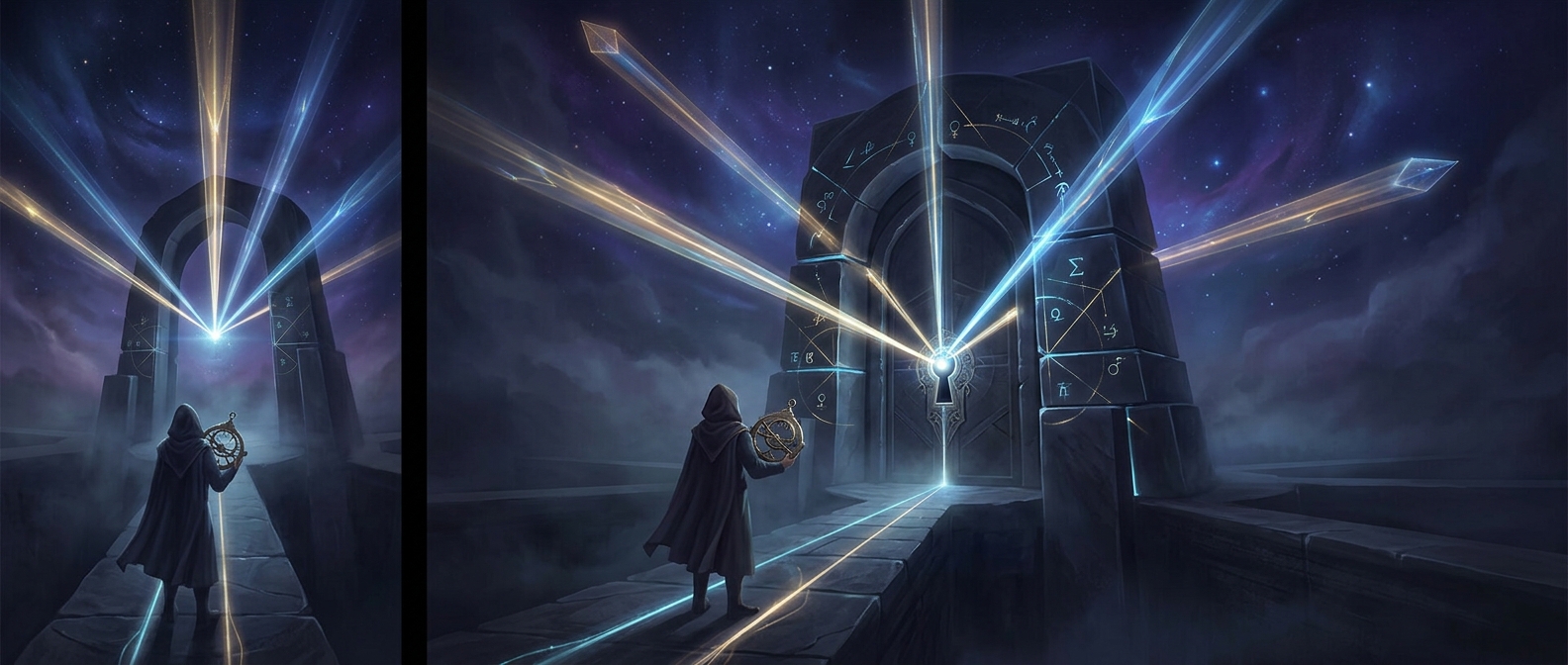
The grid was only one part of the procedure. A practitioner would associate a particular square with a planet, engrave it onto metal linked to that planet, and choose an astrologically favorable time for the work. The timing mattered because astrology held that the heavens’ arrangement shaped the qualities available on Earth. The finished talisman was therefore meant to unite three things: a numerical pattern, a material, and a moment under the planet’s influence.
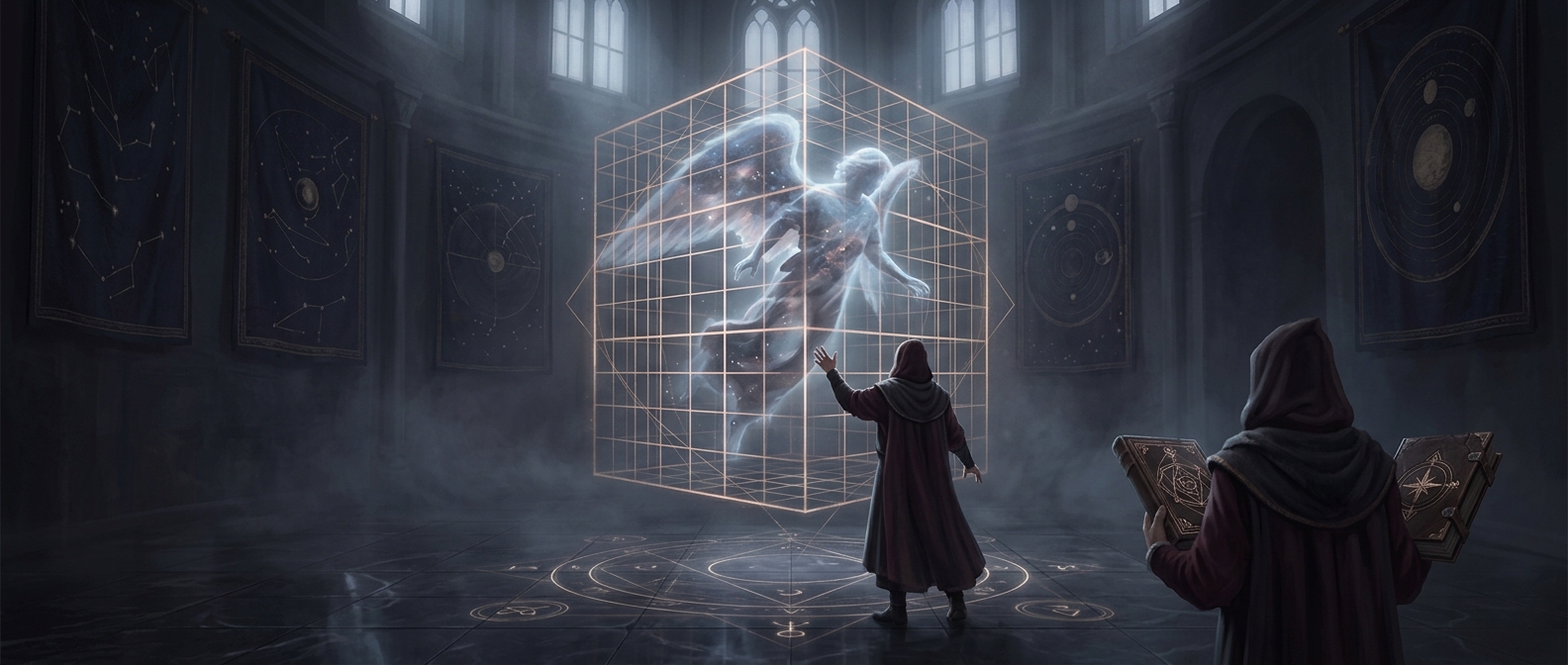
The word “bind” captures the ambition, but not necessarily a claim that an angel was physically trapped like an animal. In occult thought, ritual objects could focus or secure a spiritual influence. The square’s balanced sums offered a visible sign of order and control—a way to give an invisible relationship a form that could be carried or displayed.
Why the Grid Seemed Powerful
To a modern reader, the arithmetic may look like a clever code. For its users, it belonged to a worldview in which numbers, planetary movements, metals, and spiritual beings were connected parts of a structured universe. Making the talisman correctly was thus an act of alignment: the practitioner aimed to reproduce on a small metal surface the order believed to govern the larger cosmos.
That is what made the grid more than decoration. Its equal totals turned a simple arrangement of numbers into a compact ritual instrument, designed to make celestial order tangible.