Reading the Unalome as a Path
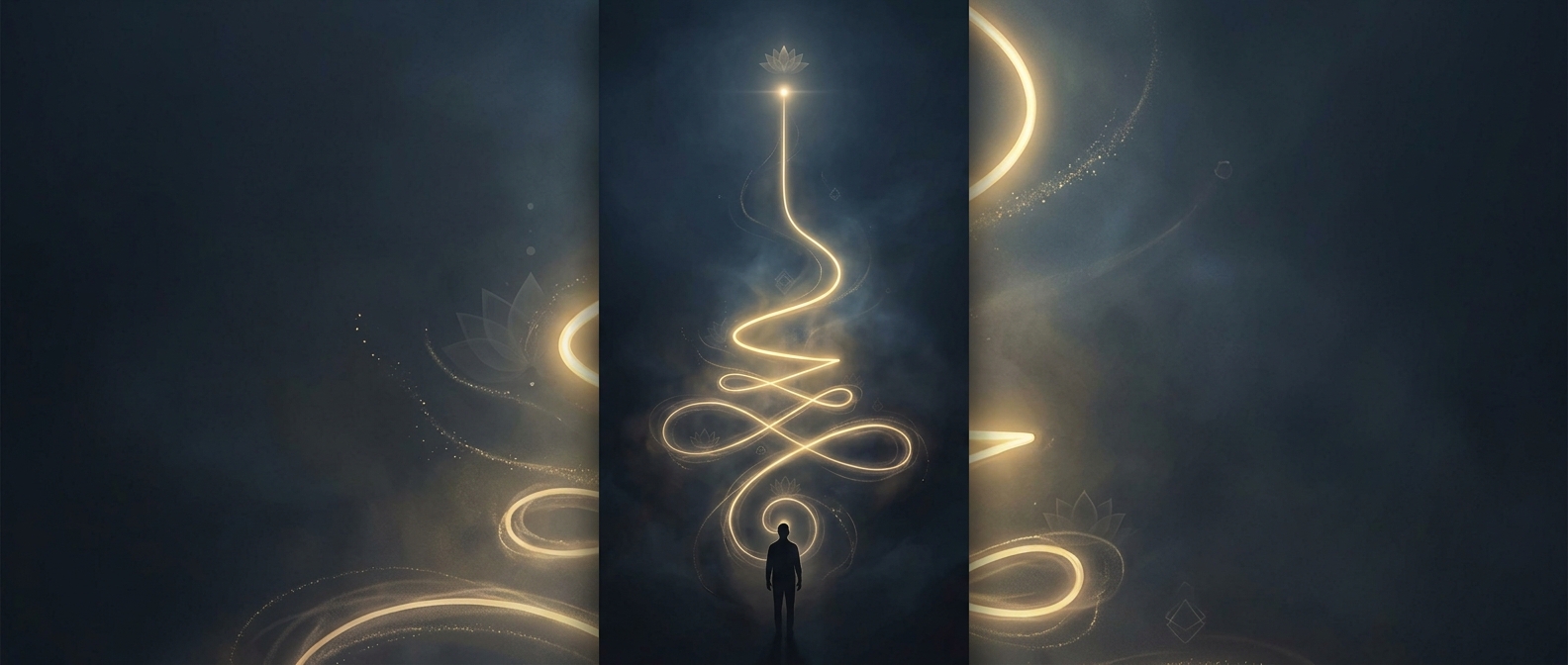
An unalome is a symbolic motif found in Buddhist contexts and widely used in contemporary art and tattoos. Its familiar form pairs a winding or knotted base with a line that gradually straightens. In many interpretations, the shape represents a person’s movement toward greater clarity or awakening: the turns suggest a path that is not direct, while the straight line marks a sense of direction or arrival.
Why the Shape Feels Familiar
The symbol works through a visual contrast. A spiral has no obvious route out; each turn can look like another return to the same place. A line, by contrast, makes progress legible. That shift gives the design a compact way to express a common experience: understanding may emerge after uncertainty rather than before it.
The unalome is not a universal diagram with one fixed reading. Its meaning depends on the religious or artistic context in which it appears, and modern uses may emphasize personal growth more than Buddhist teachings. The image’s appeal lies in how little it needs to show: a winding beginning becomes a line that can finally be followed.