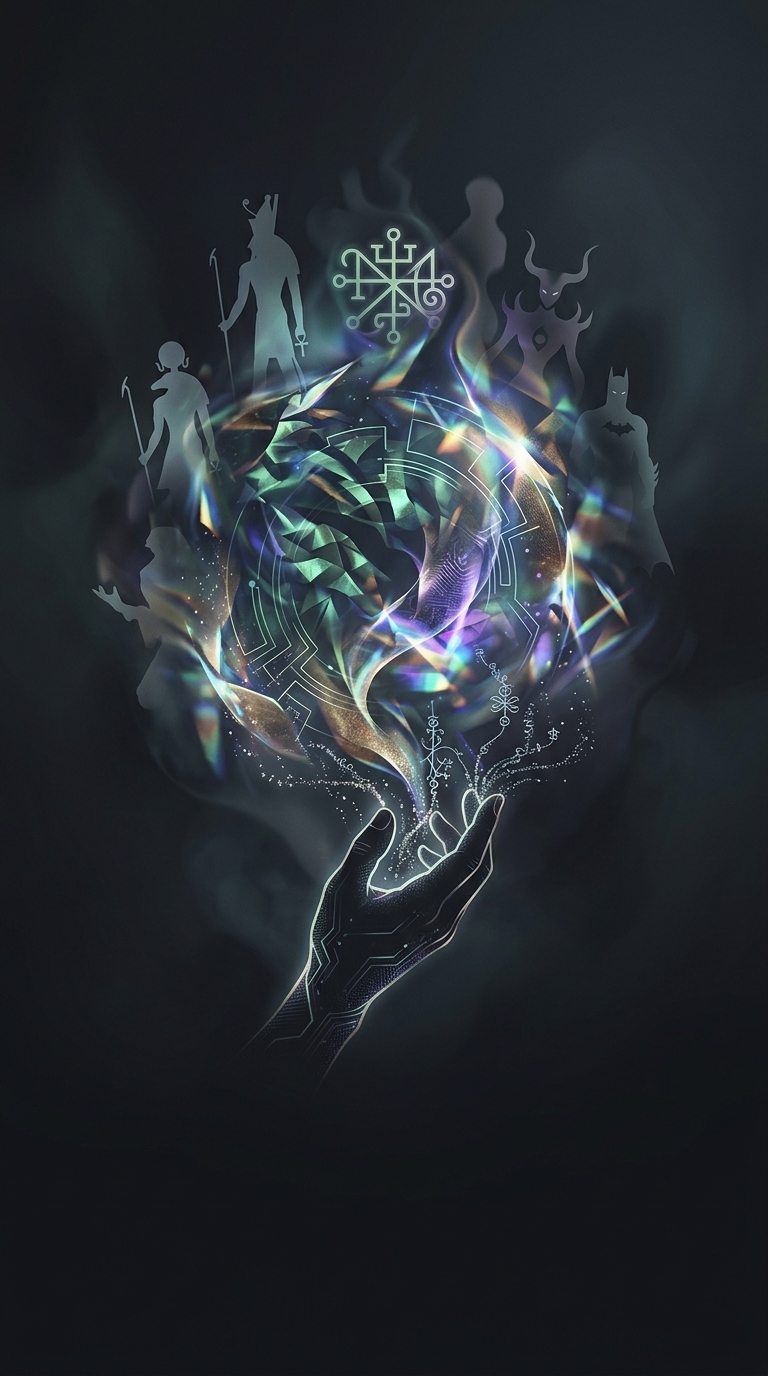
Belief as a temporary instrument
Chaos magic treats belief less like a permanent creed and more like a tool a practitioner can pick up for a particular purpose. Someone might adopt the symbols and ritual language of one tradition, then use a different set later. The point is not necessarily to declare every tradition equally true; it is to see whether a chosen framework can focus attention and support an intended change.
That flexibility makes the practice distinct from systems that require loyalty to one religious doctrine. A symbol’s usefulness may matter more than its origin or conventional status. But “useful” does not mean that any idea automatically works: the practitioner still needs a clear intention and a way to carry it through.
Turning an intention into a ritual
A common technique is a sigil: a symbol made to represent a specific intention. The practitioner may reduce a written statement to a distinctive mark, then use a ritual to concentrate on it. The symbol gives attention something concrete to settle on; the ritual supplies a deliberate setting for that focus.
Some practitioners describe this in spiritual terms, while others understand it as a way of working with attention, imagination, and motivation. Those explanations are not the same, and the practice itself does not settle which account is correct. In either case, the proposed mechanism is not simply “believe anything”: it is to choose a framework, engage it intensely, and then let the intention guide action without constantly reconsidering the ritual.
Why mix symbols from different worlds?
The approach reflects a practical, experimental attitude toward occult symbols. A saint, an ancient deity, or a fictional character can each serve as a vivid focus if the practitioner finds the figure meaningful. The borrowed image does not have to belong to a single, consistent theology; its role is to shape attention and lend emotional force to the working.
That makes chaos magic less a fixed set of beliefs than a method for trying them on. Its memorable implication is that, in this practice, a symbol’s power can depend as much on what it helps a person concentrate on as on where the symbol came from.