What the Bull Sees in the Cape
A bull does not charge because a cape is red. Cattle have dichromatic vision: their eyes rely on two main types of color-sensitive cells, compared with three in most humans. They therefore distinguish some colors less well, especially reds and greens. Red is not invisible to them, but it does not stand out in the vivid, human way the familiar image suggests.
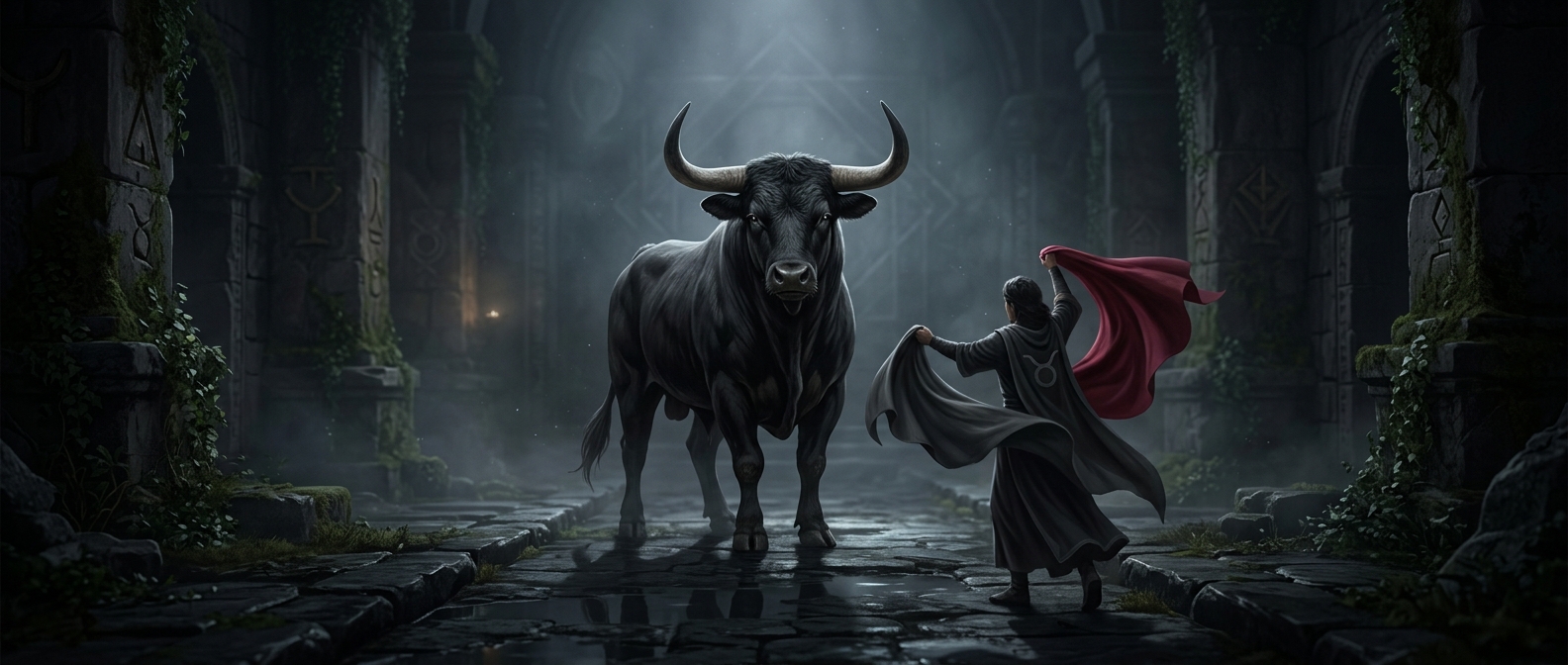
What grabs the bull’s attention is the cape’s movement. A cloth that sweeps, snaps, or flutters creates a changing target. The bull can track that motion and react to it without recognizing the color that spectators notice.
Why the Red Cape Became the Image
In a bullfight’s final stage, the matador uses a smaller red cloth called a muleta. Its color is visually striking to people, so it became closely associated with the charge. But the action depends on how the cloth is moved: the matador presents it and draws the bull’s attention across a path. A stationary red patch would not, by color alone, provoke the same response.
The distinction is a useful reminder that an animal’s sensory world is not simply a less colorful version of ours. The bull responds to a moving shape and its direction; the human audience sees a dramatic red flag. The same sweep of fabric creates two different experiences—and it is the movement, not the color, that sets the charge in motion.