A test shape escaped the development room
When developers build a game, they need to check more than whether a character looks right. They also test its hitboxes: invisible shapes that determine whether an attack connects, a character can pass through a gap, or an object bumps into something. A simple cylinder makes a useful stand-in while those interactions are being worked out, because it is easy to see and does not distract from the test.
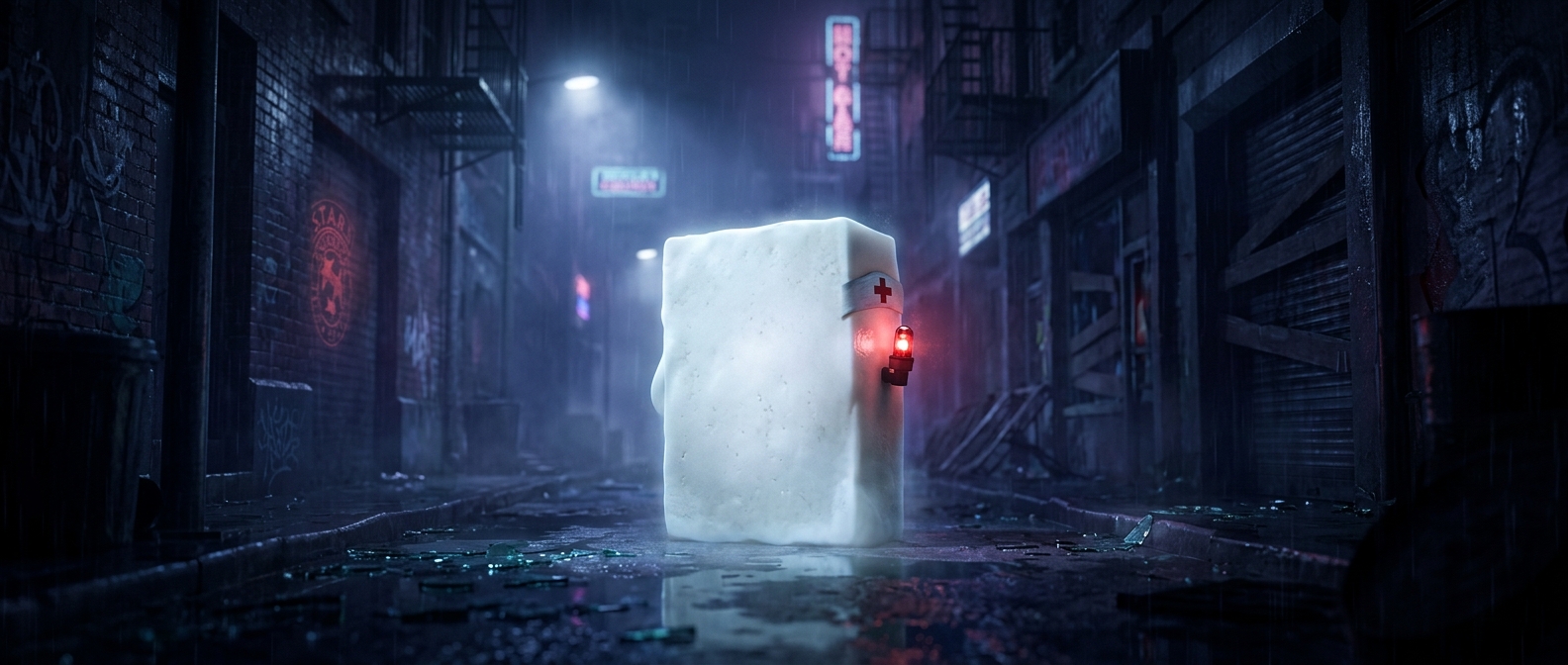
In Resident Evil 2, that temporary stand-in was transformed into a playable character. Developers painted the cylinder white so it resembled a block of tofu, then added squeaky Japanese voice acting. The result kept the plain, unmistakably test-object shape instead of disguising its origins.
The joke is part of the design
Tofu’s appeal comes from the collision between a serious survival-horror game and a character that looks as if it wandered in from a development tool. The transformation also gives a technical artifact a role beyond testing: players can encounter the shape that once helped developers check how the game behaved.
It is a small example of how a production shortcut can become memorable when creators lean into its oddness. Rather than replace the cylinder with a conventional hero, the developers made its simplicity the point—and gave an invisible game-making tool a voice.