Why Seaweed Seems to Drift Without a Destination
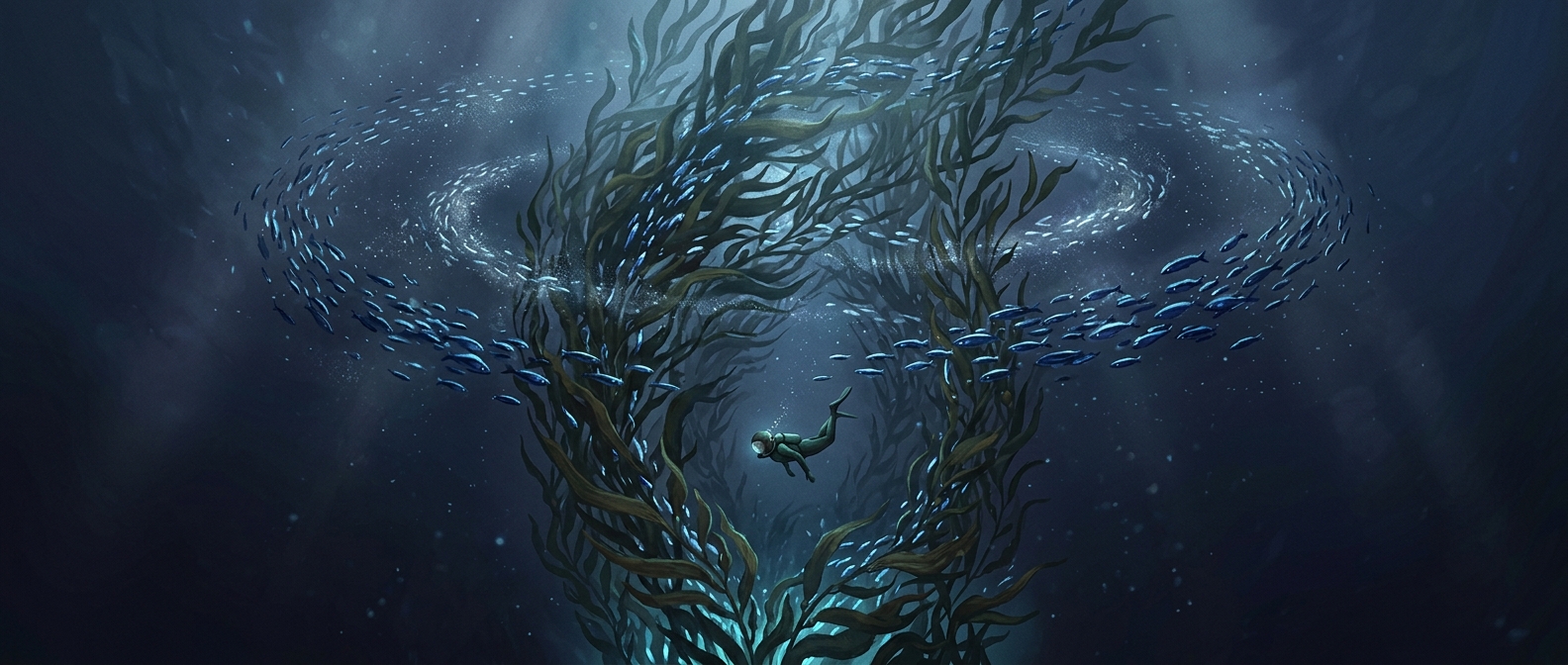
Many seaweeds are not plants that stand upright with roots in the seabed. They are algae, and some—especially free-floating forms such as sargassum—spend much of their lives at the ocean’s surface. Tiny gas-filled bladders can help keep their fronds afloat, while wind and currents carry them from place to place.
That movement makes seaweed an evocative image for Pisces, the zodiac sign commonly associated in astrology with fluidity and porous boundaries. The comparison is poetic, not a claim that seaweed or ocean currents are governed by a star sign.
Drifting Still Has a Pattern
Floating algae may look as if they are simply going wherever the water takes them, but their journeys are shaped by real forces: currents, wind, waves, and the growth of the algae themselves. Some species form drifting mats that provide shelter and food for small marine animals. If carried into coastal waters, large accumulations can also wash ashore and decay.
So the image holds two ideas at once: apparent surrender to motion and a life shaped by its surroundings. Seaweed’s drift is not literally boundaryless—it follows the ocean’s pathways—but that tension is precisely what gives the Pisces metaphor its pull.