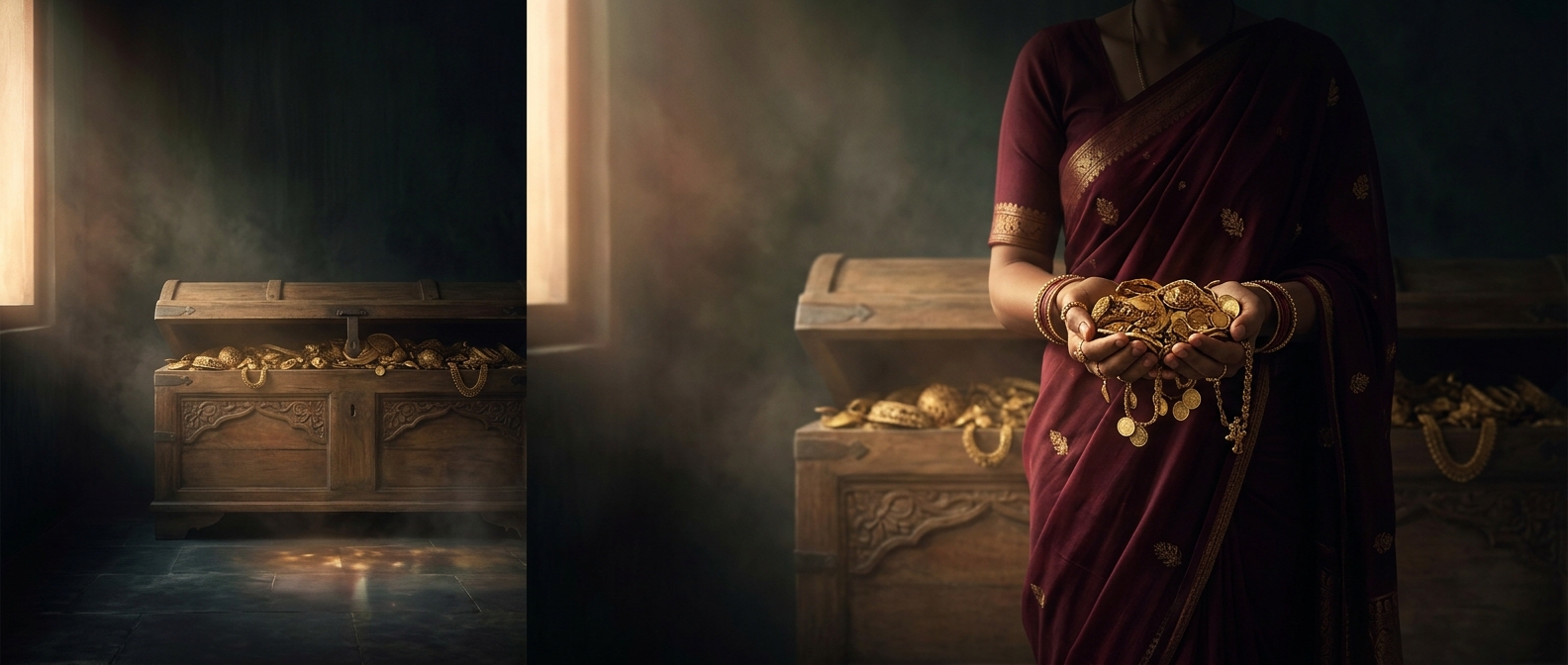
Jewelry can function as household savings
In many Indian families, gold jewelry serves two purposes at once: it is worn for weddings and other important occasions, and it preserves wealth in a form a household can keep close. Relatives may give gold at a wedding, adding to a bride’s personal collection over time. Unlike a bank balance, the jewelry is tangible and can be passed through a family, making it a familiar store of value for people who prefer not to rely entirely on financial institutions.
A reserve that is hard to put to work
Gold in a jewelry box is not the same as gold ready to circulate in the economy. Turning it into cash generally means selling or pawning an item, and a family may be reluctant to part with something tied to marriage, inheritance, or personal identity. Jewelry can also be worth less when resold than its owner expects: the buyer must assess its purity and weight, and the original purchase price may have included making charges that are not recovered.
That creates a tradeoff. Gold offers a privately held asset that can be used in an emergency, but while it remains stored at home, it does not readily finance a business, a home purchase, or other spending. The same piece may be both a safety net and an object a family is unwilling to liquidate.
Why the scale matters
The estimated reserve points to a large pool of private wealth outside formal accounts, not a single stockpile available to policymakers or lenders. Its economic significance depends on whether owners choose to sell, pledge, or keep their jewelry. A wedding gift can therefore remain wealth for generations—but wealth that is most accessible to the family that holds it.