A nod can keep a conversation moving—but not settle what was said
When words stop being useful, people still have ways to signal that an encounter is continuing. A nod, an open palm, or a smile can show attention, invite the other person to go on, or soften a request. These cues help manage the rhythm of an exchange even when neither person can follow every sentence.
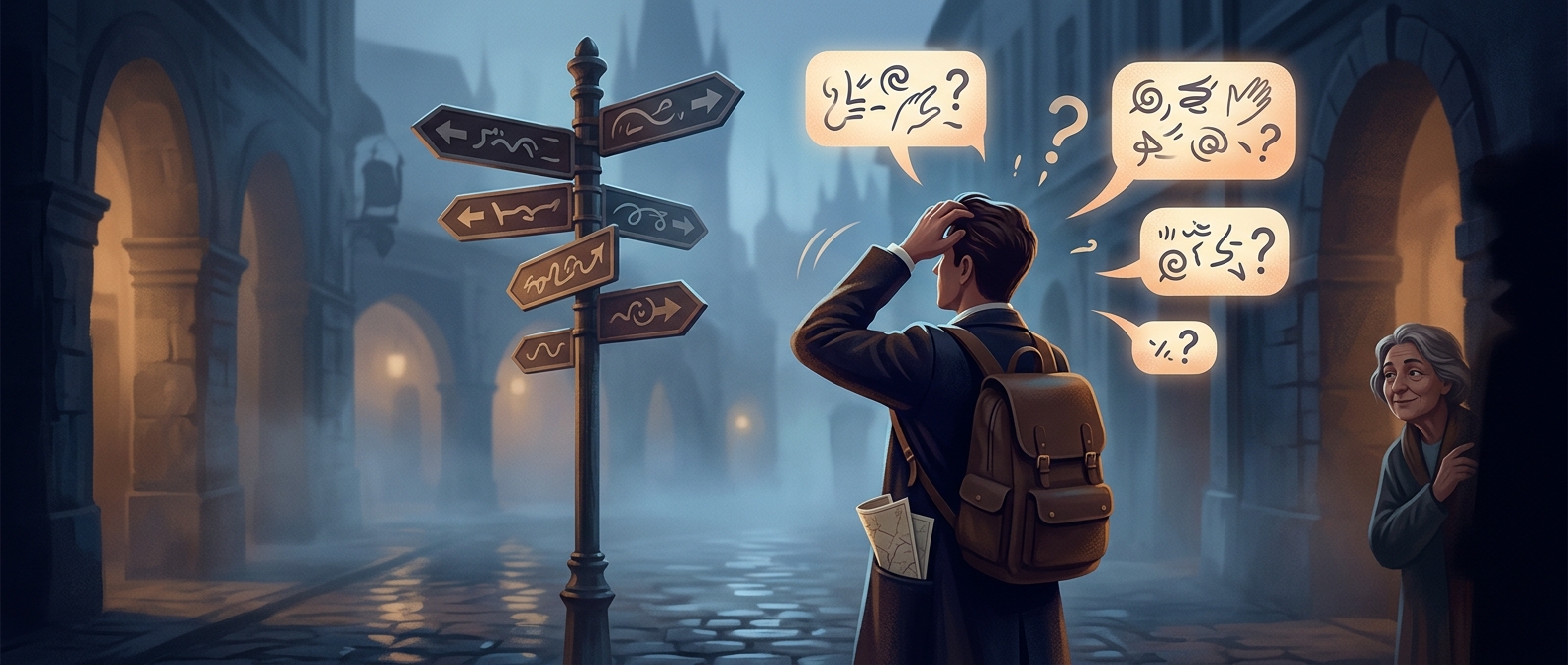
But a nod is ambiguous. It may mean “I’m listening,” “I understand,” or simply “I see that you’re speaking.” The other person may read it as agreement. That gap matters when a conversation involves a price, a direction, or a choice: both people can appear to have reached an understanding while carrying away different meanings.
Gestures work best when they point to something
A visible object gives gestures a shared reference. Someone can point to a map, a menu item, or the place they want to go; the other person can confirm by pointing back or indicating a different option. The exchange becomes less about guessing what a smile means and more about checking a specific choice.
That is why a seemingly confident nod can be useful socially without proving comprehension. It helps preserve goodwill and keep the interaction from freezing, but it cannot carry all the detail that words normally do. The small travel moment is a reminder: a friendly signal can bridge a language gap, while a clear shared reference is what helps close it.