Why the Smoke Fills the Corridor
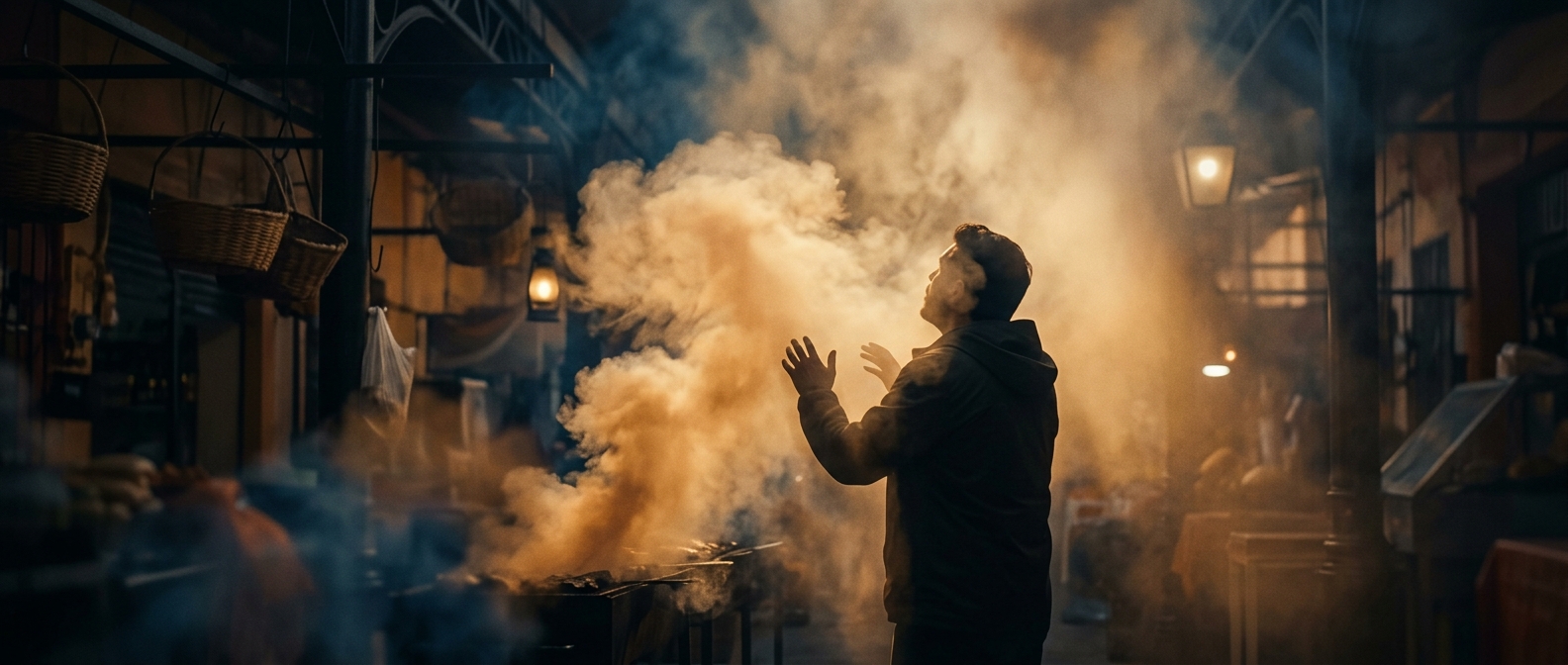
At Oaxaca City’s Mercado 20 de Noviembre, the Pasillo de Humo—literally, “Smoke Passage”—turns buying meat into a meal made in stages. Shoppers select cuts such as tasajo, thinly sliced beef often dried or cured, or links of chorizo, then take them to nearby grills. The market’s cooks char the meat over glowing charcoal while customers wait close by.
That arrangement makes the corridor a working kitchen, not just a row of stalls. Meat sellers can focus on displaying and portioning their goods; grill cooks handle the heat and timing. For visitors, the handoff is simple: choose what looks good, have it cooked nearby, and eat it while it is hot.
A Market Meal You Can Shape
The setup also gives diners a say in what goes onto the grill. Different cuts and sausages cook at different speeds, and charcoal adds a smoky, browned surface. Rather than ordering a fixed plate from a single counter, shoppers assemble lunch from the market’s offerings and watch the cooking happen in front of them.
The smoke is an unavoidable part of that exchange. Charcoal grilling releases it into the shared passage, where it mixes with the sounds and activity of the market. Here, the aroma is not decoration: it is the visible sign that shopping and cooking are happening side by side. A purchase becomes lunch within a few steps, and the corridor itself tells you where the meal is being made.