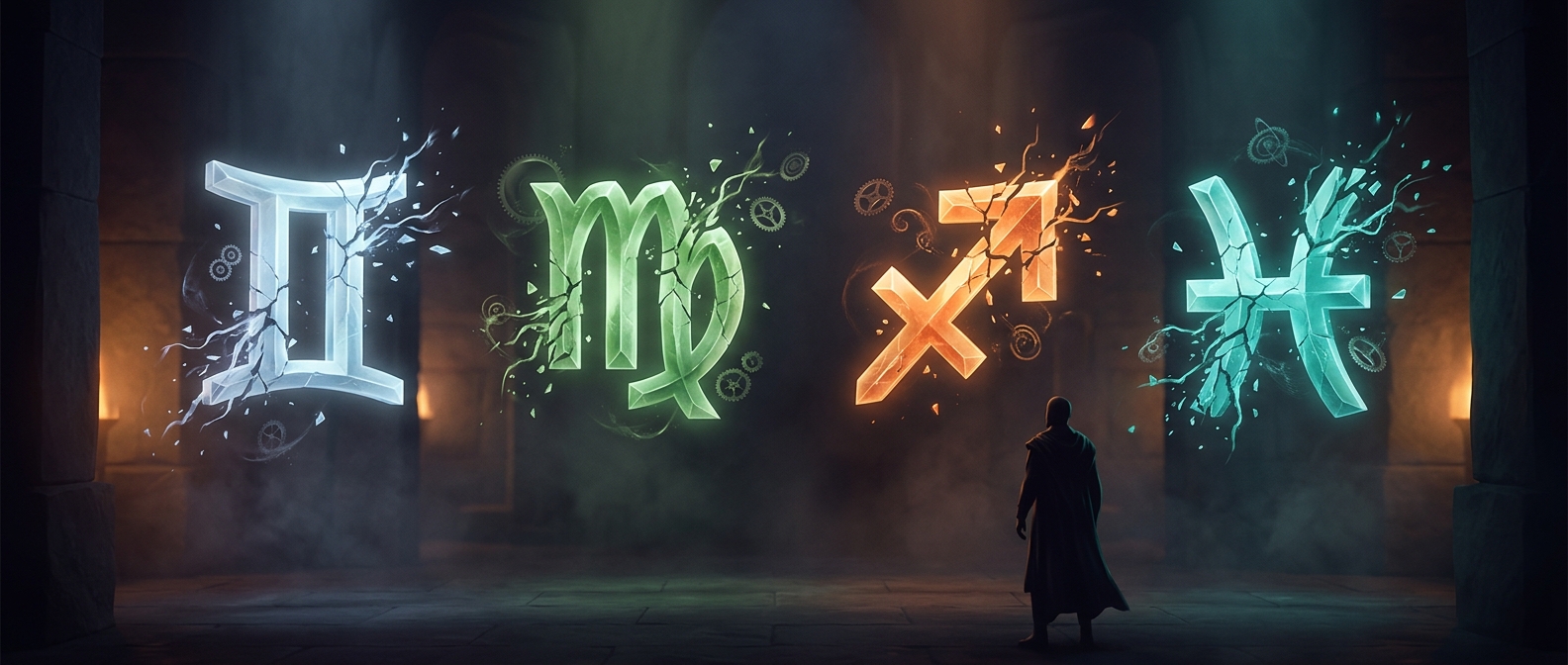
Why astrology links mutable signs with change
In Western astrology, the zodiac is divided into four repeating seasonal phases, and each season is assigned three signs. The sign at the season’s opening is called cardinal, the middle sign fixed, and the closing sign mutable. Gemini, Virgo, Sagittarius, and Pisces are the mutable signs. Their placement at seasonal turning points gives them a symbolic role: they stand where one phase is giving way to another.
That framework connects mutability with transition—adjusting, responding, and moving between possibilities. It is a symbolic interpretation within astrology, not a scientific measure of how someone handles stress.
When flexibility becomes overthinking
The same trait can be read in two ways. A person who quickly considers alternatives may seem resourceful when circumstances shift. But if several options remain open at once, choosing a new direction can become difficult. In the joking version, the mutable sign’s talent for adapting turns into a mental scramble: every changed plan prompts another round of weighing what might happen next.
That tension is what makes the caricature recognizable. It does not portray adaptability as simple calm; it suggests that being ready to change course can also mean noticing more possible courses to take. The astrological shorthand turns a seasonal metaphor—one phase ending, another beginning—into a character sketch about the cost of staying mentally flexible.