
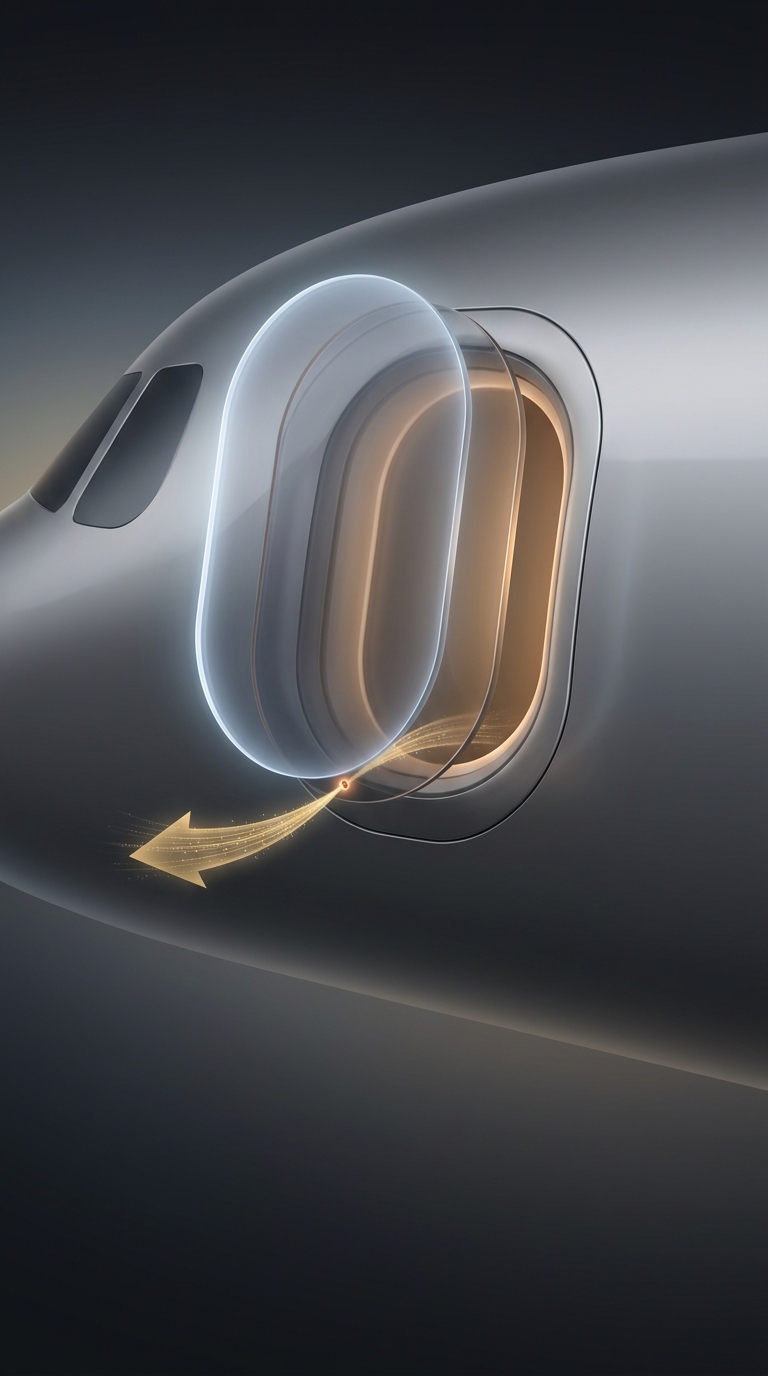
A closer look
Airplane windows feature a tiny, deliberate hole at the bottom of the middle pane called a bleed hole, which is explicitly designed to prevent the entire window from violently shattering under atmospheric pressure. The typical passenger window actually consists of three distinct layers of tough acrylic, with the middle and outer panes bearing the terrifying brunt of the pressure differential between the pressurized cabin and the freezing, thin atmosphere outside. That little hole allows pressure to equalize between the panes, ensuring the outer layer takes all the structural stress while keeping the inner glass safely intact next to your sleeping face. It also prevents the window from fogging up, guaranteeing you a clear view of the dreary airport tarmac. It is incredibly reassuring to know that the only thing standing between your comfortable window seat and explosive decompression is a microscopic puncture hole invented by stressed aerospace engineers