Why a record spun so fast
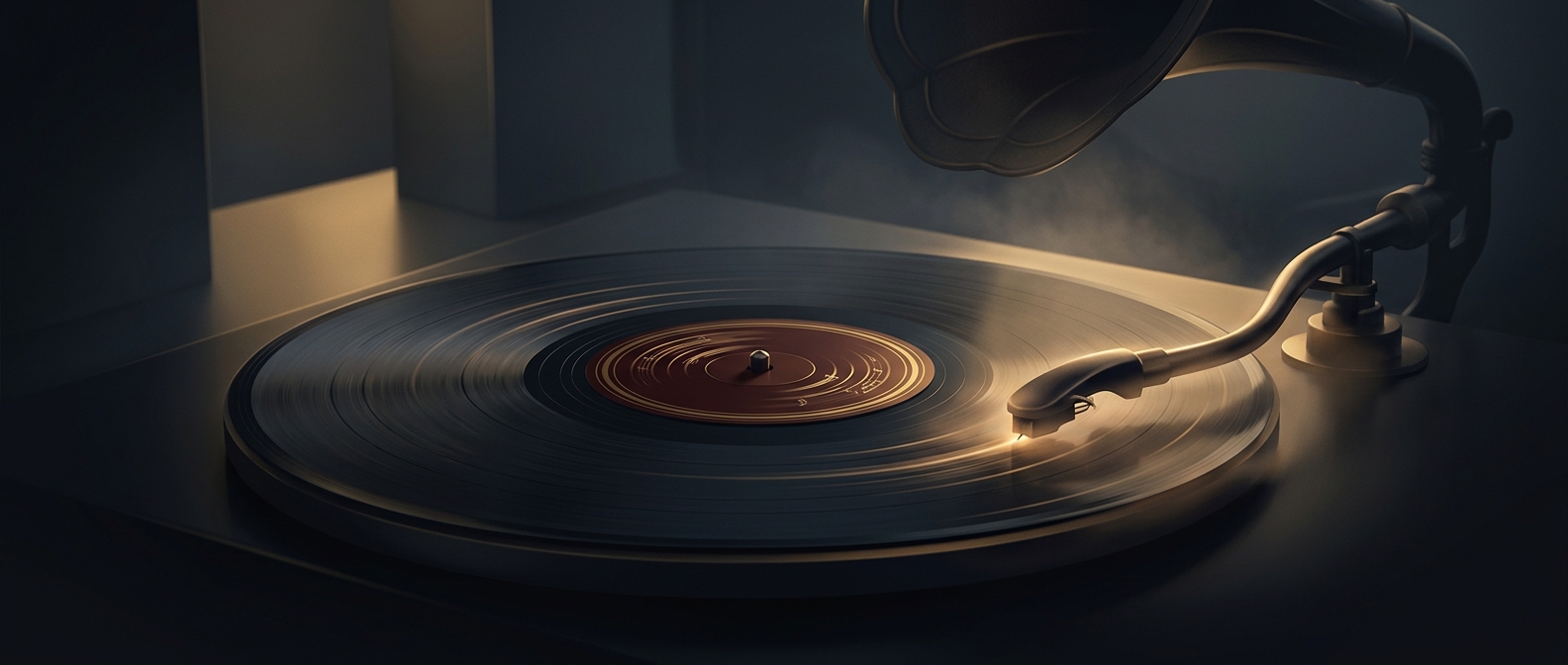
A 78-rpm record made the groove race beneath the needle: each turn carried the stylus along a relatively long stretch of groove in a short time. That helped preserve the rapid wiggles that reproduce higher-pitched sounds. The tradeoff was straightforward: the faster the disc turned, the more groove it used per minute, leaving less room for music on each side.
“78” became the standard speed for the shellac records commonly sold in the first half of the 20th century. It was a nominal standard, not a guarantee that every record or playback machine turned at precisely that rate; earlier discs in particular could use different speeds.
The format shaped listening
A typical 10-inch disc could hold only about three minutes per side. To hear a longer work, listeners had to stop the gramophone, turn the disc over, or replace it with another. Record companies and musicians therefore had to fit performances to the available space, while longer pieces arrived in installments across several sides.
That limitation made the record itself part of the listening routine: a symphony or other extended work meant keeping track of sides and interruptions. The later 33⅓-rpm long-playing record could run longer partly because its finer groove and slower speed used the disc’s surface more sparingly.