A healing manual built to travel
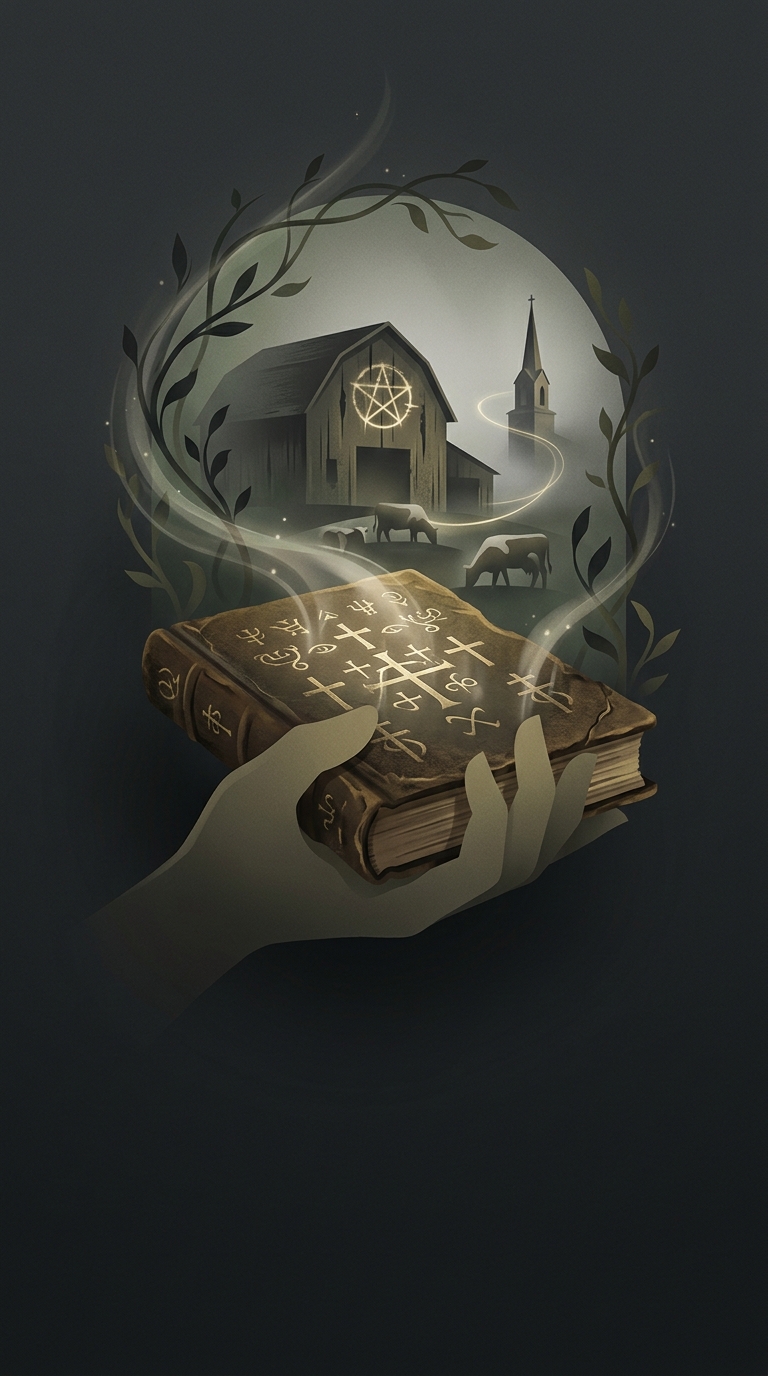
John George Hohman’s The Long Lost Friend gathered prayers, charms, and practical remedies into a small, usable handbook. First published in German in 1820, it offered Pennsylvania German readers written instructions they could consult at home or carry with them. Its influence came partly from that portability: practices that might otherwise be passed along by word of mouth could be preserved and repeated from a page.
When words became part of the remedy
Powwowing—also called braucherei, from a German word associated with healing—was a form of folk practice rooted in Pennsylvania German communities. It combined Christian prayers and biblical language with charms and household treatments. A practitioner might speak or write a prescribed formula as part of an effort to heal; the words were not merely an explanation of the remedy but part of what the ritual asked the healer and patient to do.
The toothache charm involving written words and paper made that idea especially tangible. The writing could be eaten, bringing the spoken or written formula into direct contact with the person seeking relief. This is a form of ritual healing, not a medically established treatment for dental pain. Its significance lies in how it turned language into an action that could be performed and remembered.
A tradition made repeatable
A printed collection did not make every healer’s practice identical, but it gave readers a shared store of formulas. Hohman’s book helped carry a local healing tradition beyond a single household or practitioner. Even its most startling remedy shows the tradition’s practical imagination: a prayer could be read, spoken, written, and—on paper—made part of the cure itself.**