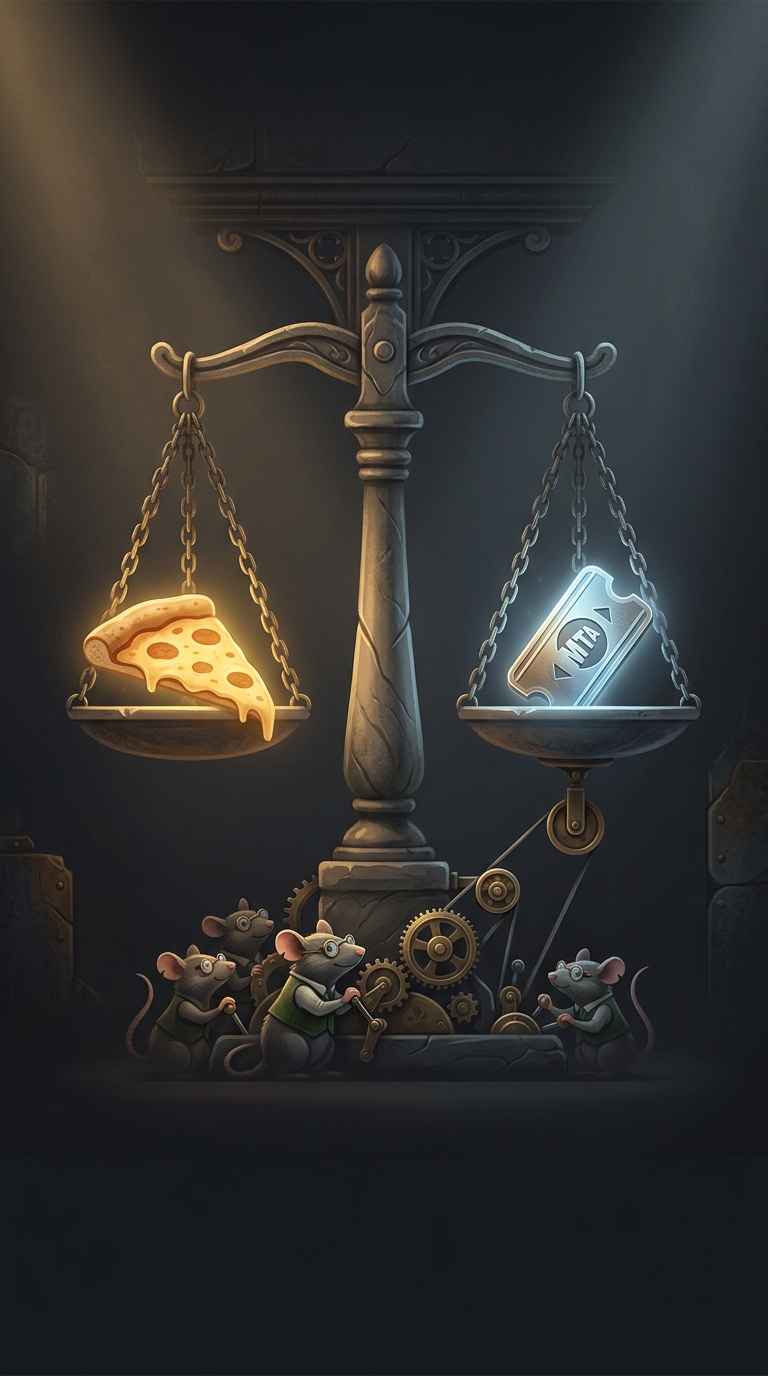
Why a slice can shadow a subway fare
The Pizza Principle is a street-level comparison: set the price of a plain slice beside the base fare for a subway ride, and in New York the two have often moved in strikingly similar ways. Patent lawyer Eric M. Bram gave the pattern its name after noticing it in 1980. The comparison works because both prices are familiar, easy to check, and tied to the everyday cost of living in the same city.
But the two prices are made in very different ways. A pizzeria has to cover ingredients, rent, wages, and other operating costs, then choose a price customers will accept. The subway fare, by contrast, is set through public decisions about how much riders should pay and how much of the system’s cost should be covered in other ways. One price responds to business expenses and competition; the other is shaped by transit policy.
A useful comparison, not a pricing formula
Because both businesses face pressures such as rising costs, their prices can drift upward over time. That helps explain why the comparison can feel persuasive without implying that one price causes the other to change. A fare increase does not automatically force pizzerias to raise slice prices, and pizza sellers do not determine transit fares. The resemblance is a memorable coincidence, not an economic rule.
Its charm lies in how little it takes to turn an abstract idea—changes in urban costs—into something people can check on a lunch break. A slice and a ride are not a formal inflation measure, but together they offer a quick, local snapshot of what everyday New York costs.