When a Notebook Becomes a Display Object
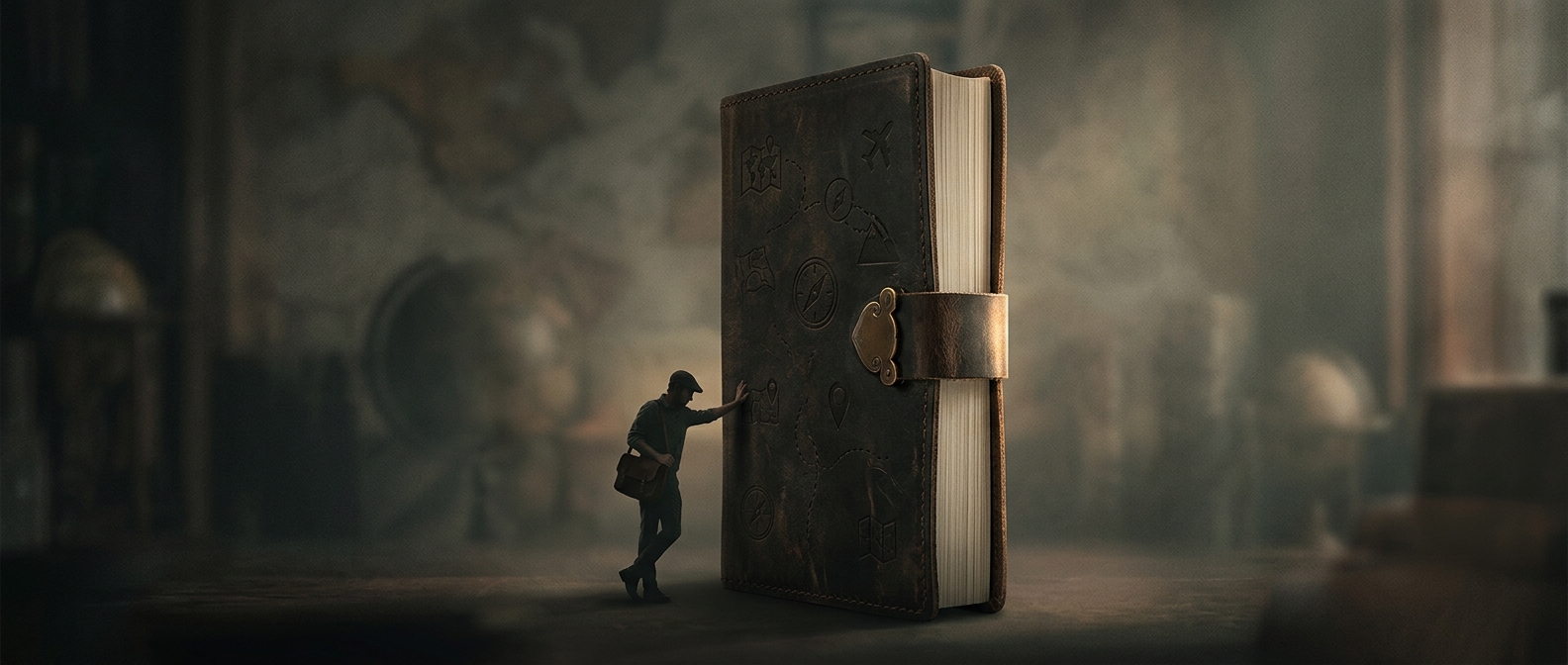
A notebook is meant to hold unfinished thoughts, but a pristine one can start to feel like something that must be protected. Its clean pages set a standard before the writer has put down a word: the first entry should be worthy of the book. The more carefully chosen or costly the notebook seems, the easier it is to treat ordinary notes as damage rather than use.
The First Mark Raises the Stakes
This is a small perfectionism trap. A person imagines the page as a finished product—neat handwriting, a clever observation, a sentence worth keeping—instead of a workspace. Because a first mark cannot be taken back, postponing it offers brief relief. But the blank page then becomes more conspicuous, and the next attempt can feel even more consequential.
The problem is not necessarily a lack of ideas. It is the expectation that ideas must arrive polished. A grocery reminder, a rough sketch, or a half-formed sentence may seem too trivial for the book, even though those are exactly the kinds of things notebooks can hold.
Make the Page Ordinary Again
A useful reset is to give the notebook a deliberately low-stakes job: use the first pages for lists, questions, or notes that are allowed to be messy. That changes the standard from “make something beautiful” to “leave a trace of what I noticed.” The notebook becomes a tool through repeated use, not by staying immaculate.
The irony is that a page filled with imperfect notes can become more personal than a pristine one. Its value comes from what it helped someone remember or think through—not from the fact that it was never touched.