Fragrance advertising sells an imagined feeling
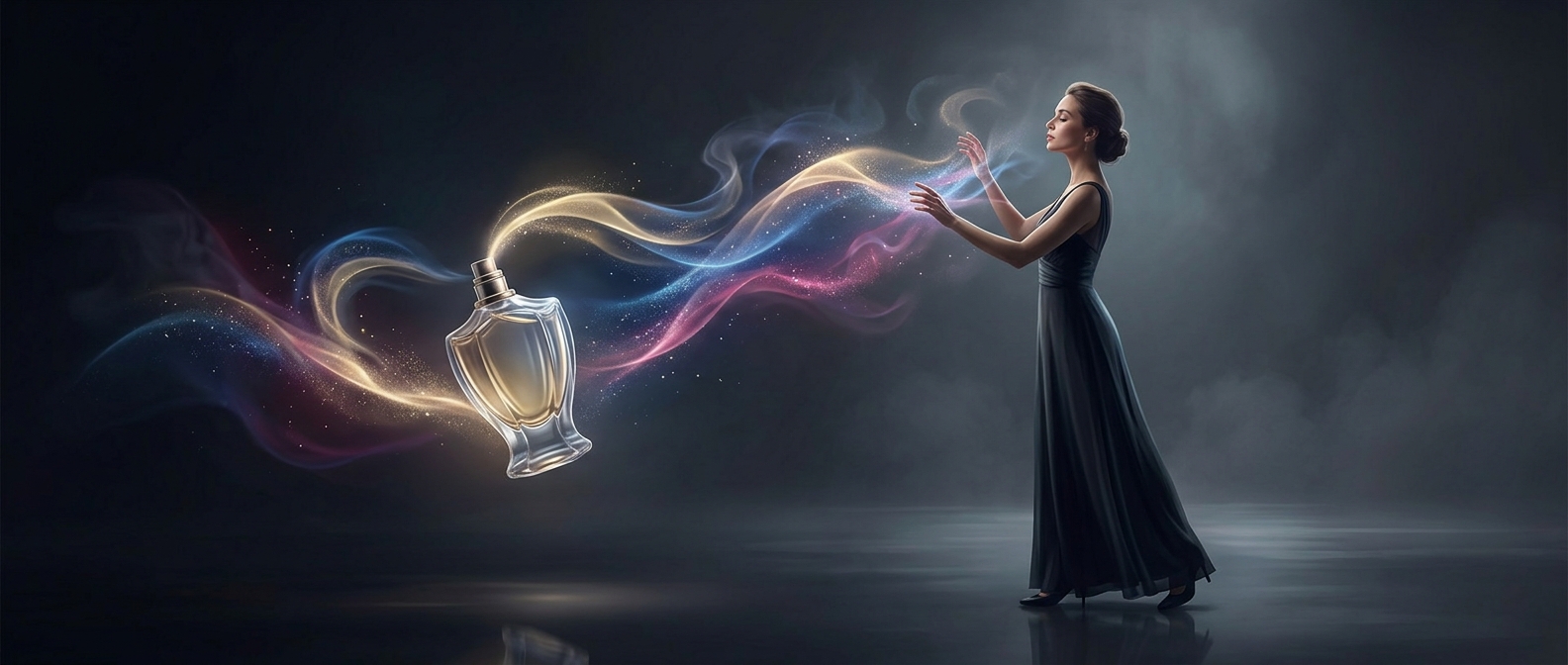
A screen can show a bottle, but it cannot deliver the first burst of citrus, the warmth of woods, or the way a scent changes after an hour on skin. Perfume ads therefore work through association rather than demonstration: they give viewers images that suggest a mood, a character, or a world to step into.
An open landscape can imply freedom or solitude; a figure in motion can make a fragrance feel daring, intimate, or untamed. These images are not literal translations of ingredients. They are emotional cues, meant to help viewers imagine how wearing the perfume might feel.
Ambiguity is part of the appeal
There is no single visual equivalent for a smell. Even the same perfume can seem different from one person to another, and its notes unfold over time. A highly specific picture of a flower or spice might suggest a literal ingredient, but it could also narrow the fragrance to one simple idea.
Abstract imagery leaves room for the viewer to complete the scene. The ad offers a mood; the viewer supplies a personal version of it. That makes the campaign less like a product demonstration and more like a small piece of storytelling.
The image gives the bottle a world
The bottle anchors the ad in something real, while the surrounding imagery builds an identity around it. That identity can matter when viewers cannot sample the fragrance through the medium itself. A successful image may not tell someone exactly what the perfume smells like; it gives them a reason to seek out the bottle and find out.