The match is only one part of the product
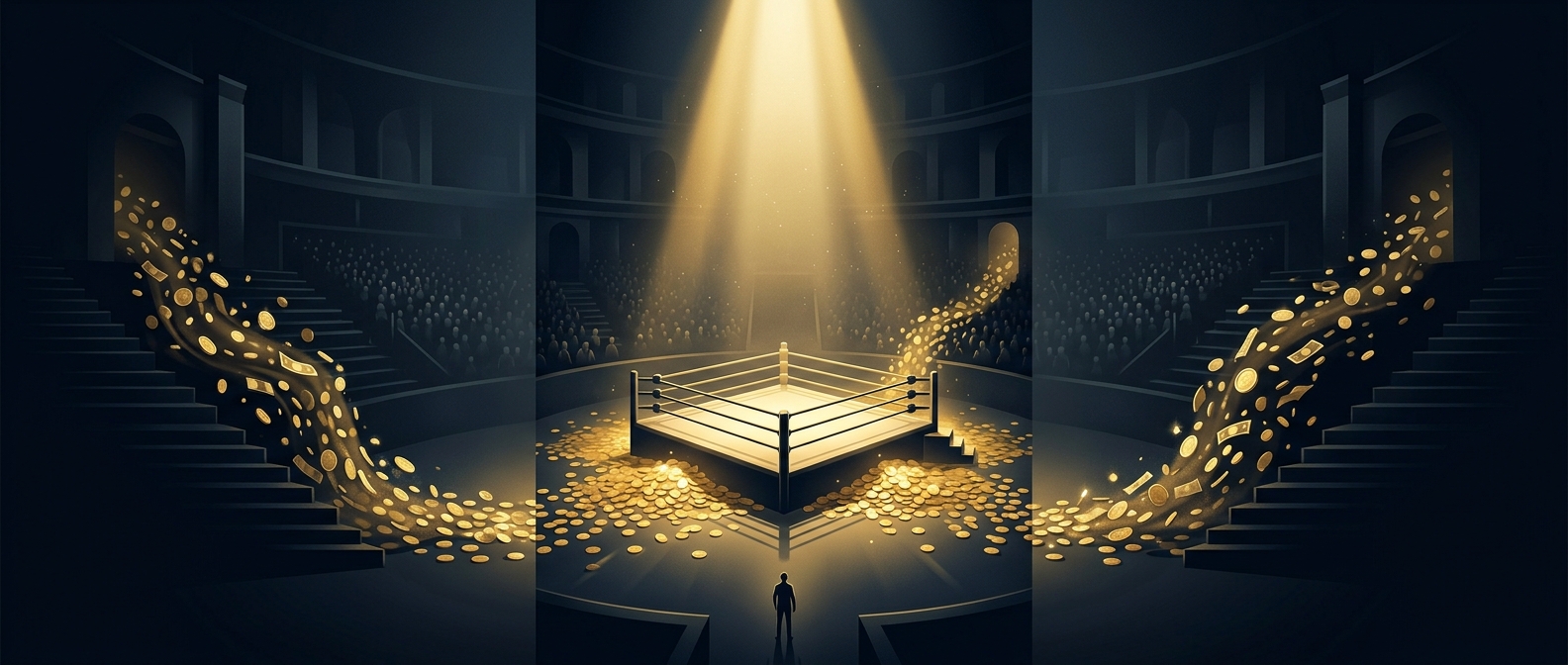
In professional wrestling, a ticket buys more than a contest: it buys a live chapter in an ongoing story. Rivalries, betrayals, and reversals give the audience reasons to care about who wins, while the wrestlers’ physical performance makes the conflict feel immediate. The result may be planned, but the execution still depends on timing, athletic skill, and performers responding to the crowd.
That combination helps promoters sell an event to people who might not follow a sport for its competitive uncertainty. A feud can build anticipation over several weeks, turning a single match into the payoff to a story fans have watched unfold.
One performance can keep earning
A live event has a fixed audience and a fixed night. Broadcasting changes that limit: a match can reach viewers who are nowhere near the venue, and televised stories can make later events more appealing. The broadcast is therefore not just a record of the show; it is also a way to expand the audience for the next one.
Merchandise extends the same logic beyond the screen. A recognizable wrestler, catchphrase, or team identity can become something fans wear or collect. Stories help make those items meaningful: they signal allegiance to a character or side, rather than functioning as generic souvenirs.
The business depends on continuity
Promoters have to balance spectacle with a story that can keep going. A decisive ending can satisfy an audience, but it may also close off a rivalry; a continuing conflict can support another event, though stretching it too long risks losing interest. The commercial engine is not simply the match—it is the expectation that the next chapter will be worth watching.