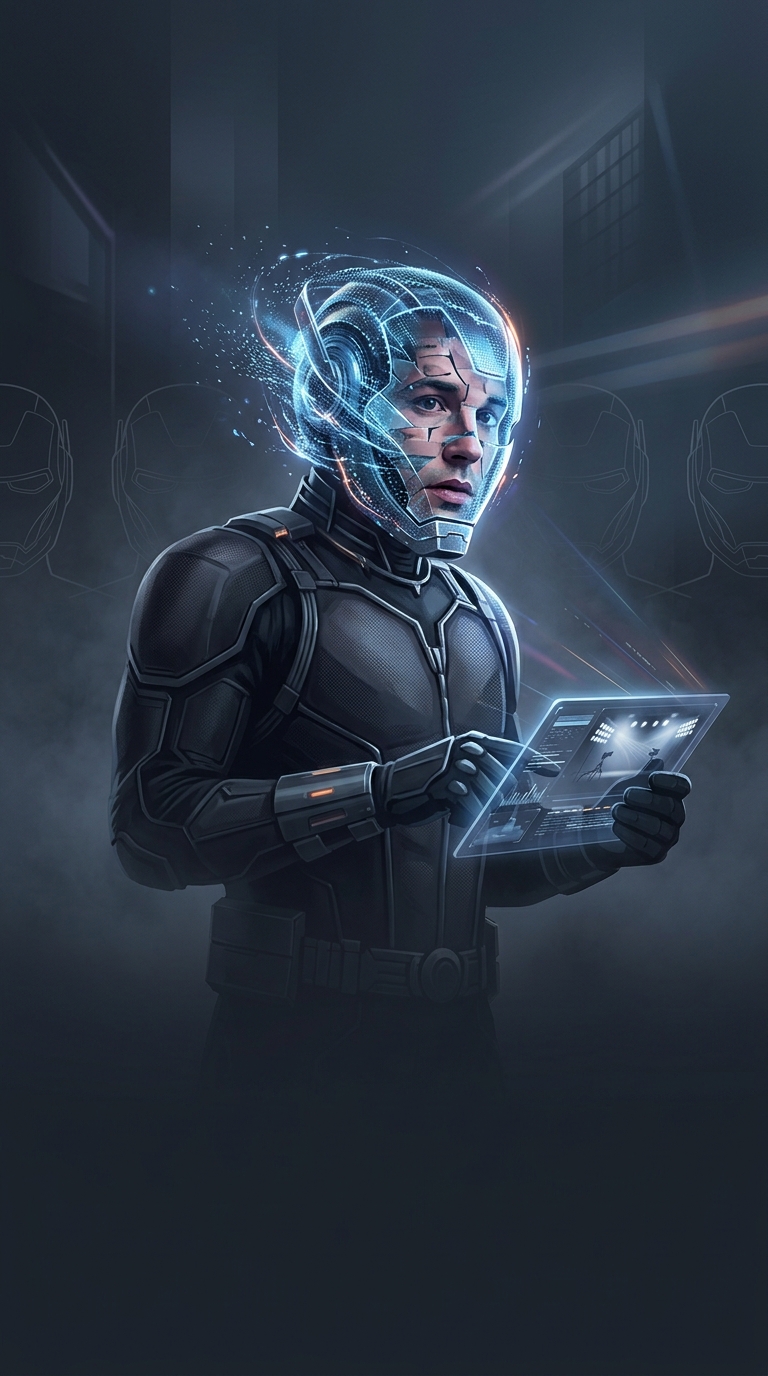
The helmet has to protect—and disappear
A superhero helmet serves two competing purposes. It makes the character look armored and formidable, but it can hide the actor’s face, an important tool for conveying fear, humor, and resolve. A visor that retracts on cue resolves that tension: the hero can enter a fight fully enclosed, then reveal an expression at the moment the story needs it.
That reveal is more than a costume change. It gives filmmakers a clean visual beat—a face appears, a character recognizes someone, or a confident mask gives way to panic—without stopping the action for someone to remove bulky gear by hand.
Why invent nanotech?
In a grounded story, a helmet could hinge open or come off conventionally. Nanotechnology offers a more flexible screen illusion: armor can flow over the body, reshape itself, or vanish quickly. The film does not need to explain the engineering in detail; the fictional technology gives the costume designers and visual-effects artists permission to move between sleek armor and an uncovered face almost instantly.
That freedom also helps with practical filmmaking. A real helmet can limit an actor’s movement, obscure facial acting, and make dialogue harder to stage. Digital effects can preserve the look of a sealed helmet while allowing the performance to remain visible when the scene calls for it.
A small effect with a big storytelling job
The device is therefore not just a shortcut for getting a helmet off. It lets the same costume communicate two different things: protection during danger and vulnerability in a personal moment. Its convenience is part of the appeal, but its real value is how smoothly it turns an action image into an emotional one.