What a Patent on a High-Five Machine Actually Covers
A patent for a mechanical high-five sounds as if someone claimed ownership of a greeting. That is not how patent rights work. A patent protects an invention as defined by its claims: the precise written boundaries describing what the device is and how it operates. The rights apply to that claimed apparatus, not to people slapping hands.
That distinction matters commercially. If a business wanted to make or sell a device that falls within the patent’s claims, the patent could give its holder a way to stop that activity, subject to the law and the patent’s scope. A different machine—or a human giving a high-five—would not automatically be covered just because it produces the same general effect.
Why Bother Patenting a Novelty?
The commercial value of an invention is not measured by how serious it looks. A contraption built for a gag, an event, or a promotional display could still be something its creator hopes to sell or license. Patent protection can help a creator control who makes or markets the particular mechanism, while the application process forces the invention to be described in a formal, reviewable way.
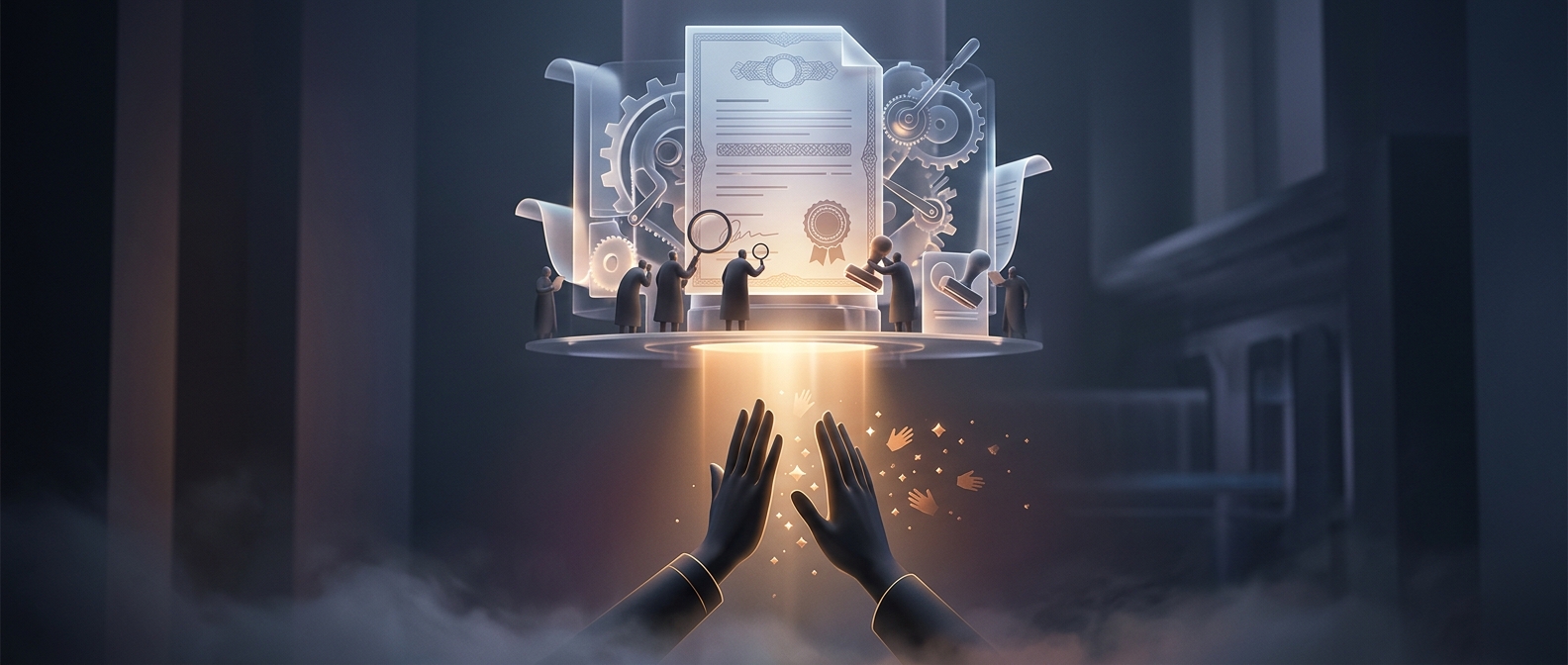
That process is why even an apparently silly object generates paperwork. A patent is not simply a certificate declaring an idea clever; it defines a legal boundary around a specific technical design. Whether that boundary is broad or narrow depends on the patent’s actual claims, not on the joke implied by its subject.
The high-five machine is memorable because the contrast is so sharp: a casual human gesture becomes a product concept, and the product concept becomes a set of legal documents. The paperwork does not put a price on friendship—it establishes who may commercially use the particular machine the patent describes.