The doorway as a boundary
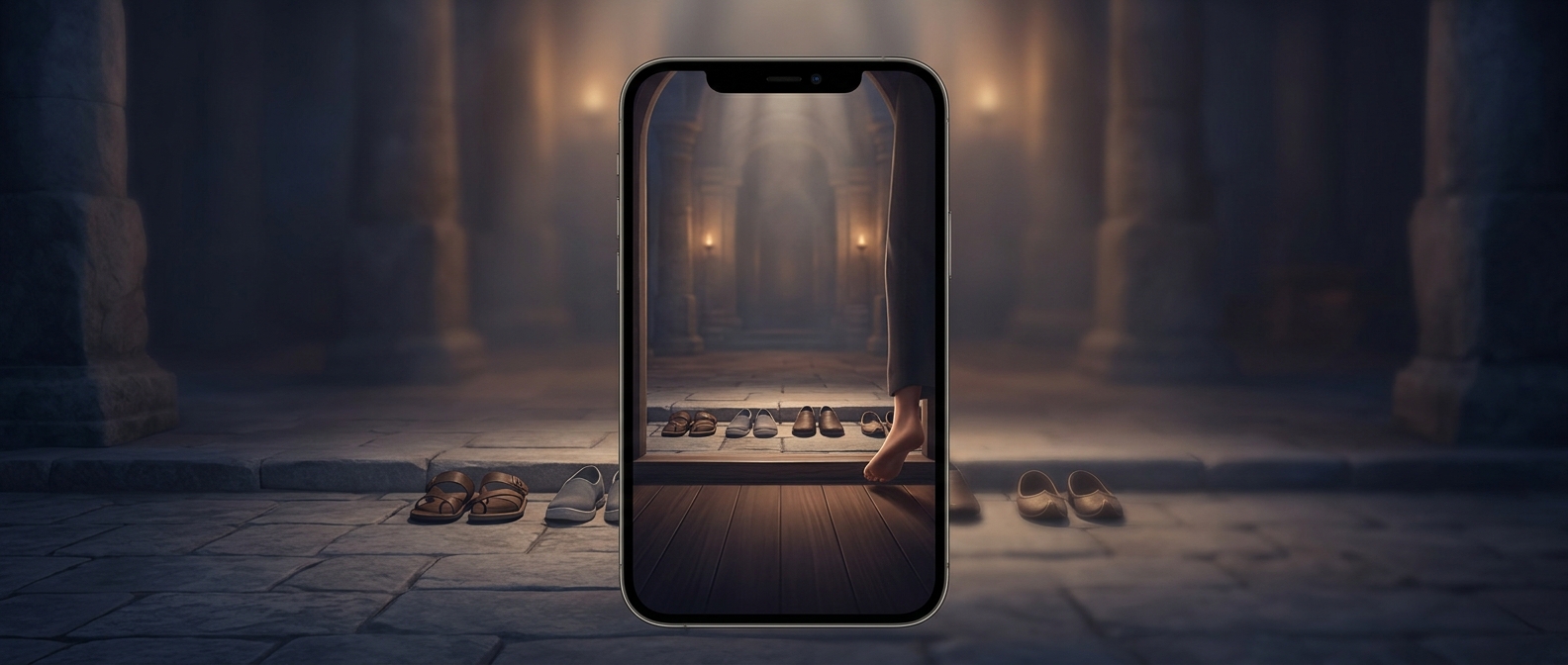
In customs that ask people to remove their shoes indoors, the doorway does more than separate one room from another. It marks a change in how the space is treated: outside footwear stays on the public side, while the interior is kept clean for sitting, eating, prayer, or other activities close to the floor.
That boundary can carry religious meaning as well as practical value. A place regarded as sacred may call for a deliberate gesture of respect before entering. Removing shoes makes that gesture visible and repeatable; it is a way of preparing oneself to enter, not evidence that the floor or footwear has supernatural properties.
A small ritual with a daily purpose
The custom also works because shoes collect whatever people walk through outdoors. Keeping them off indoor floors reduces the dirt tracked inside, especially where people commonly sit or kneel on the floor. The same action can therefore express reverence and meet an ordinary household need.
The details depend on the household or place. A visitor may be expected to leave shoes at the entrance, while the meaning of the practice—and how strictly it is observed—can differ. What looks like a simple pause to take off footwear can thus signal that the rules of the space have changed: the threshold is where everyday movement gives way to care for the interior.