Why a Big Shadow Can Lead to a Small Catch
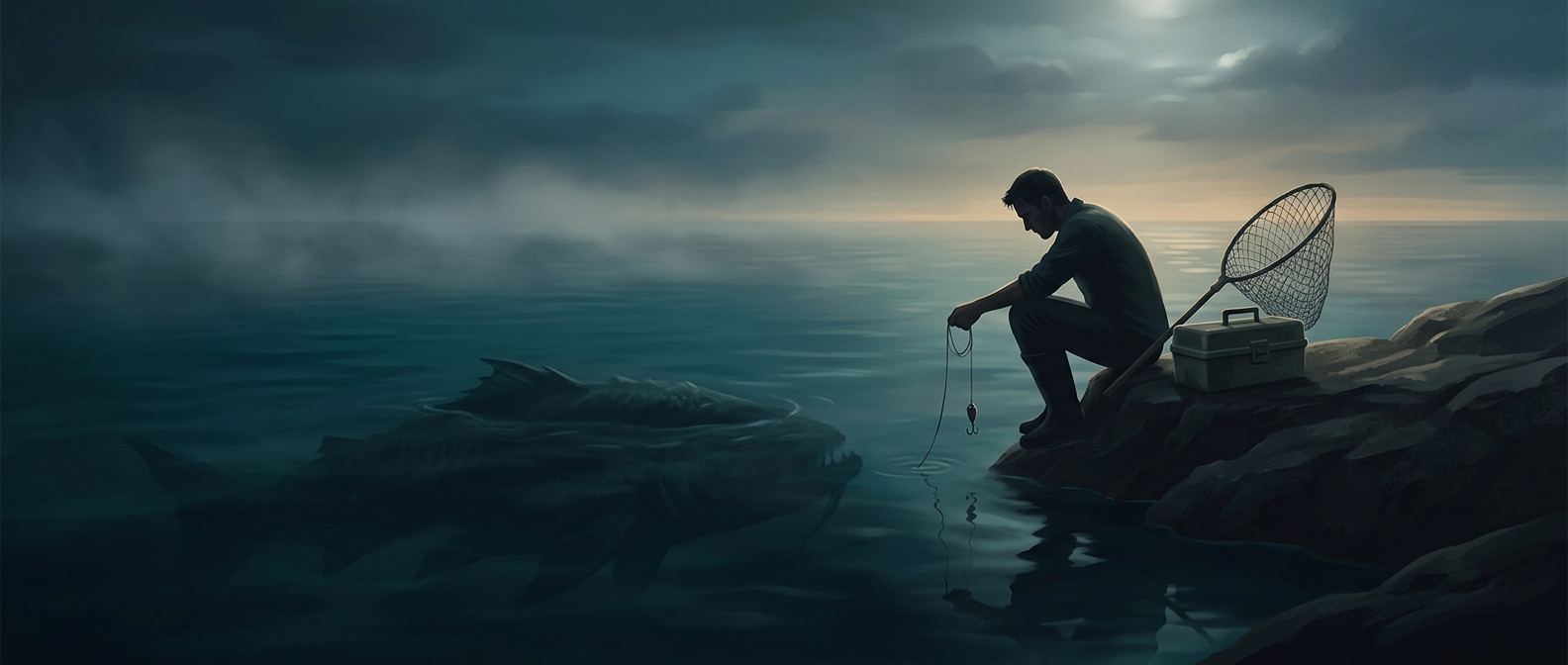
Fishing games often make the moment before a catch do much of the work. A shape moving beneath the surface suggests size, but not identity; until the fish is revealed, players can imagine a rare shark or another prized catch. That gap between expectation and certainty turns an ordinary reel-in into a little suspense sequence.
The reveal then has to make both outcomes legible. A rare catch feels special because it appears less often, while a common fish keeps the basic activity moving and gives players something to collect or sell. If every large shape guaranteed a rare animal, the surprise would vanish—and the prized catch would stop feeling prized.
The Joke Softens the Letdown
When the shadow resolves into a familiar fish, a groan-worthy pun can turn disappointment into a comic beat. The game acknowledges the mismatch between what the player hoped for and what appeared, rather than treating the ordinary catch as a dramatic failure. That small change in tone matters: the player can laugh, keep fishing, and wonder what the next shadow will reveal.
The trick is balance. Too many predictable letdowns make suspense feel pointless; too many rare catches make rarity meaningless. A common fish beneath a grand-looking silhouette gives the game room for both outcomes—and gives the avatar a chance to make the miss part of the fun.