The safe turned a break-in into an exposure risk
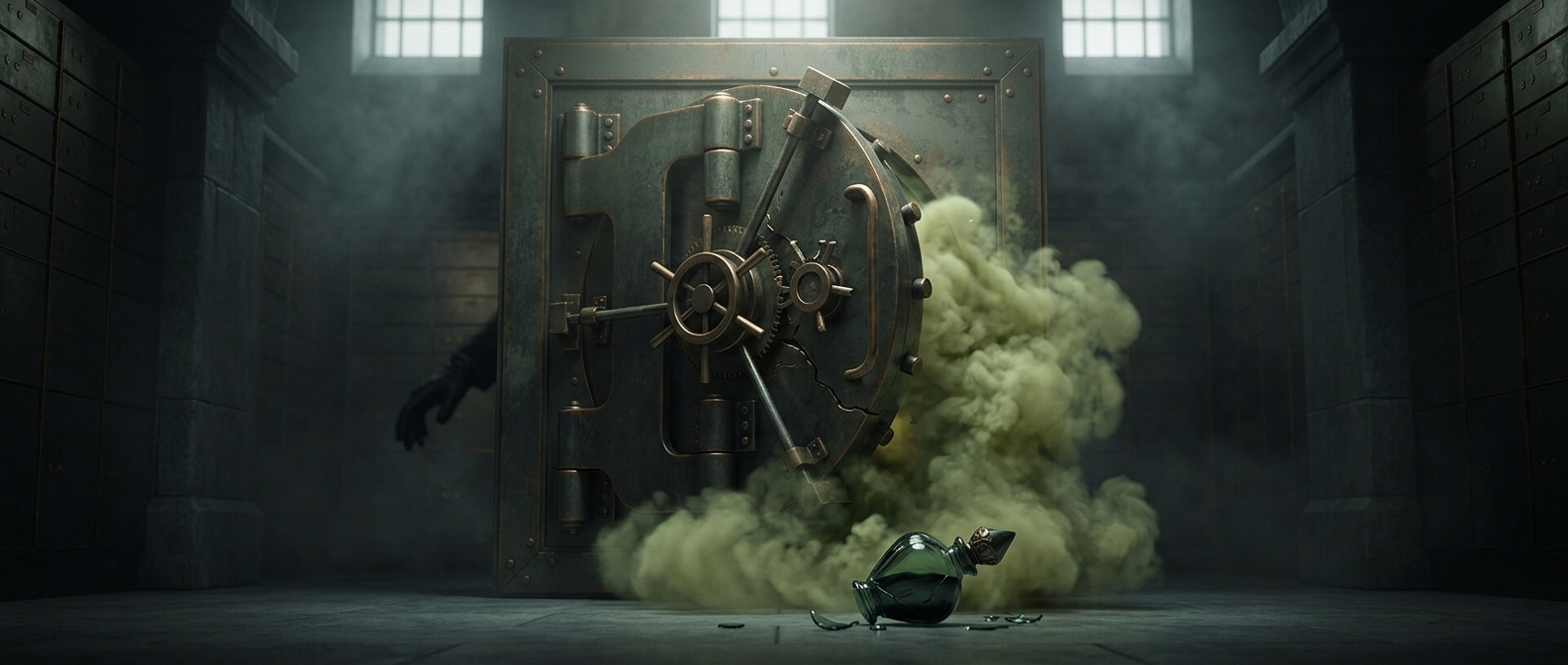
Some older safes concealed a glass vial containing tear gas. A drill or torch used to force entry could break the vial, releasing gas into the surrounding space. Instead of simply opening the safe, the attempt could fill the area with an irritant that made it difficult to see and remain close to the target.
The trap did not need to make the safe impossible to open. Its purpose was to disrupt the person trying: a thief forced to retreat or unable to see clearly would have a harder time continuing the attack or carrying off valuables. The vial made the safe itself part of the security system, turning the tools used to defeat it into a possible trigger.
Security came with a cost
This was a deterrent, not a clean barrier. Gas released inside a building could affect anyone nearby, not just the intruder. That meant the same mechanism intended to protect valuables could create a hazard for occupants or others entering the space.
The design reflects a basic security tradeoff: when a container cannot guarantee that nobody can get in, it can make forced entry slower, riskier, and more disruptive. In these safes, even the act of breaking through the metal could set off the next obstacle.