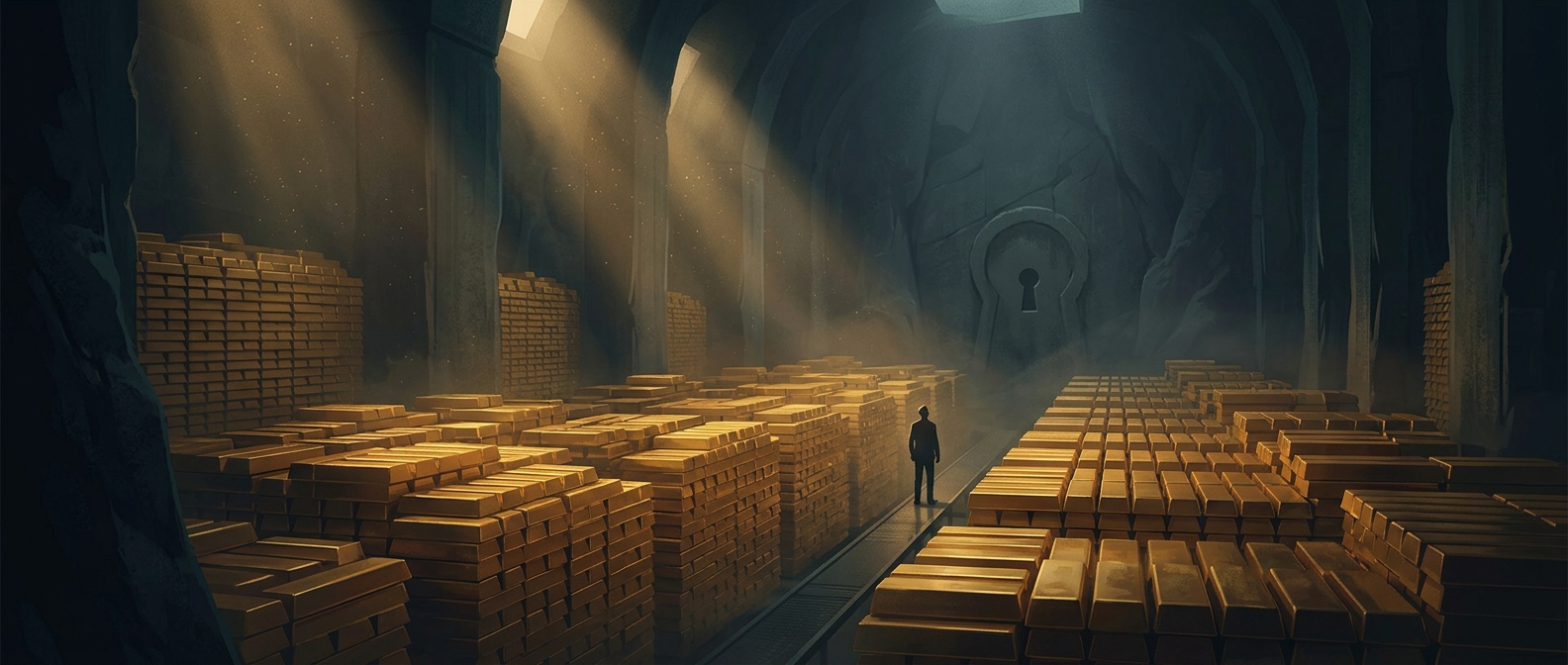
Why America’s gold is spread across vaults
Fort Knox’s fame can make it seem like the country’s gold is concentrated in one fortress. In reality, its roughly 147 million ounces are only part of the Treasury’s holdings; other bullion is kept at sites including West Point and Denver.
That distribution matters because a national stockpile is a physical asset, not a pile of money that can simply be shifted with an electronic transfer. Gold bars must be secured and accounted for wherever they are stored. Keeping bullion at multiple vaults also avoids making a single location the sole point of access to the reserve.
A reserve, not everyday spending money
The Treasury’s gold is different from cash held to pay bills or from gold traded constantly in financial markets. It is a government asset held in physical form. Its presence does not mean that ordinary dollars can be exchanged for a fixed amount of gold; the modern dollar is not redeemable for bullion on demand.
The locations are therefore part of the practical management of a long-held stockpile. Each vault holds a portion of the same national asset, so Fort Knox’s prominence does not tell the whole story. The memorable detail is that even America’s most famous gold vault contains less than half of the country’s Treasury gold.