When a Third Car Seat Changes the Budget
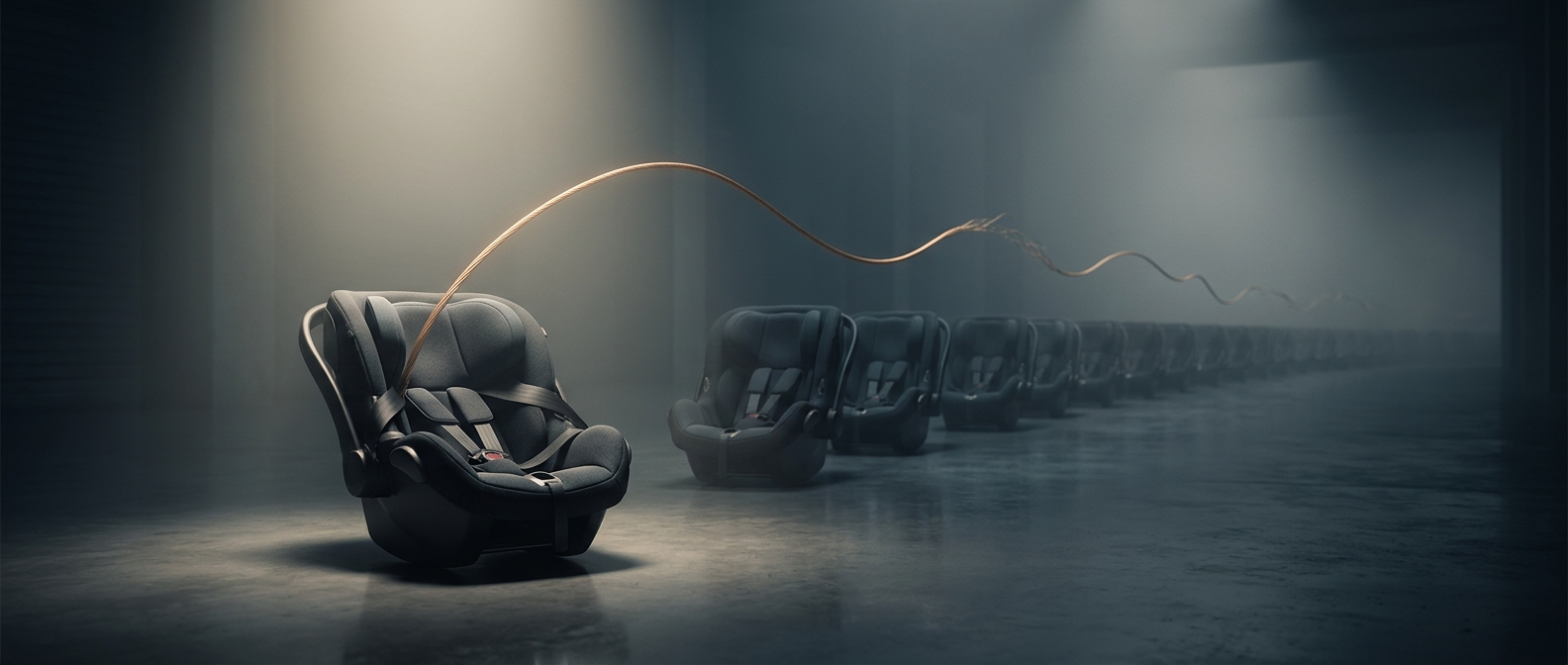
The expense is not always the child seat itself. It is whether the family’s current vehicle can safely accommodate another one. Child seats take up more room than an adult passenger, and their shapes, bases and installation requirements can make three seats difficult to fit across a back row. A vehicle may have enough seat belts on paper yet still lack a workable arrangement for the family’s particular seats.
If no suitable configuration works, parents may consider replacing a car they would otherwise keep. That can bring a larger loan or lease payment, as well as higher costs for fuel, insurance or upkeep. The added expense is tied to a practical constraint: the family needs room for the children it already has, plus one more.
A Small Constraint With a Long Financial Tail
Economists call the extra expense associated with one additional child a marginal cost. In this case, it can arrive before the child is born: parents may have to decide whether to buy a different vehicle as part of planning for another child. The vehicle’s cost is not necessarily caused only by that decision—families may have other reasons to replace a car—but the need to fit another seat can change the calculation or bring the purchase forward.
The effect depends on the family’s vehicle, budget and available options. Some cars can fit three seats across; others may offer a usable third row. For a family with little financial room, however, a vehicle upgrade can loom larger than the price of another seat. It is one example of how the built environment and the equipment needed to care for children can shape a seemingly private decision about family size.