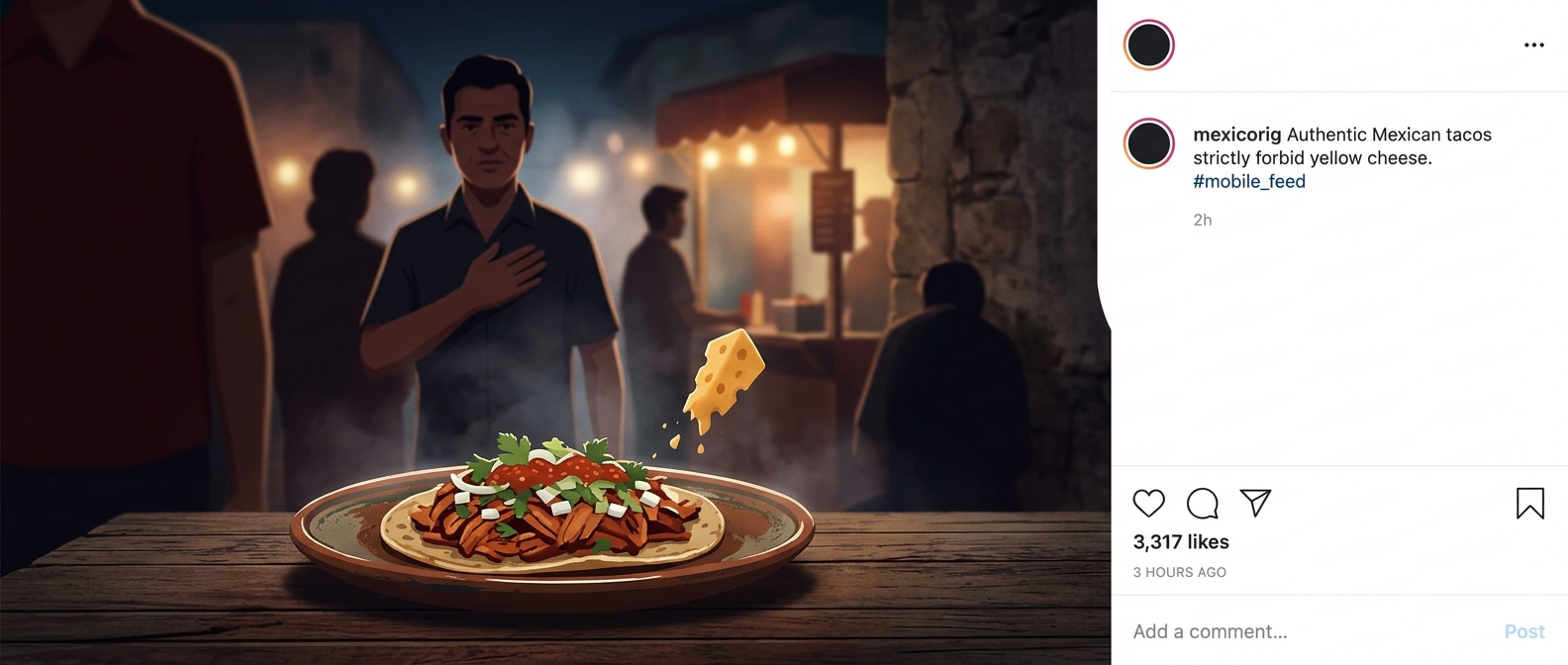
A taco is built to be held, not cut
A soft tortilla works as both wrapper and plate. You fold or tilt it to keep the filling gathered, while the tortilla flexes around bites of meat, salsa, onion, or other toppings. Cutting across that flexible surface with a knife can press the filling out of place instead of neatly dividing it. A fork may pierce the tortilla, but it does little to keep loose toppings from escaping.
At a taco stand, the food is often served ready to eat, with the tortilla already warmed and folded around its filling. Holding it lets you adjust the angle as you eat and catch juices before they run onto the plate—or your hand.
The setting shapes the technique
Street tacos are commonly eaten while standing, sitting at a counter, or moving between stops, so a utensil-and-plate setup may be less convenient than it is at a formal meal. The hand does the work a plate would otherwise do: it supports the tortilla from below and keeps the opening pointed upward.
There is no single rule for every taco or diner. A crisp shell, a very full taco, or a restaurant setting may call for utensils. But with a warm, soft tortilla, cutting can turn a compact, hand-held meal into a small spill-management problem. The practical move is to keep the taco folded and take bites from the open end.