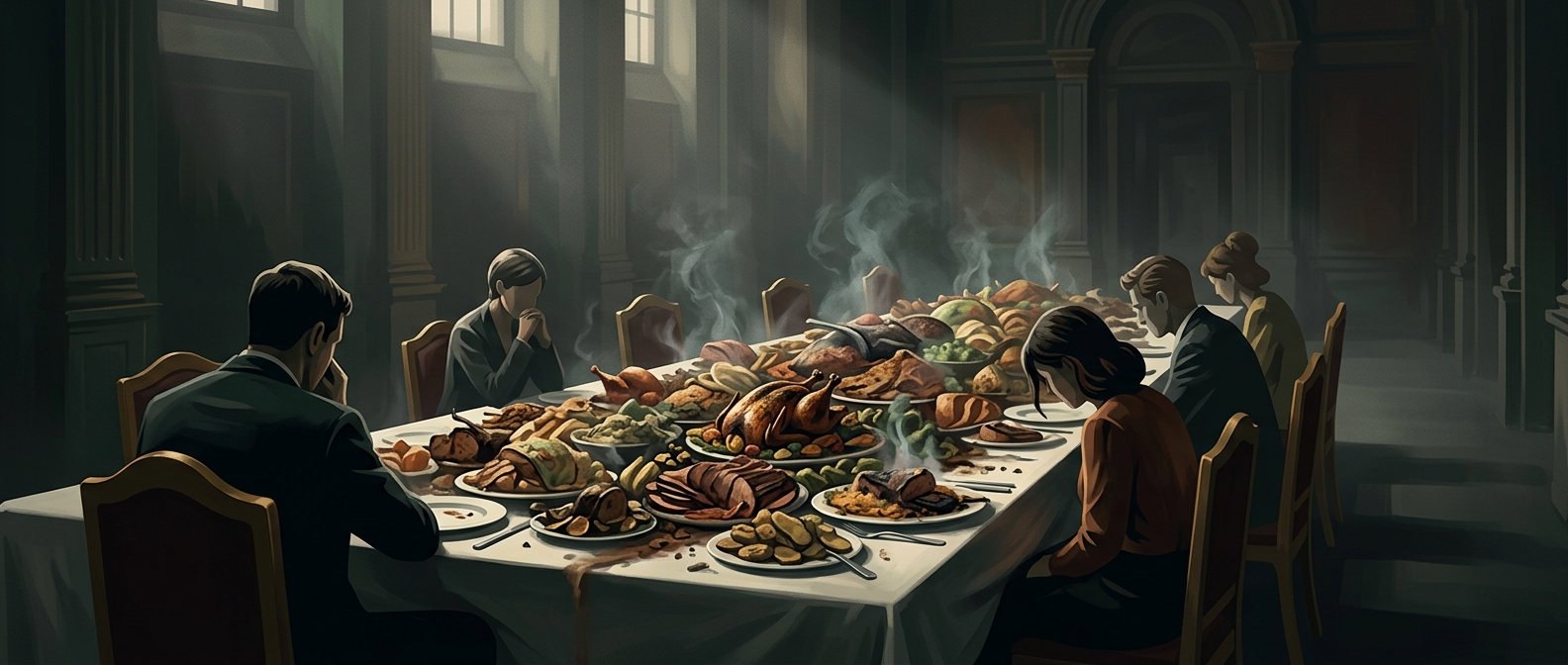
When a Banquet Misses Its Audience
A lavish meal can use up valuable resources without delivering the satisfaction those resources were meant to create. Ingredients, kitchen time, fuel, and labor all had other possible uses. If guests leave the food uneaten, the effort has produced little benefit beyond the parts of the meal they actually enjoyed.
That gap is the economic idea behind deadweight loss: value that could have been created is lost, so no one receives it. The food’s cost is not itself the whole loss. The deeper problem is that resources were committed to a meal whose extra portions brought guests less pleasure than those resources might have produced elsewhere.
How the Waste Happens
The caterer has to decide what and how much to prepare before knowing exactly what each guest will want. A generous spread can be a sensible hedge against running short, especially when an empty serving dish would disappoint everyone. But when the menu, portions, or cooking method do not match guests’ preferences, that insurance becomes overproduction.
The loss is not simply that the food remains on the plate. It is the missed alternative: ingredients might have gone toward dishes guests preferred, and kitchen capacity might have served another event or a different need. Once the banquet is cooked and served, those resources cannot be recovered by wishing the meal had been planned differently.
Why “Pure” Is a Useful Warning
In economics, “pure” deadweight loss usually describes a net loss after counting gains and costs across the people affected. The banquet makes the idea vivid, but not every leftover automatically qualifies: guests may still have enjoyed the meal, and some surplus may be unavoidable when demand is uncertain. The clearest waste occurs when the extra food costs more in resources than the enjoyment it adds.
That makes the practical question less “How impressive was the spread?” and more “Did the next dish create enough pleasure to justify its ingredients and labor?” A smaller menu that guests finish can deliver more value than a grander one whose best feature is what remains untouched.