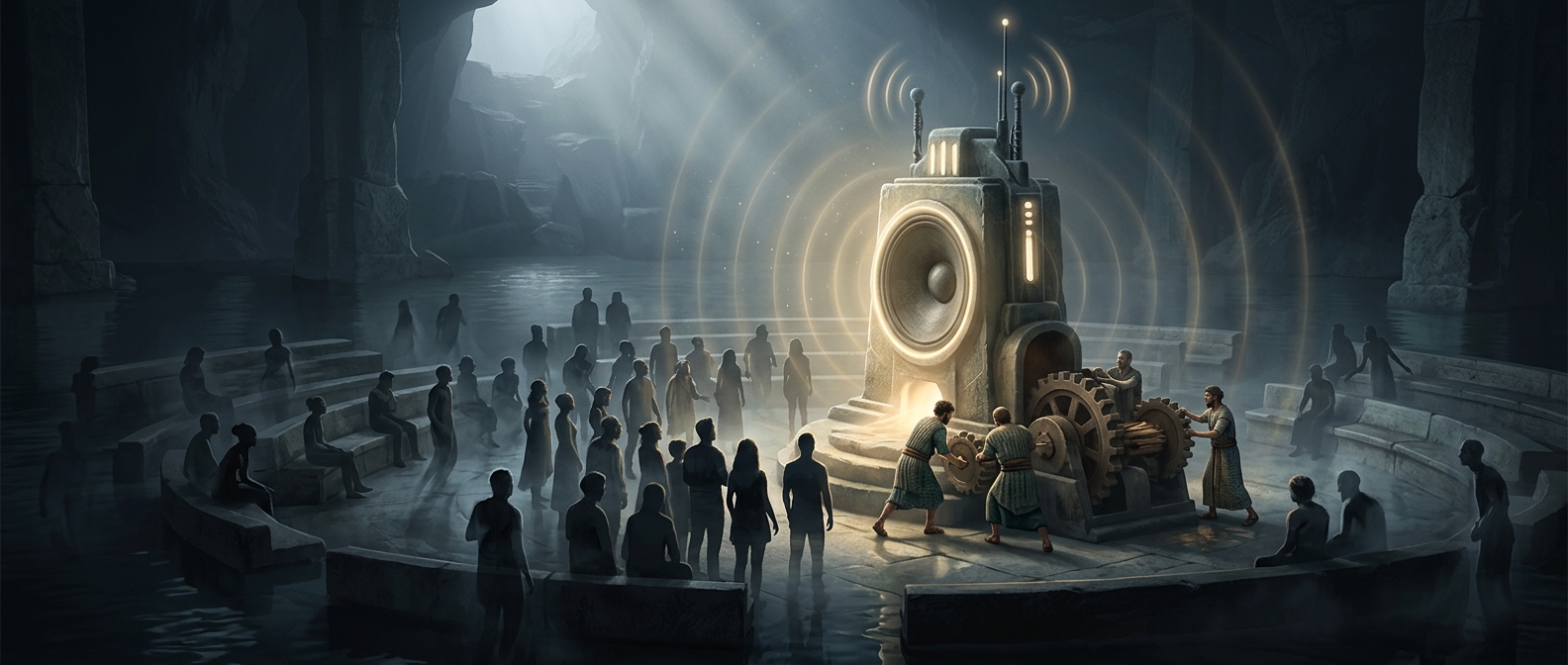
Why public TV can’t charge every viewer
A public TV signal is difficult to sell one viewer at a time. Once a station broadcasts a program, people in its coverage area can usually watch whether or not they donated. The benefit is hard to restrict to paying customers—the feature economists call “nonexcludability.” A viewer who gives nothing can still enjoy the program, so contributing is voluntary rather than a condition of access.
That creates a free-rider problem. Each person may reason that their own small donation is unnecessary because the program will remain available if others pay. But if too many people make that choice, the station has less money for producing, acquiring, and transmitting programs. The audience can therefore be much larger than the group whose contributions help cover the bill.
The bargain behind the pledge drive
Fundraising appeals try to close that gap by asking viewers to act on a shared interest: if enough people chip in, everyone can keep receiving the service. Membership gifts and pledge drives make the connection visible, but they do not turn broadcasting into a pay-per-view system. Stations may also rely on public funds, business underwriting, and other support, so viewer donations are part of a broader funding mix.
The arrangement’s tradeoff is straightforward: open access reaches people who never pay, while the station must persuade a smaller group that keeping the service available is worth supporting. A viewer can watch without donating; the station’s challenge is making sure enough others do.