Why the ladder’s triangle matters
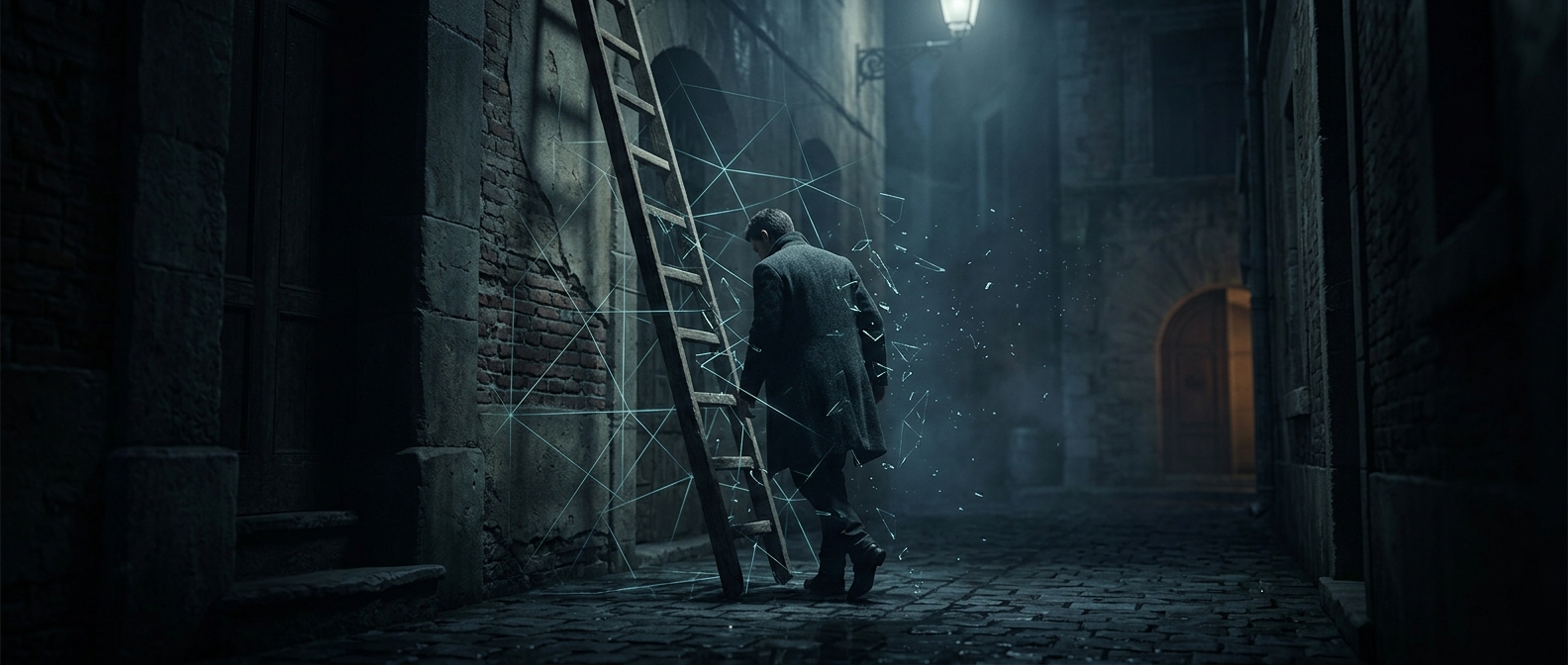
A ladder leaning against a wall outlines a triangle: the wall, the ground, and the ladder form its three sides. In this superstition, that shape is treated not just as geometry but as a protective boundary. Walking through the open space beneath the ladder symbolically breaks the shape—and, with it, the protection it represents.
The belief works through a familiar kind of folk logic: a shape can stand for order or safety, and crossing into it can seem like disturbing that order. The triangle does not need to be thought of as a literal force for the warning to make sense within the tradition. Its meaning comes from the role assigned to it.
A warning with a practical edge
There is also an ordinary reason people might avoid passing beneath a ladder: someone above could drop a tool, or the ladder could shift. That everyday hazard may make the superstition easier to remember and pass along, though it does not establish how the belief began.
So the taboo links two kinds of caution. One is physical—keep clear of a precarious work area. The other is symbolic—do not cross a boundary understood to protect you. In either case, the space under the ladder is treated as a place to go around, not through.