How Treated Paper Became a Hard Shell
Vulcanized fiberboard began as paper, but not as a stack of ordinary sheets glued together. Paper was treated with chemicals, built up in layers, and pressed into a dense sheet. The process bonded the fibers into a tough material that could be cut and shaped, much like a rigid board.
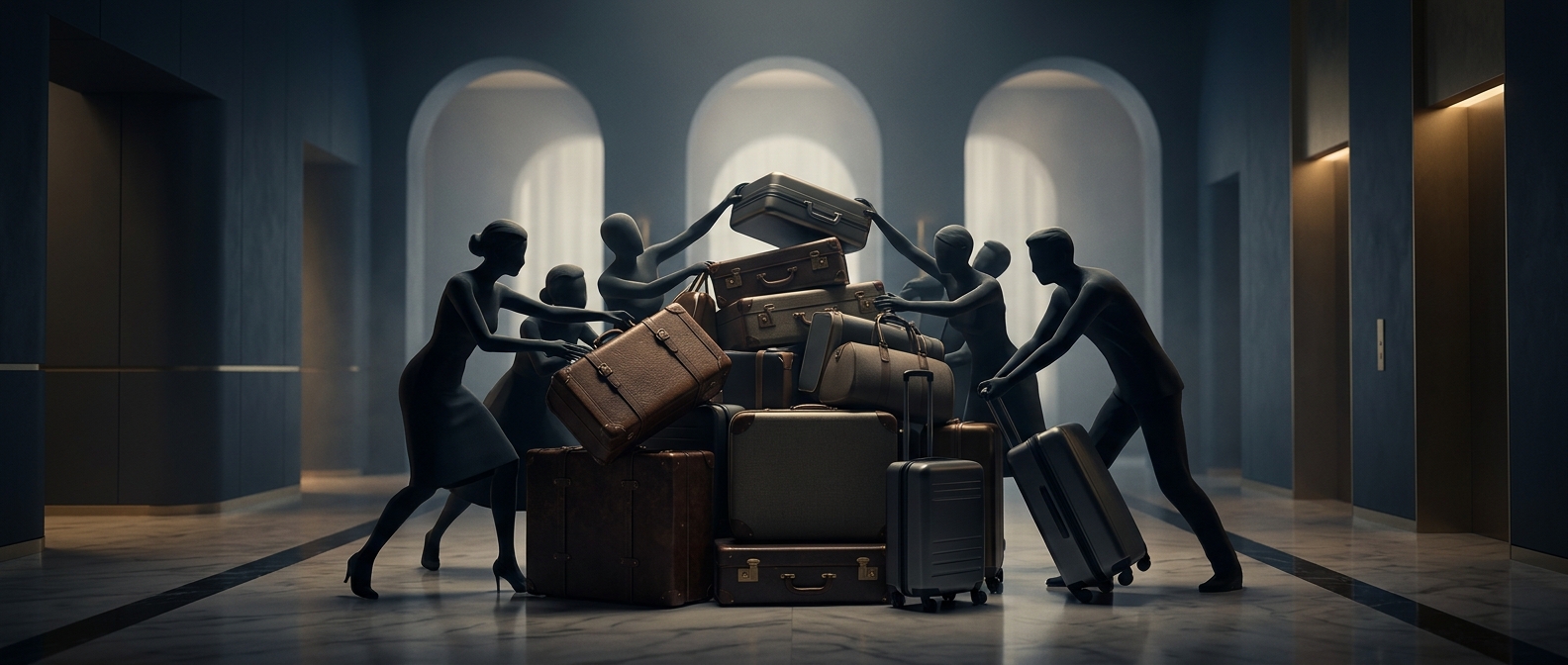
That transformation made a practical difference for luggage. A cloth bag could sag under the weight of its contents; a formed fiberboard case held its shape. Its broad panels helped shield clothes from bumps and pressure, while the case stayed relatively light compared with many heavier shell materials.
A Suitcase Made Like an Envelope
The material suited a simple design: flat panels joined into a box, with a hinged lid and metal fittings at the corners and edges. In that sense, the case worked like a sturdy envelope—its outer walls protected the packed clothes, but the shell itself was made from layered paper rather than fabric or solid wood.
The construction also shaped its limits. Fiberboard could be durable in everyday handling, yet paper-based material was vulnerable to prolonged dampness and damage to its surface. The finish and hardware helped protect the case, but it was not an all-weather shell.
That tradeoff explains the appeal of these vintage suitcases: layers of paper could be turned into a firm, useful travel case without making every piece of luggage a heavy wooden box.