How a mantle mineral reaches the surface
Peridot is the gem-quality form of olivine, a green mineral common in Earth’s upper mantle. It can crystallize far below the surface, where heat and pressure keep surrounding rock solid or partly molten.
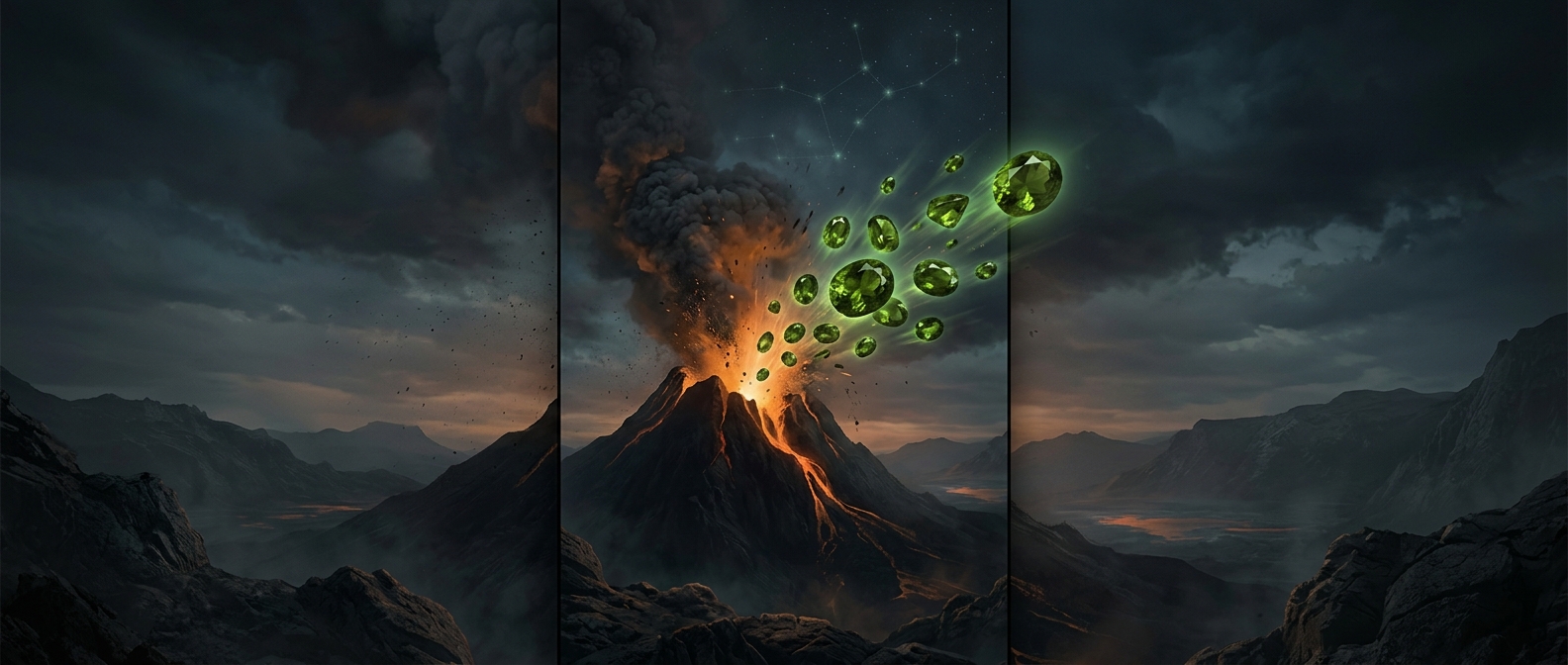
When magma rises through the crust, it can break off and carry pieces of mantle rock with it. These fragments are called xenoliths—literally, “foreign rocks” embedded in another rock. A fast-rising eruption may bring olivine grains to the surface before they have time to melt or react completely with the surrounding magma.
The eruption transports; it does not simply manufacture
The image of a volcano hurling finished gemstones out of the ground is vivid, but the journey is more complicated. Volcanic activity can expose or transport olivine that formed at depth; only some crystals have the color, clarity, and size needed to be cut as gems. Much olivine arrives locked inside dark volcanic rock or mantle fragments, rather than as loose, polished stones.
That makes a peridot’s green sparkle a small clue to a much larger geological trip: a mineral formed deep underground can be carried upward by magma and later uncovered in erupted rock. The volcano is the elevator, not the gem cutter.