An overnight investigation can become a controlled-access shoot
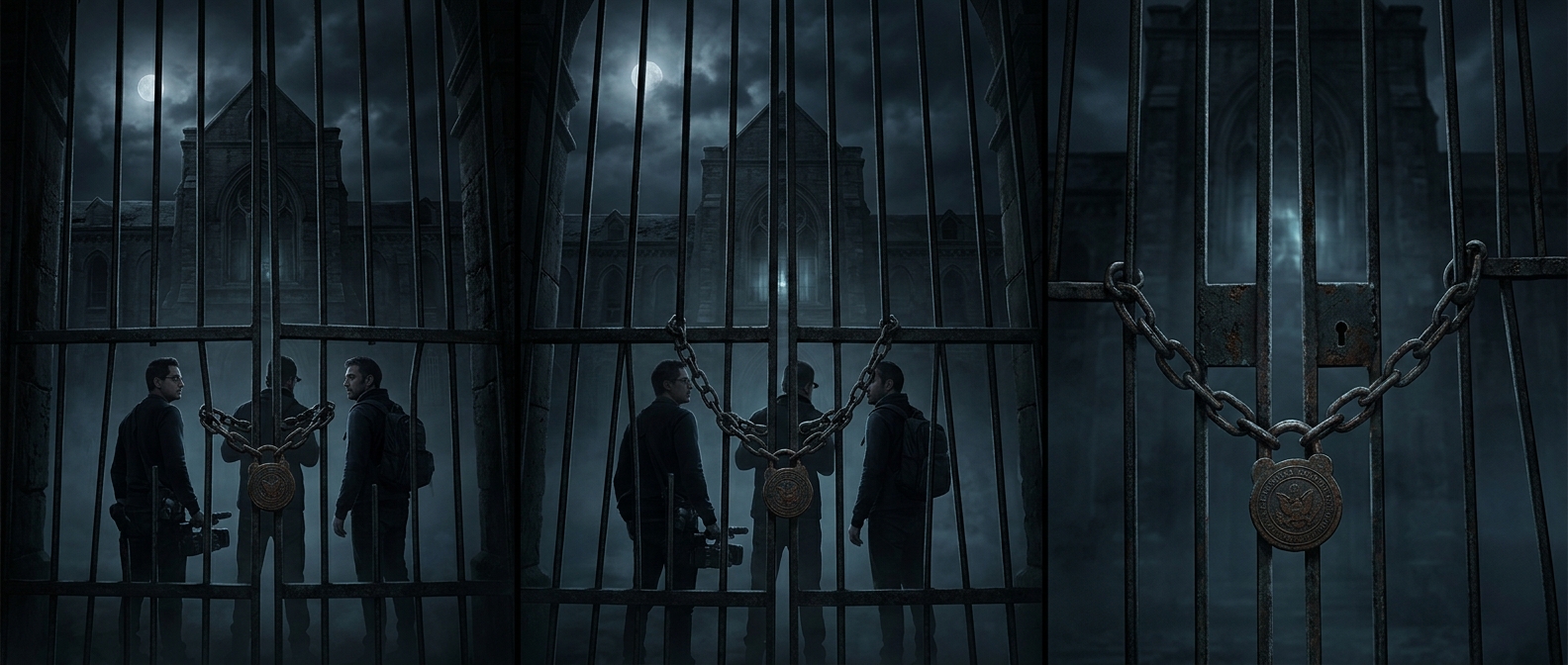
When a property owner agrees to let a television crew investigate after hours, the building still has to be managed as a real site—not just a spooky backdrop. Securing exterior doors can help keep outsiders from entering and limit access to a property that may be empty or unfamiliar. In some cases, that means the crew’s exit is controlled from outside until the owner or another authorized person returns.
That arrangement changes the practical shape of filming. A crew cannot treat the building like a studio where people can step out whenever they want; the shoot depends on an agreed plan for getting in and out. The locked door is therefore part of the location’s security and access rules, not evidence of anything paranormal.
The setting creates a production tradeoff
Keeping investigators inside through the night can preserve the uninterrupted conditions the program wants to film, while restricting access helps protect the site. But the same restriction also makes coordination important: the people on site and the person responsible for opening the property have to be on the same page about when the crew can leave.
The detail is a reminder that an “overnight investigation” is also a production working inside someone else’s building. The atmosphere may be eerie on camera; the locked entrance reflects the ordinary logistics of securing a location after hours.