Each car keeps its own beat
A turn signal is controlled by the car it belongs to. Older vehicles often use a thermal flasher: electricity heats a small metal strip until it bends and breaks the circuit; as it cools, the strip straightens and switches the lights back on. Newer cars typically use electronic controls that set the flashing rhythm with a timer.
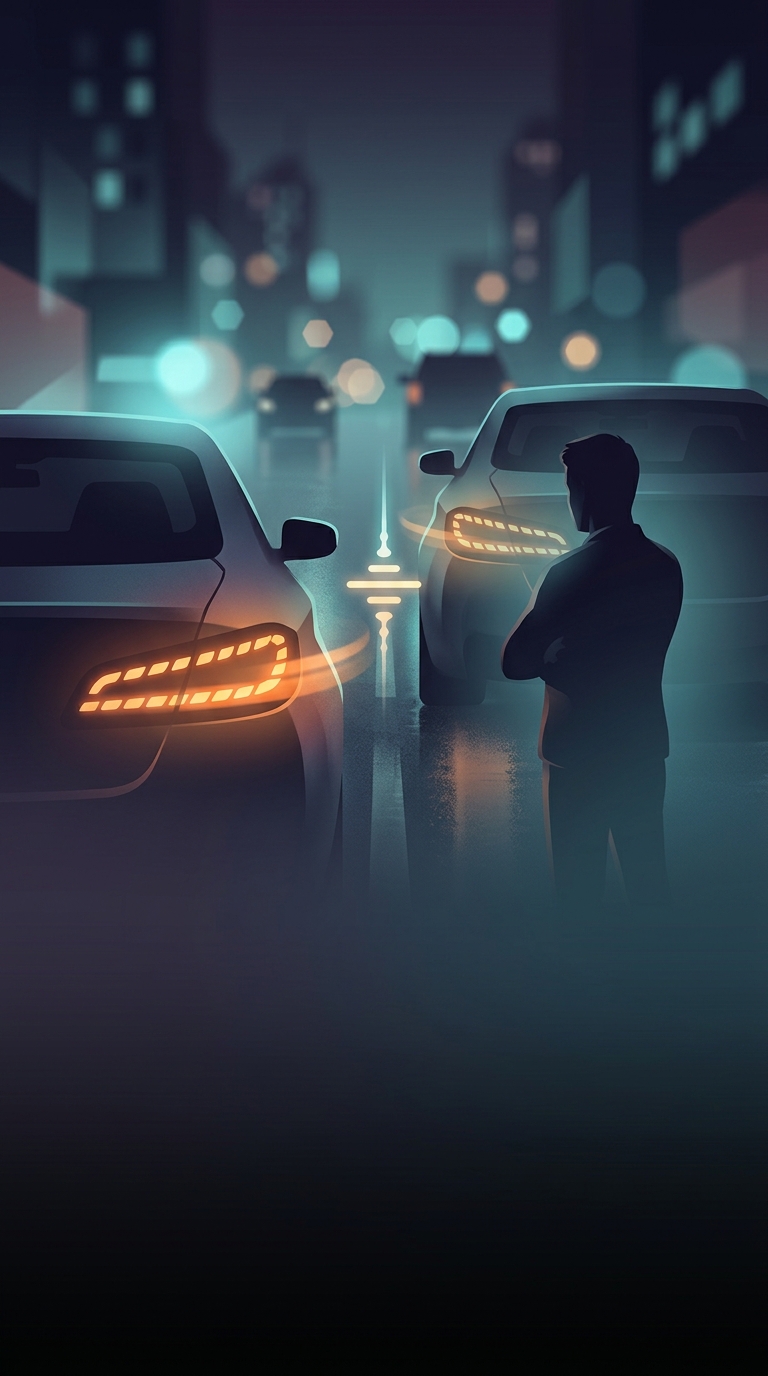
Neither system checks the timing of nearby cars. Even when two signals start together, tiny differences in their cycles—caused by component tolerances, electrical load, or the design of the control unit—make one flash slightly sooner than the other. That small mismatch accumulates: after several flashes, the lights can look noticeably out of step.
The rhythm can also reveal a fault
On vehicles with older thermal flashers, the bulbs’ electrical load helps determine how quickly the metal strip heats and cools. If a turn-signal bulb burns out, the reduced load often makes the remaining signal flash unusually fast. Many newer cars detect a failed lamp electronically and produce a similar warning through the flashing pattern or a dashboard alert.
So the shifting rhythm between two cars is usually just the result of independent timers, not a shared signal system drifting out of alignment. But a sudden change in your own blinker’s pace can be a practical clue to check whether one of your signal lights has stopped working.