The cue behind the blue screens
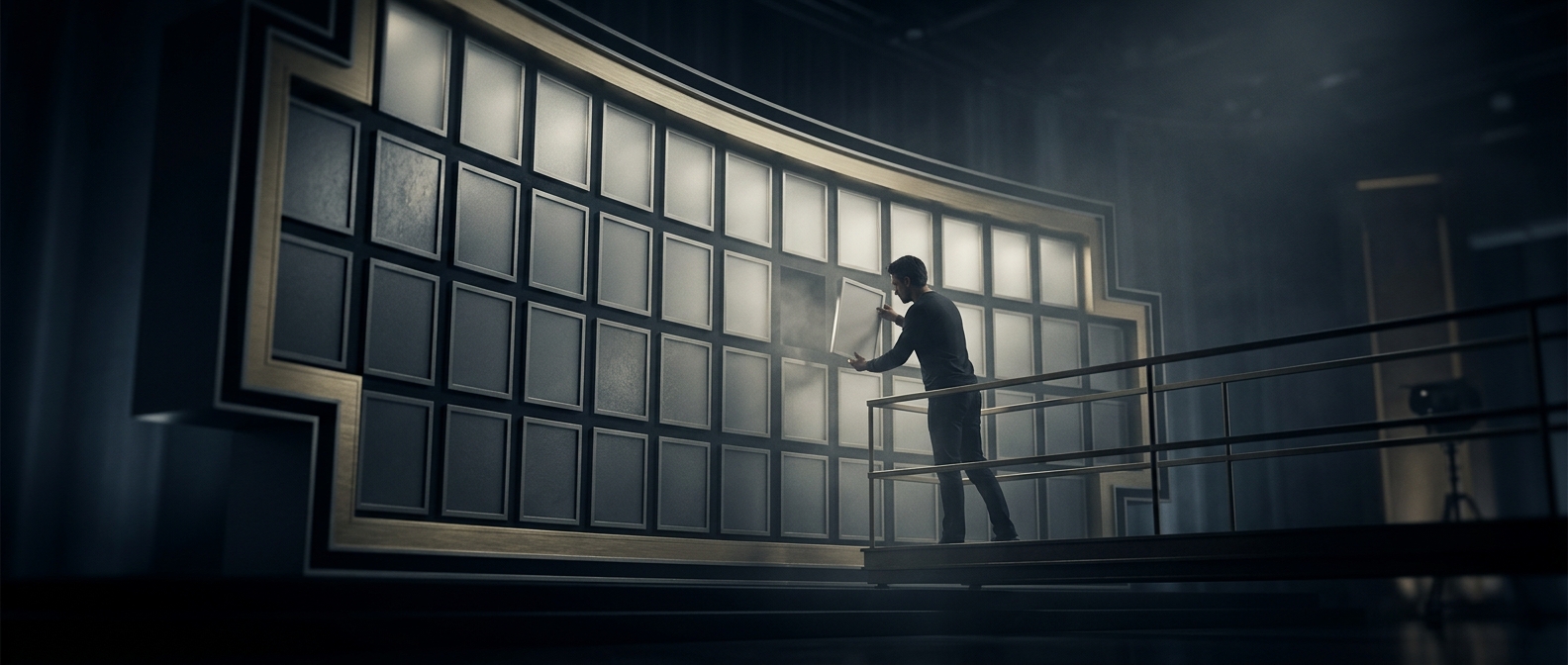
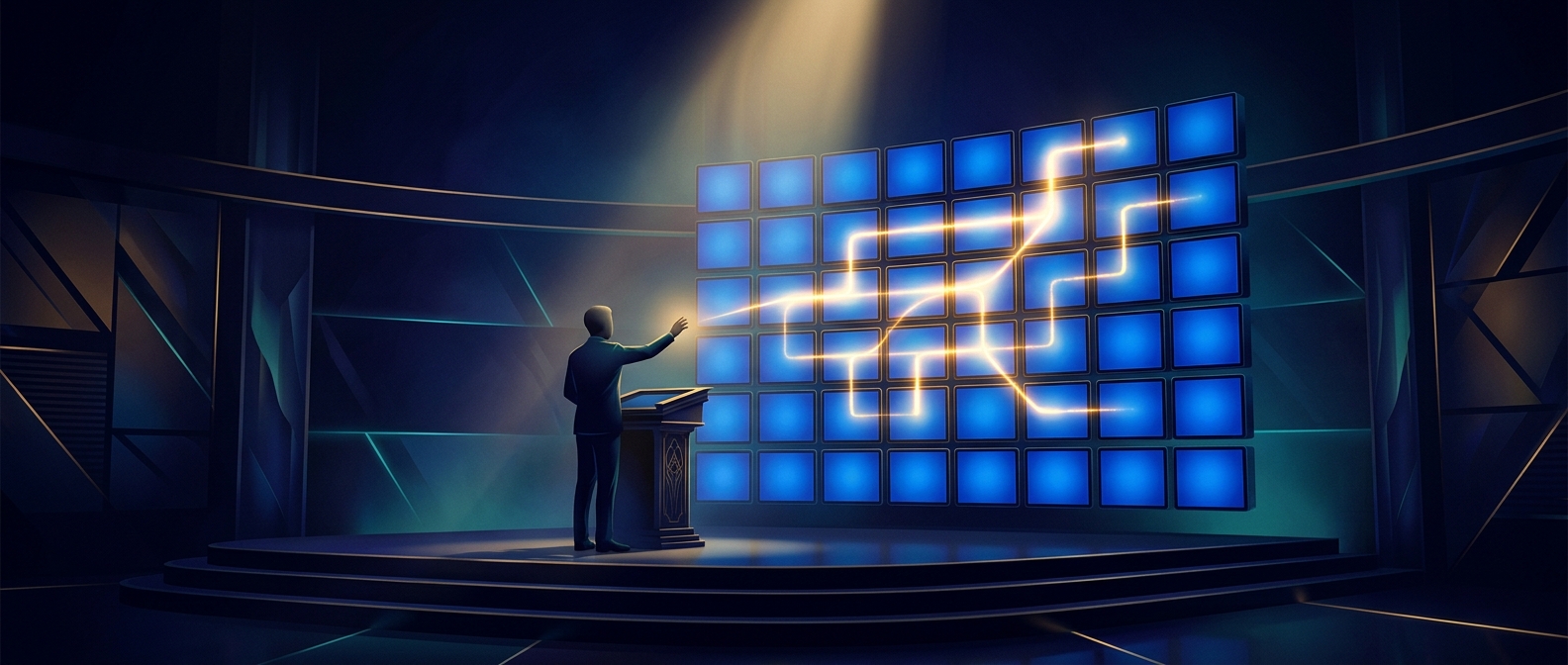
A Jeopardy! clue is not a race to press the buzzer while the host is still talking. The contestants must wait until the clue has been read, and the signaling system controls when their buzzers can register. The blue screens conceal tracking lights that tell the players when the host has finished speaking—and, therefore, when they can try to buzz in.
That small cue helps solve a tricky problem: contestants need to react quickly, but they also need a clear, shared signal that the reading is over. Without one, a player might have to guess from the host’s final syllable, creating uncertainty about whether a buzz came too early. The light makes the transition visible from the contestants’ positions on set.
A split-second rule made visible
The buzzer system and the lights work together to turn a spoken clue into a fair contest of timing. While the host is reading, the players know to hold off; once the cue appears, they can compete to signal first. The lights do not reveal an answer or give one contestant an advantage. They mark the moment when the contest begins.
The screens are blank to viewers, but they cover a practical piece of stage equipment. On television, that hidden cue helps make a rapid, tightly timed exchange possible without turning the host’s reading into a guessing game for the players.