When private devotion became a public disturbance
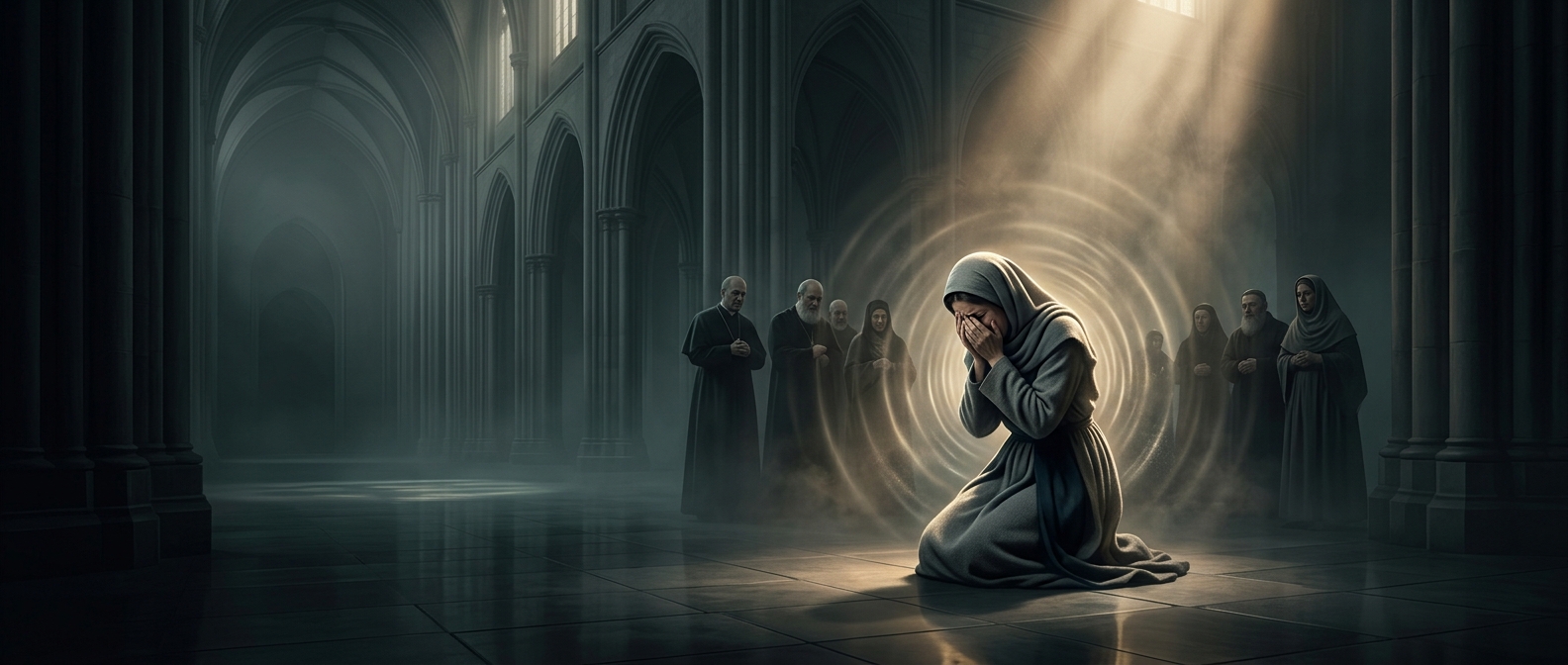
Margery Kempe’s weeping was more than a quiet expression of feeling. Accounts of her spiritual life describe sobbing and cries so conspicuous during worship that they interrupted the service and drew attention from the congregation. In a church where people had gathered for shared prayer and ritual, one person’s intense display could become a problem of order as well as a matter of faith.
Kempe understood her tears as a religious gift: a bodily response to the suffering of Christ and the nearness of God. That interpretation gave the episodes meaning for her, but it did not oblige local clergy to accept them. Priests responsible for services could regard the outbursts as disruptive, and their authority over church spaces gave them a direct way to respond: they could refuse her entry.
A woman claiming spiritual authority
The conflict also involved who could speak with religious authority. Kempe was a laywoman, not a priest, and she described receiving direct messages from Christ. Her experiences therefore reached beyond private devotion: they implied that she could understand and communicate divine instruction without holding a clerical office. Her tears made that claim visible—and difficult for others to ignore.
Kempe later dictated an account of her life and spiritual experiences, now known as The Book of Margery Kempe. It preserves a picture of devotion that was intensely physical and public, rather than restrained and invisible. The church bans were not simply a judgment on emotion; they show what could happen when a lay believer’s way of worship collided with clergy’s control of communal religious life. Her tears made an inward conviction impossible to keep private.