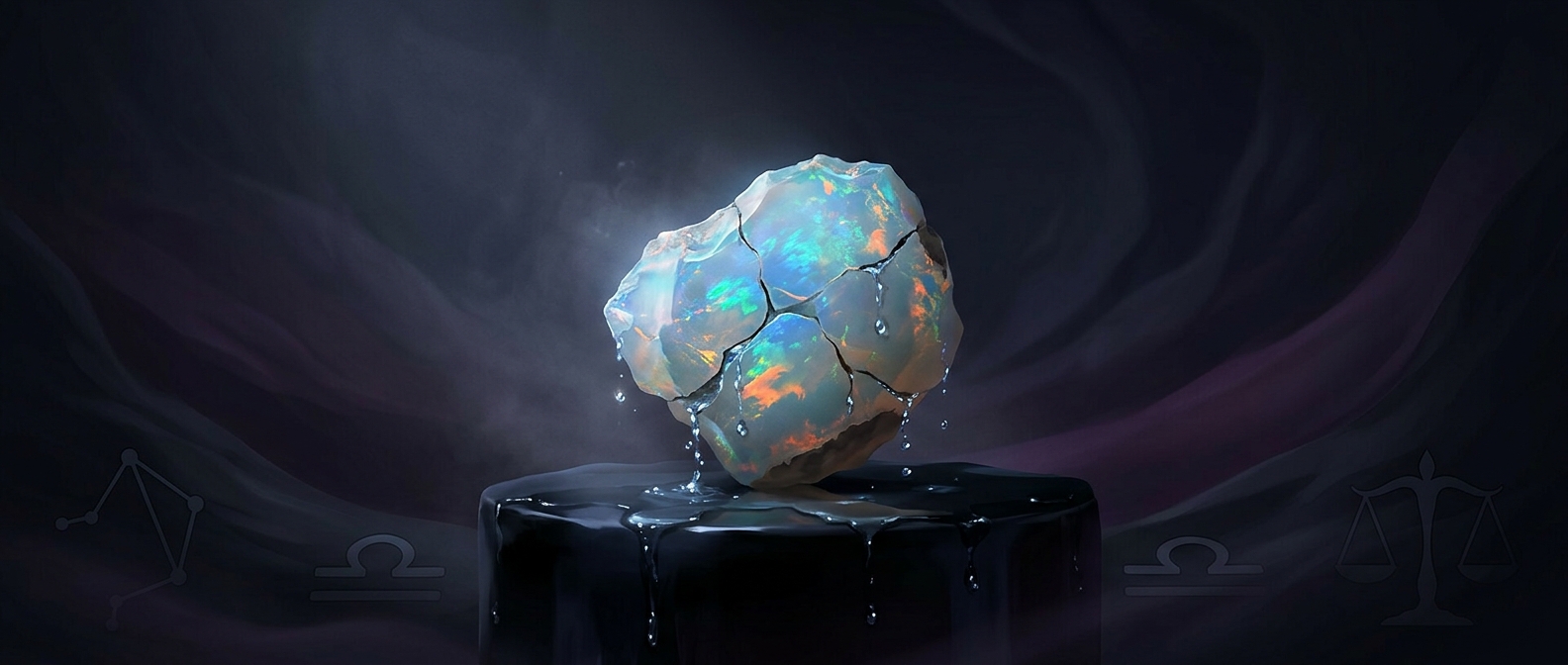
Why Dry Air Can Stress an Opal
An opal is made mostly of silica, the same basic material found in quartz, but its structure is less compact. Tiny silica particles are packed together with small gaps that can hold water. In some opals, water makes up a substantial share of the stone’s weight—sometimes as much as about 20 percent.
When the surrounding air is very dry, moisture can gradually leave the stone, especially near its surface. Losing water can change the dimensions of the opal’s silica structure. If the outer region dries and contracts faster than the interior, the difference creates stress; existing flaws may then widen into cracks.
Why Some Opals Are More Vulnerable
Opals vary in how much water they contain and how it is held within their structure, so they do not all respond alike. A stone’s history and condition also matter: sudden changes in humidity or temperature can be harder on it than steady conditions, and a pre-existing crack gives stress an easy path to follow.
That is why careful storage matters for valuable opals. Avoiding very dry environments and abrupt changes helps limit moisture loss—and can keep a tiny internal weakness from becoming a visible split.