A hard shell, a fragile kernel
A macadamia is a processing puzzle: the shell must be broken decisively, but the edible kernel inside should stay whole. A household nutcracker applies force through two jaws, often squeezing wherever the nut happens to sit. That can slip, crack the shell unevenly, or crush the kernel before the shell opens cleanly.
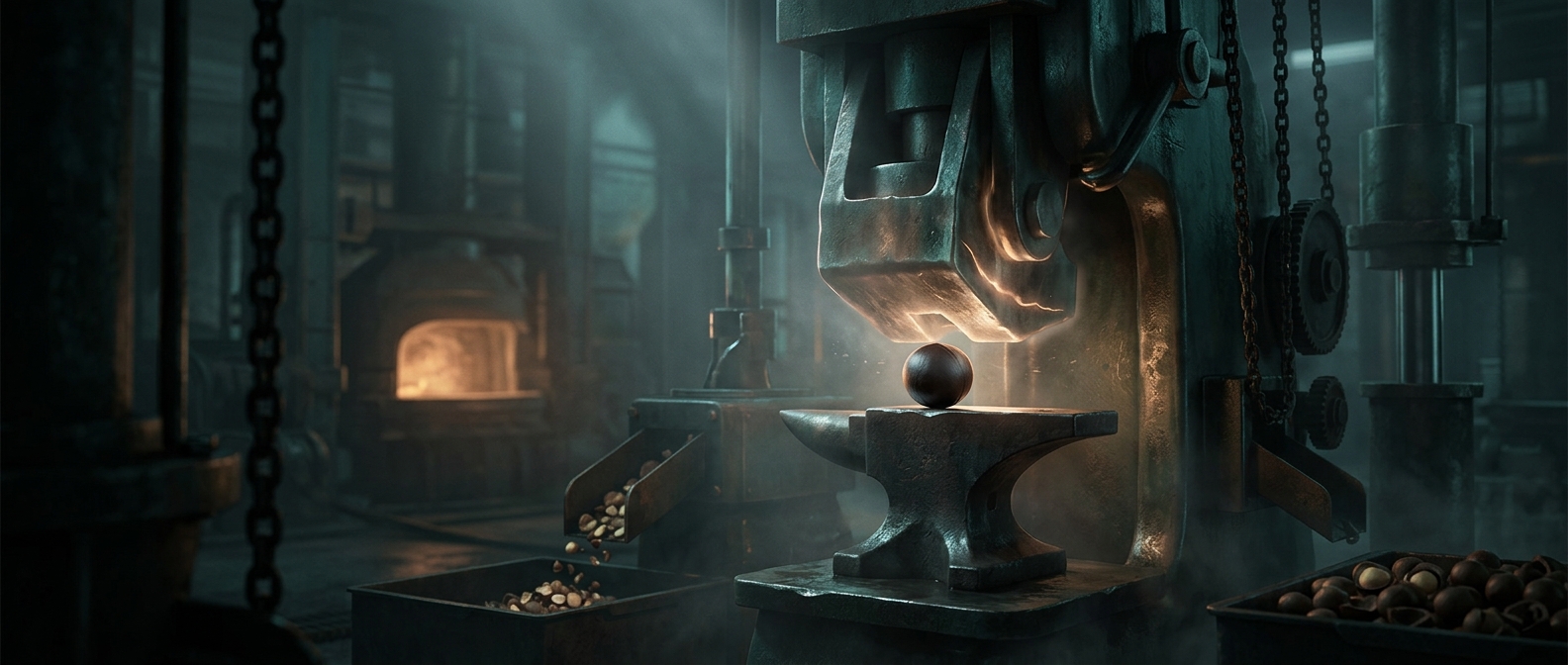
Commercial processing uses equipment designed to deliver a more controlled, repeatable break. The goal is not simply maximum force; it is force applied in a way that opens the shell while limiting damage to what is inside. After cracking, kernels still have to be separated from shell pieces and sorted by condition and size.
Why the crack affects the price
Every damaged kernel is worth less as a whole nut than an intact one, and irregular pieces take additional handling to sort. The machinery and processing steps needed to manage a tough shell therefore add cost before the nuts are packaged. The shell is not the only reason macadamias command a premium, but it makes turning a harvested nut into a saleable kernel more demanding.
That tradeoff explains why “just crack it” is not a trivial step: the processor must break one of the nut’s toughest parts without sacrificing the delicate food it protects.