Aurobindo’s vision of a transformed body
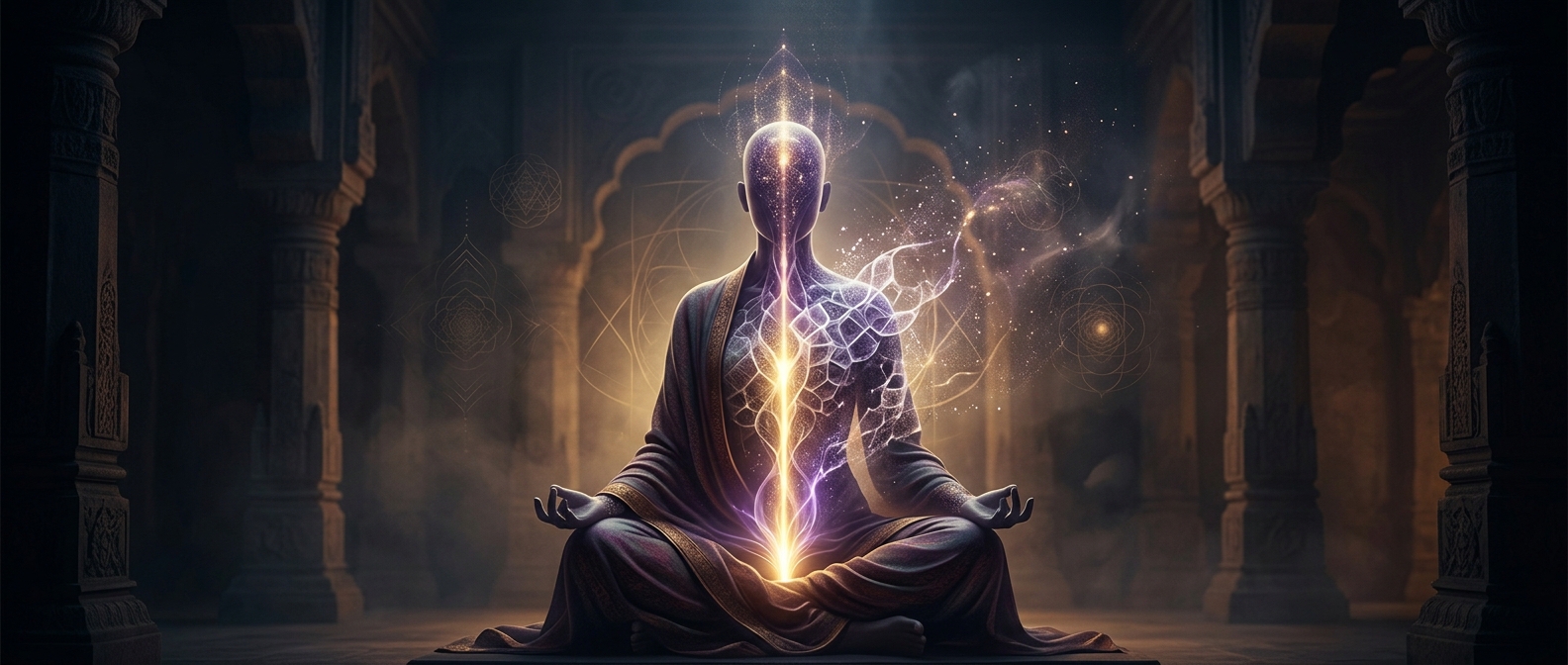
Sri Aurobindo’s Integral Yoga was meant to change more than a person’s thoughts or inner life. He imagined a further stage of human evolution in which a higher form of consciousness—what he called the Supramental—could enter ordinary human existence and reshape it from within.
In his spiritual framework, consciousness was not separate from physical matter. If it could transform the mind and life, he reasoned, it might eventually transform the body too. “Bringing down” the Supramental meant making that consciousness active in human nature, rather than reaching an elevated state only in meditation. The body’s cells, in this account, would gradually become receptive to a different way of being.
Spiritual evolution, not a genetic procedure
Aurobindo’s language of physical transformation can sound like a claim about DNA, but his proposed mechanism was spiritual, not a biological technique. Integral Yoga did not describe a laboratory process for editing genes or specify a measurable change to the genome. Its aim was a profound transformation of human nature through sustained inner practice and what practitioners understood as divine consciousness.
That distinction matters: the prospect of overcoming bodily limits belonged to Aurobindo’s metaphysical vision, not to an established finding in biology. He saw the body not merely as an obstacle to spiritual life, but as part of what spiritual evolution might ultimately change. In that view, liberation would not mean escaping the physical world; it would mean making even the body a vehicle for a higher consciousness.