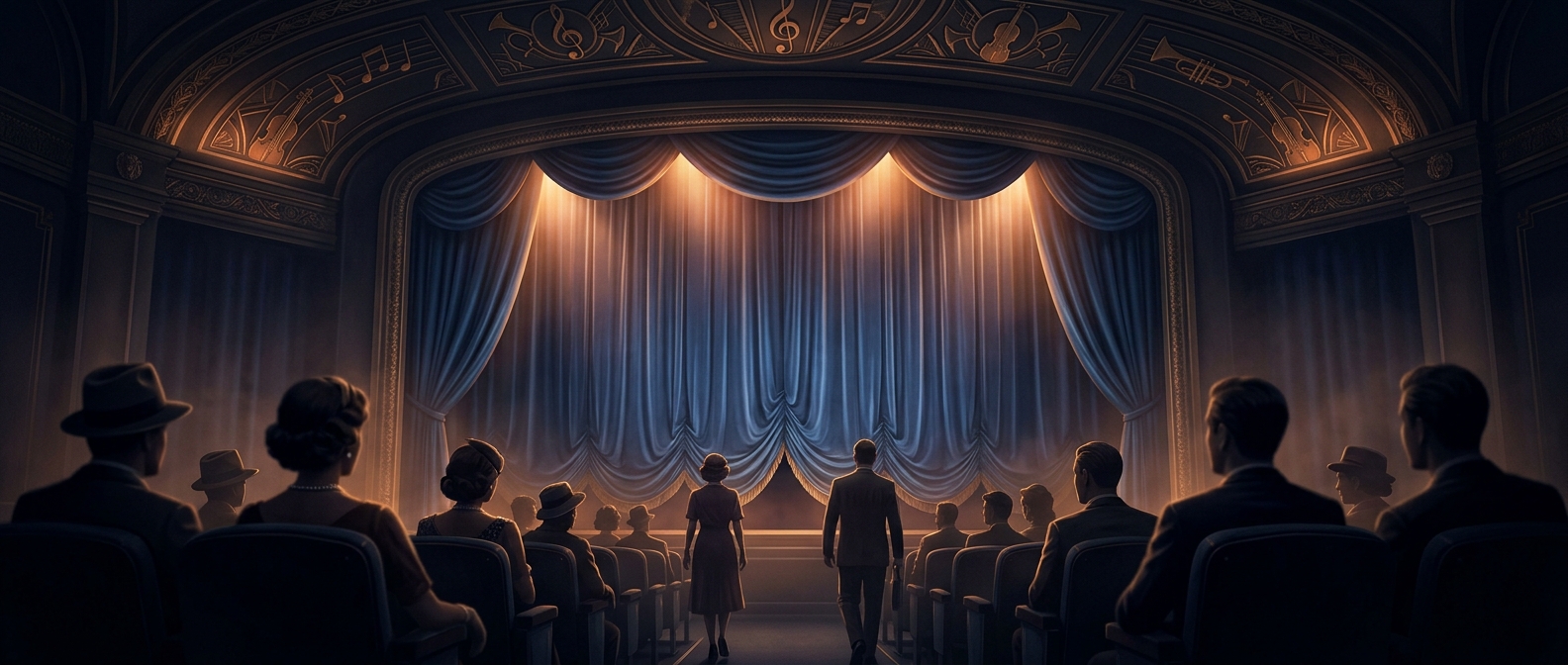
Music Made the Wait Part of the Show
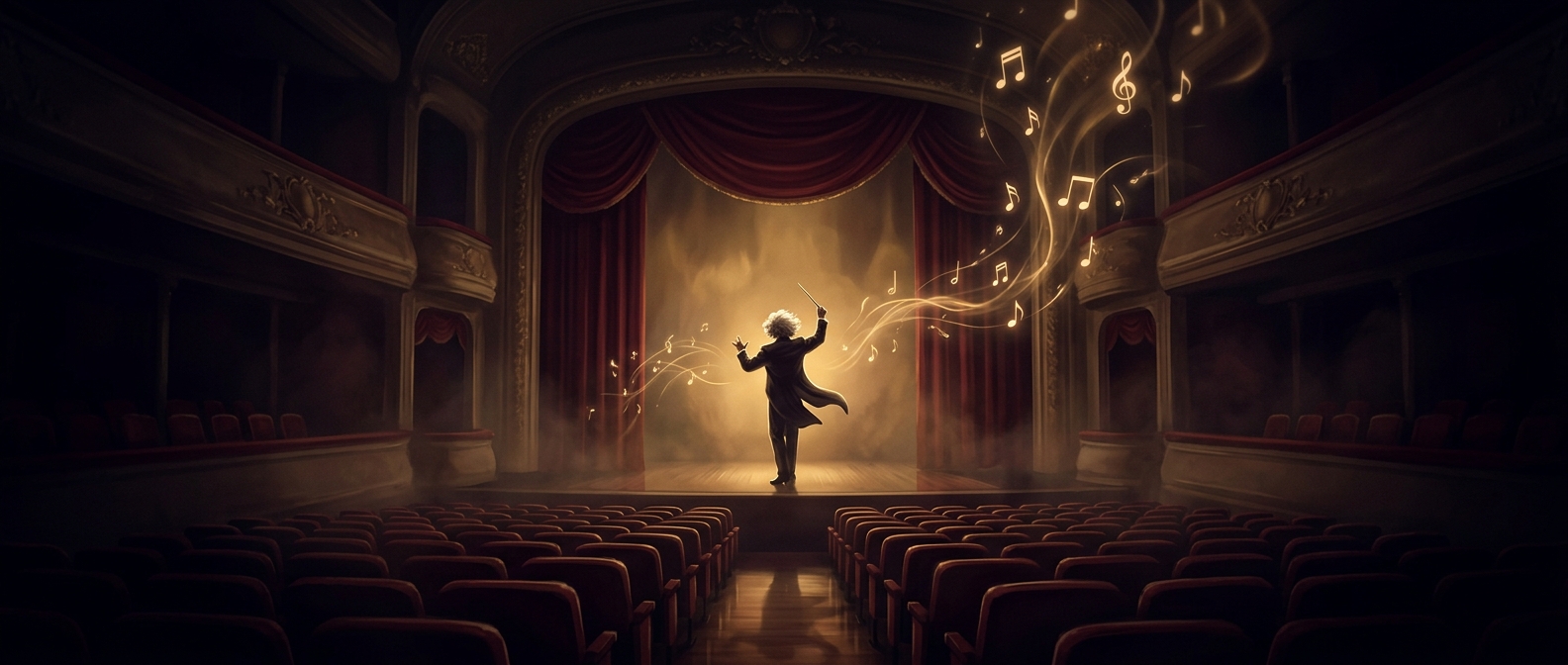
Before the picture began, an overture gave a theater audience a transition from the bustle of arriving to the attention a film required. People could still be moving, talking softly, and searching for seats; the music filled that interval without asking them to follow a scene. With the curtains closed, the screen remained out of view, so the performance could begin as a distinct event rather than as a film already underway.
A Practical Buffer—and a Dramatic Cue
The overture also helped manage the sounds and movement of a crowded room. Instead of letting footsteps, conversations, and late arrivals compete with the opening moments, the theater let music occupy the space while patrons settled. As it ended, the audience had a clear cue that the main feature was about to start.
That small piece of theater timing linked the practical problem of getting everyone seated with the emotional work of preparing them to watch. The film did not have to begin over the clatter of people finding their places; its first image could arrive after the room had quieted and the curtain opened.