Music for the pause, not the plot
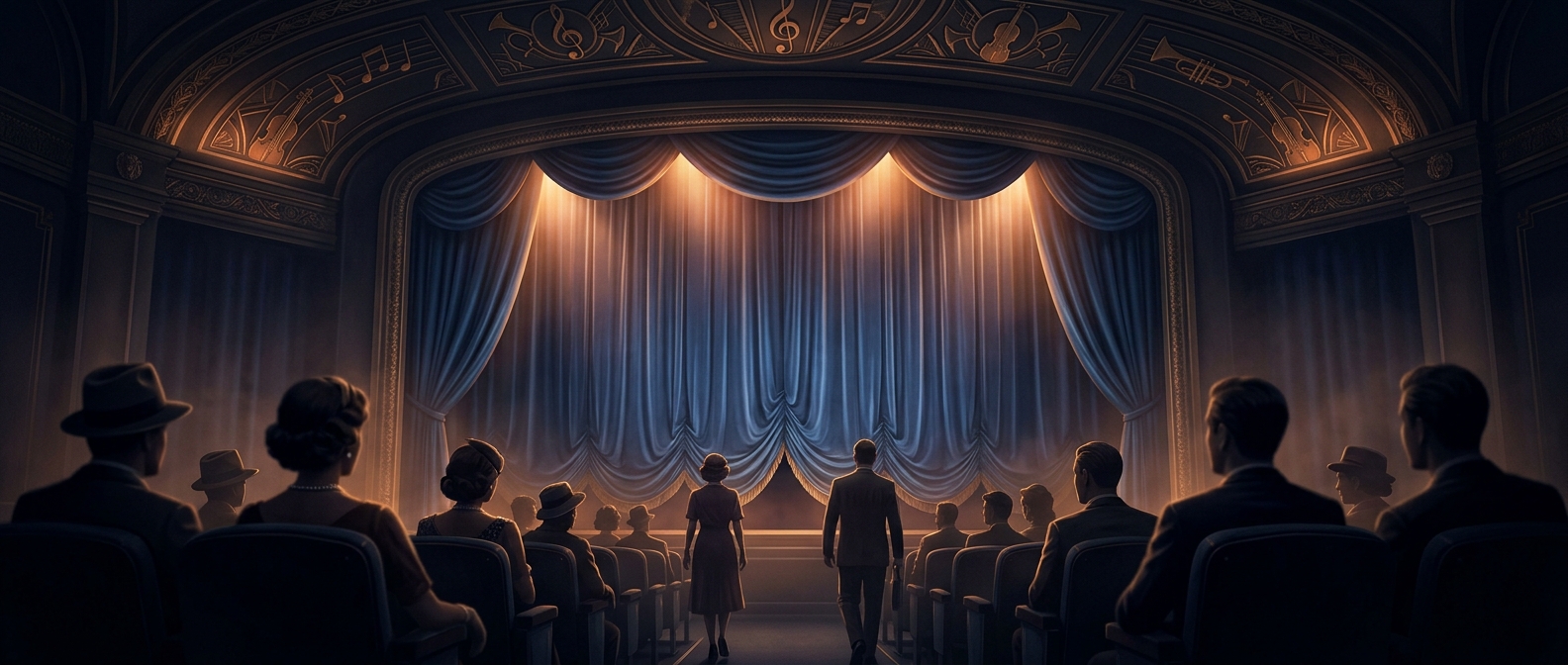
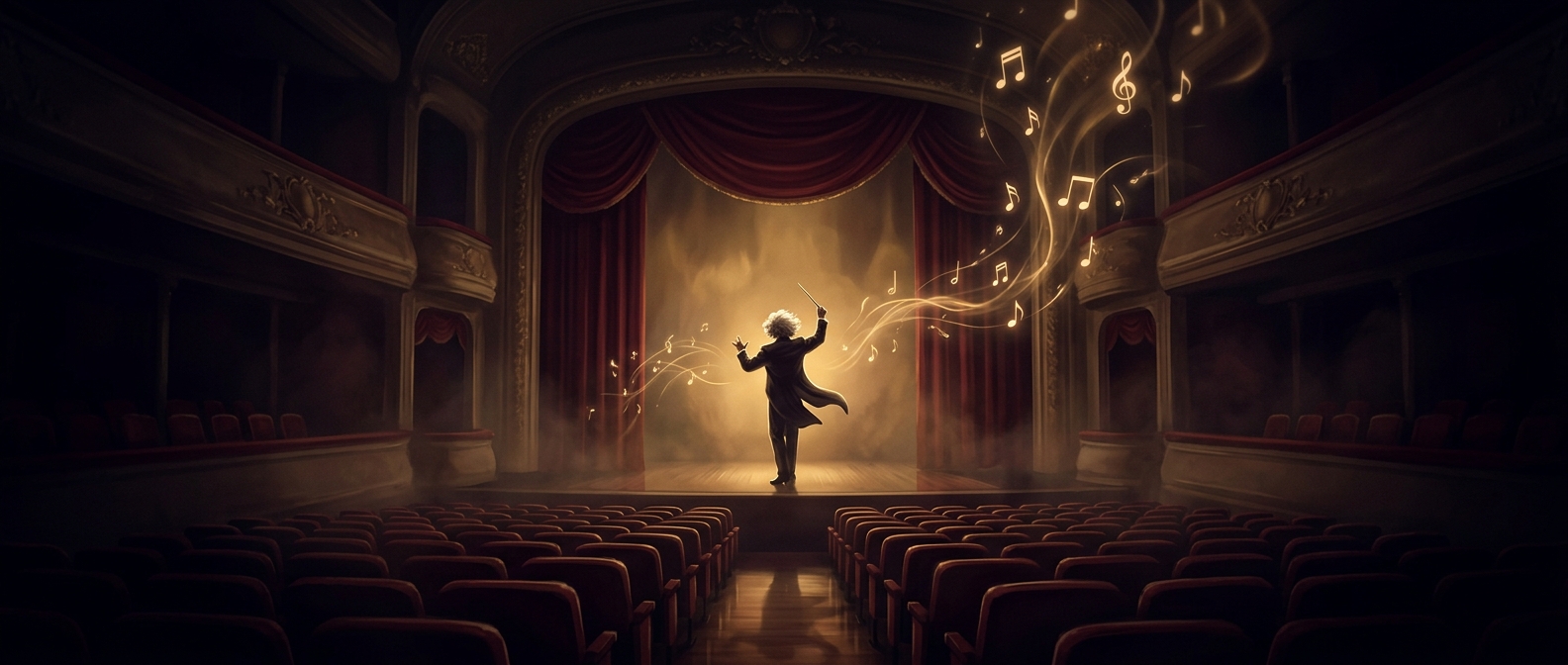
An entr’acte is a musical passage played between acts—or, in a film theater, during an intermission. Unlike a score meant to follow action on screen, entr’acte music had a practical job: fill the stretch when the story stopped and the audience moved about.
In theaters with live musicians, a composed suite could give that pause a shape. Its connected sections offered more than a single repeated tune, while keeping music in the room as patrons talked, found their seats, or returned from the lobby. The performance helped preserve a sense of occasion even when the film itself had temporarily disappeared from view.
A bridge back into the story
The music also made the break feel like part of the presentation rather than dead time. It could hold the audience’s attention loosely without demanding the close focus that a dramatic scene required. When the intermission ended, the music stopped and the film could resume, carrying the crowd from a social pause back into watching.
Not every intermission used a specially written suite; theaters could draw on existing music, too. But entr’acte compositions were designed around this in-between moment. Their distinctive purpose was to keep the evening moving while the screen was quiet.