A backyard test solved a practical problem
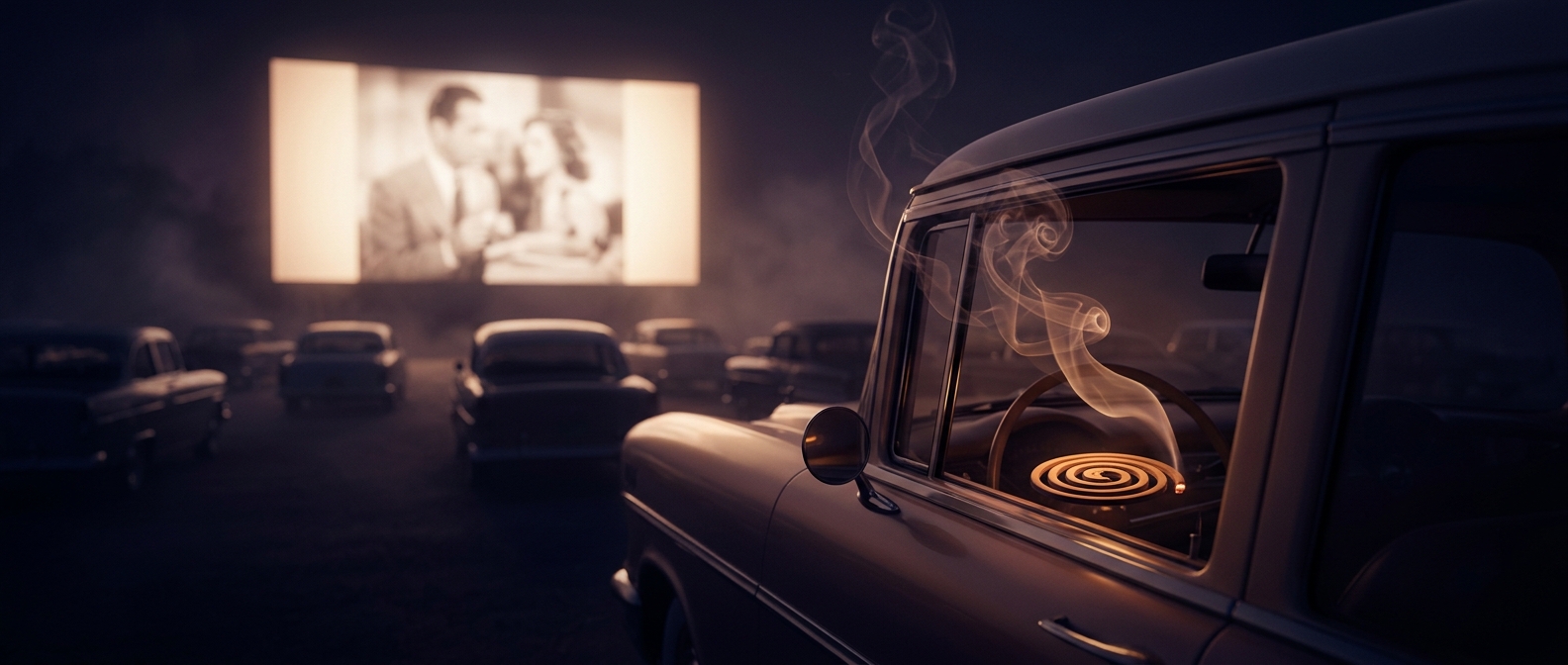
In 1933, Richard Hollingshead tried out a simple arrangement: a screen stretched between trees, a projector set on his car hood, and a radio placed behind the screen to provide sound. The setup let him test a question that a conventional cinema could not answer: could people watch a film without leaving their cars?
That mattered especially to parents. In a regular theater, a restless child could disturb other moviegoers, and families had to keep everyone quiet in fixed seats. In a car, parents could bring children along and manage them in a more private space. Hollingshead marketed the idea around that convenience rather than treating the car merely as an unusual seat.
From experiment to theater
The backyard arrangement was a prototype, not yet a public venue. Hollingshead went on to open a drive-in in Camden, New Jersey, and patent his theater concept. The patent marked an effort to claim a particular way of organizing outdoor film exhibition—not ownership of the basic idea of showing movies on a large screen.
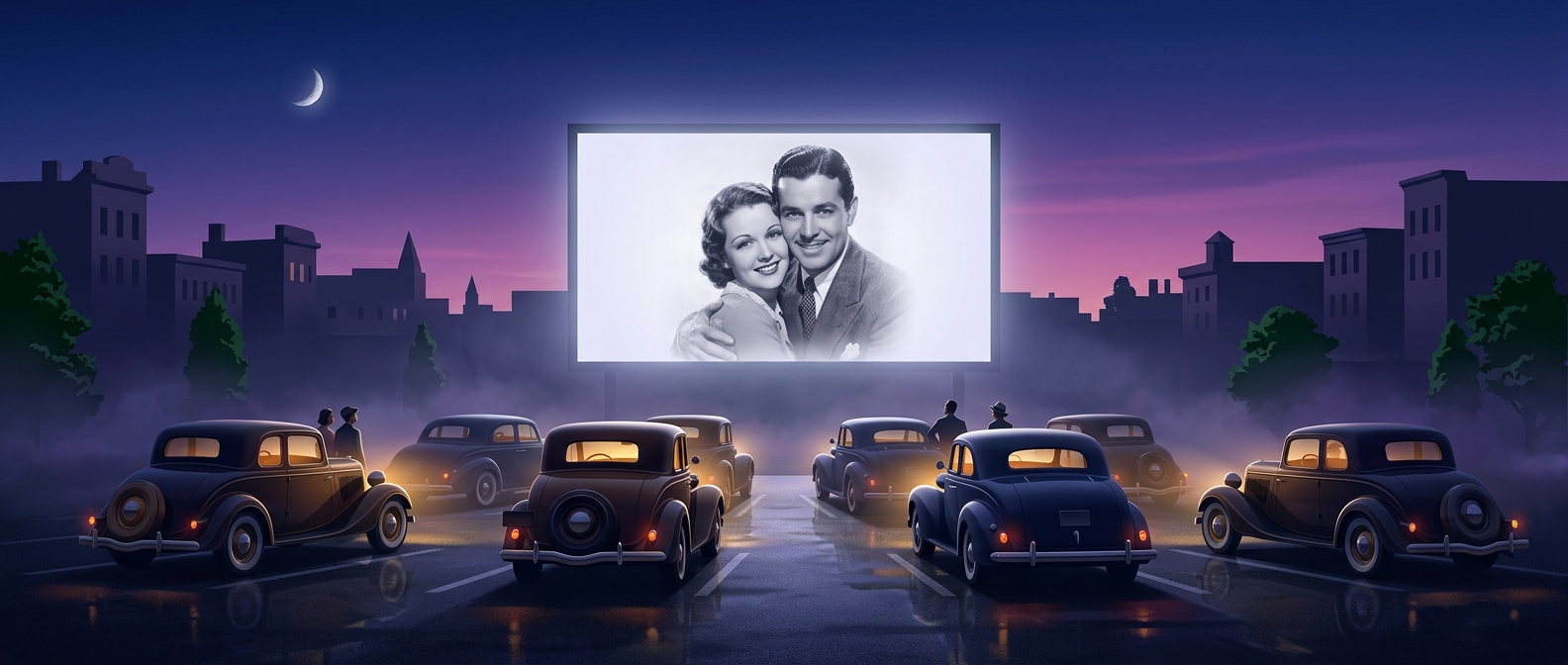
The experiment also exposed the format’s central engineering challenge: viewers needed to see the same picture from different parking positions and hear the film outdoors. Hollingshead’s trial put the screen, projector, cars, and radio into one working system. The radio behind the screen supplied sound without requiring the audience to gather in a building.
A car became part of the auditorium
The drive-in’s appeal came from changing the social rules of moviegoing. Families could watch together while staying in their own vehicle, where children had more room and parents had more control. That small shift turned the parking space into part of the theater—and made a backyard test into a new way to go to the movies.