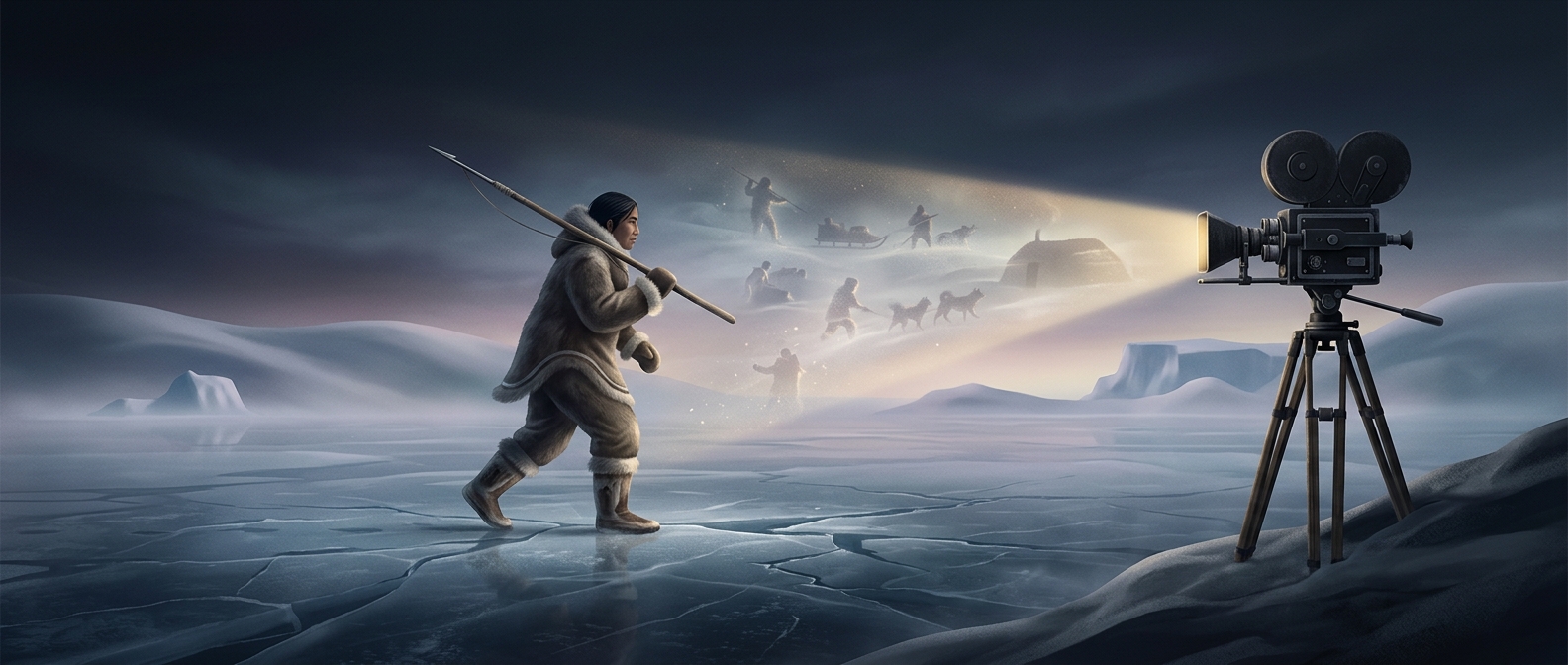
How Nanook of the North made the Arctic filmable
Robert Flaherty’s 1922 film looks like a record of daily life, but it was also constructed for the camera. Early film equipment was cumbersome, and filming inside a dark snow house was difficult. For some interior scenes, the structure was made with an opening that let in enough light to photograph the action. The resulting image showed a family at home—but not an untouched slice of ordinary life.
Flaherty also asked people to perform activities for the film. Some hunting scenes were reenacted, and the film favored older tools and practices over newer ones. That choice made the action easier for audiences to follow and gave the story a sense of life in a remote, earlier world.
Documentary before the rules were settled
The distinction between documentary and fiction was not yet governed by the conventions viewers expect today. Flaherty worked with people he filmed and shaped their actions into a dramatic narrative, with recognizable characters, suspense, and hardship. The camera did not simply observe events; the filmmaking process helped create the events that could be shown.
That approach made the film powerful and influential, but it also narrowed what audiences saw. The people on screen were presented through a story designed for outsiders, rather than as a complete portrait of contemporary Inuit life. Nanook is therefore both an early landmark of feature documentary and an example of how a film can feel like direct evidence while being carefully arranged. Its realism came partly from the real people and environment—and partly from choices made to turn them into a story.