How a Dull Documentary Can Occupy an Anxious Mind
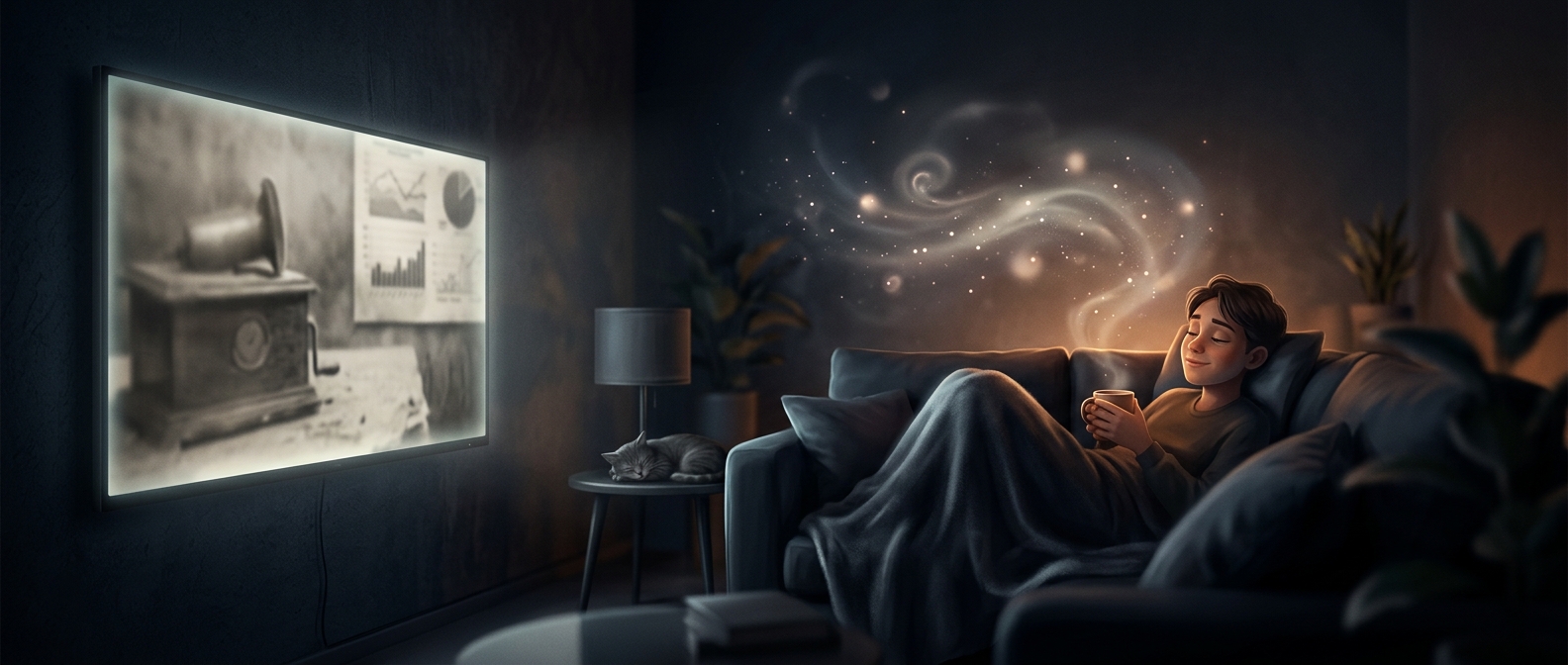
Anxiety often pulls attention toward possible problems: a replayed conversation, a looming task, or a vague sense that something needs fixing. A steady voice discussing an unfamiliar topic can give attention a simple place to land. Following the narration takes a little mental effort, which may leave less room for those thoughts to dominate the moment.
Why Predictability Matters
A restrained delivery and a slow pace offer few sudden changes to react to. That predictability can make the program easier to keep on without demanding the alertness that a thriller, argument, or fast-cut video might. The subject matters too: if it feels remote from the listener’s own life, its details may be interesting enough to follow but not emotionally charged enough to intensify worry.
The balance is the point. Material that is too stimulating can add tension; material that is completely silent or familiar may leave attention free to drift back to anxious thoughts. A mildly engaging documentary can sit between those extremes—present enough to follow, undemanding enough to fade when focus wanders.
A Small Tool, Not a Guaranteed Fix
This is less about the documentary changing the source of anxiety than about changing what occupies attention for a while. People differ: one person may settle into a calm account of shipbuilding, while another finds narration distracting or prefers silence. The useful test is concrete: does the program make it easier to let a thought pass without immediately chasing it? If so, even a documentary whose facts are quickly forgotten may have served its purpose.