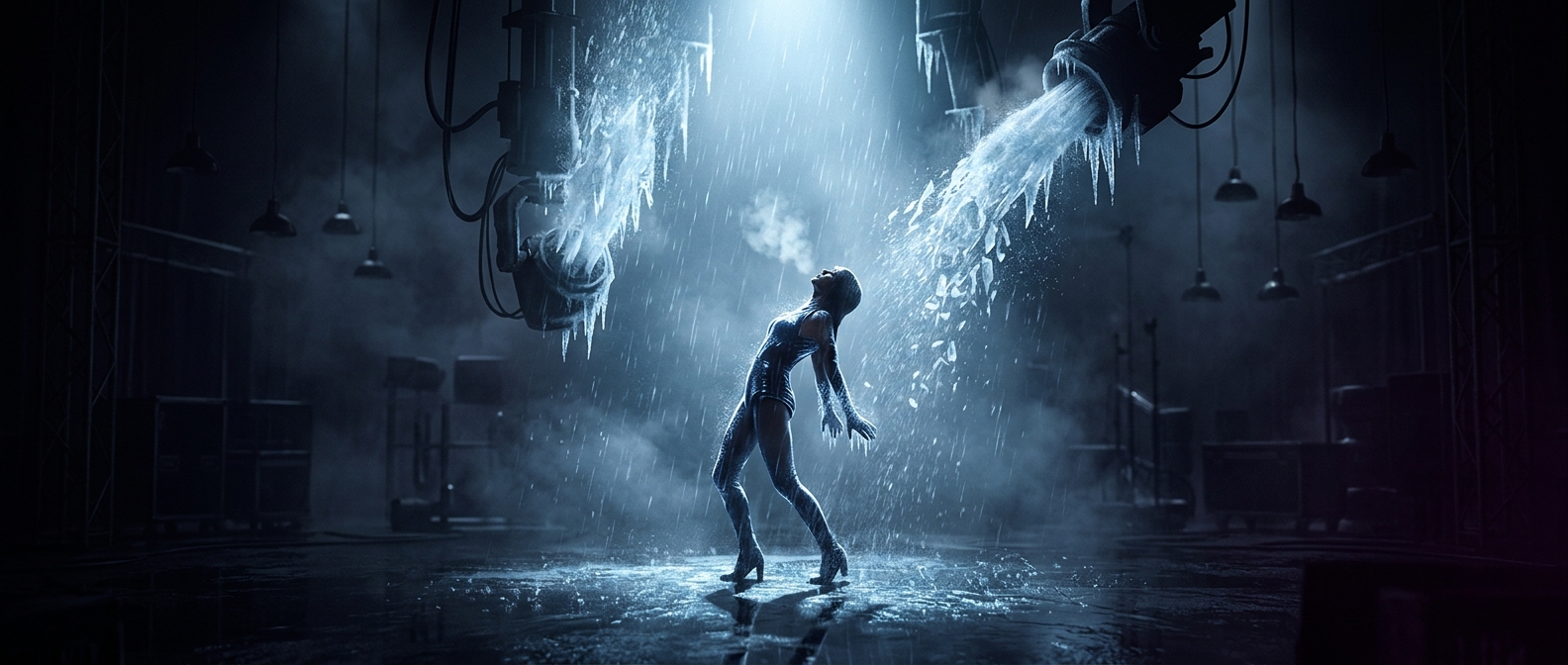
A rain rig is a high-volume plumbing setup
The “rain” in a music video is usually made by directing water through pipes and spray nozzles above or around the performers. To look convincing on camera, it has to fall across a broad area and keep flowing through repeated takes. Feeding that system from a hydrant provides a ready supply, but the water arrives at the temperature of the local water system—not warmed for the shoot.
Heating a large, continuous flow would require extra equipment and time. It also would not make the water feel warm for long: performers’ clothes and hair become saturated, and additional spray keeps replacing the water against their skin.
Wind and wet clothing intensify the chill
Water carries heat away from the body. Once clothing is soaked, it no longer provides much insulation, and moving air speeds the loss of warmth. Even a day that feels mild between takes can become uncomfortable under sustained spray, especially when performers must hold still or repeat the same movement for the camera.
That is why a rain scene can demand more than dramatic acting. Crews may need to schedule pauses so performers can warm up and change into dry clothing. On screen, the water reads as a storm; on set, each take means standing under a steady supply of cold water while trying to make the performance look effortless.