The music is a flexible bridge, not a miniature song
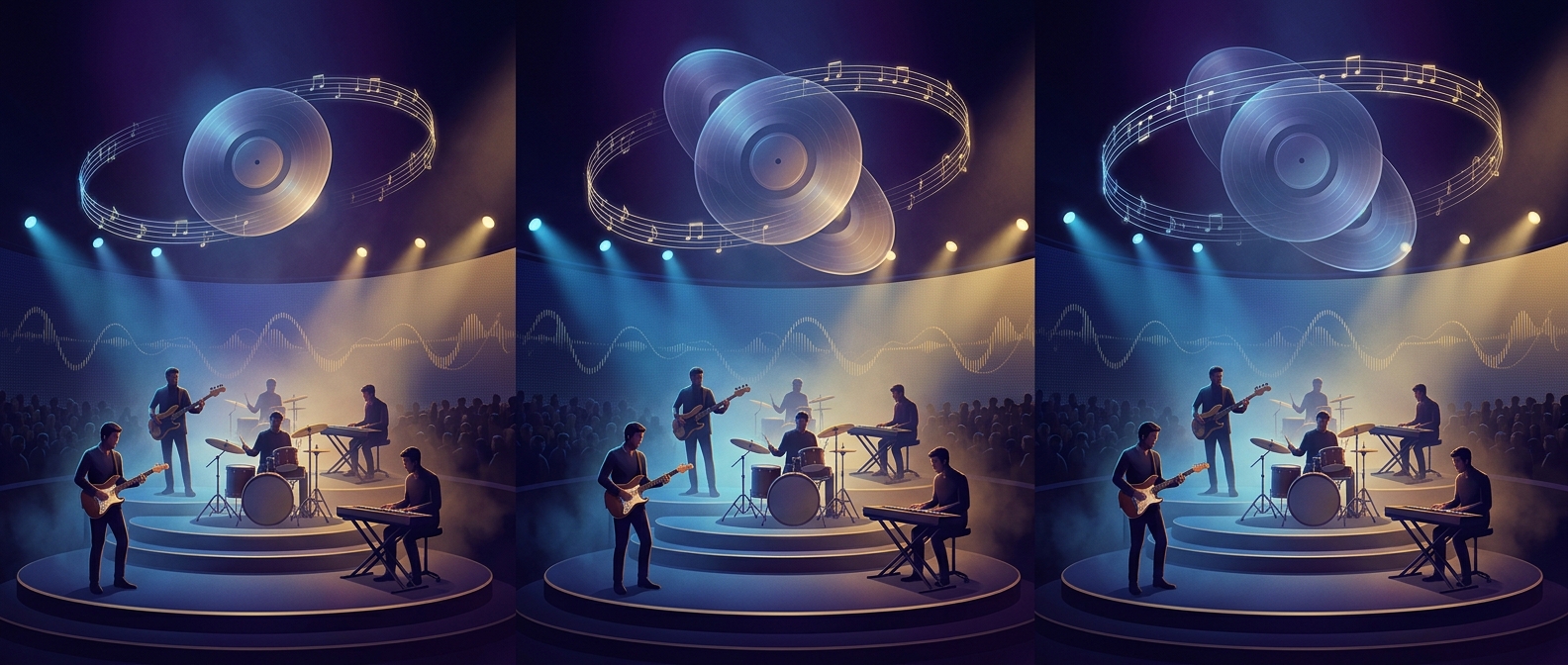
A house band’s job during a commercial break is often to keep the show feeling continuous while the cameras are off the main action. A short instrumental passage—sometimes called a break bumper or simply a vamp—can fill the gap between one on-air moment and the next without demanding the audience’s full attention.
Unlike a finished song, a vamp is built to be repeatable. The musicians play a compact pattern that can continue for as long as needed, then land on an ending when the show is ready to return. That makes it useful when a break’s exact length, or the timing of the next cue, can vary.
Repetition gives the band control
A familiar loop is easier to stretch or trim than a tightly arranged piece with a fixed sequence of verses and transitions. The band can keep the groove going, adjust its intensity, and watch for a signal to wrap up. The same few bars may sound repetitive to someone listening closely, but their practical value is precisely that they can be repeated without disrupting the handoff back to the program.
The arrangement also has to work in the room, not just on a recording. A brief instrumental cue can maintain a live atmosphere without competing with conversation or the show’s other activity. Because the band knows the passage so well, it can concentrate on timing and coordination rather than reading new music every break.
A small task with a long shelf life
Repeating the same transitions for years is less about running out of musical ideas than about keeping a dependable tool ready. When the show needs a few more bars, the band has them; when it is time to return, the pattern can resolve cleanly. The tune’s real purpose is not to go somewhere new—it is to make an unpredictable wait feel organized.