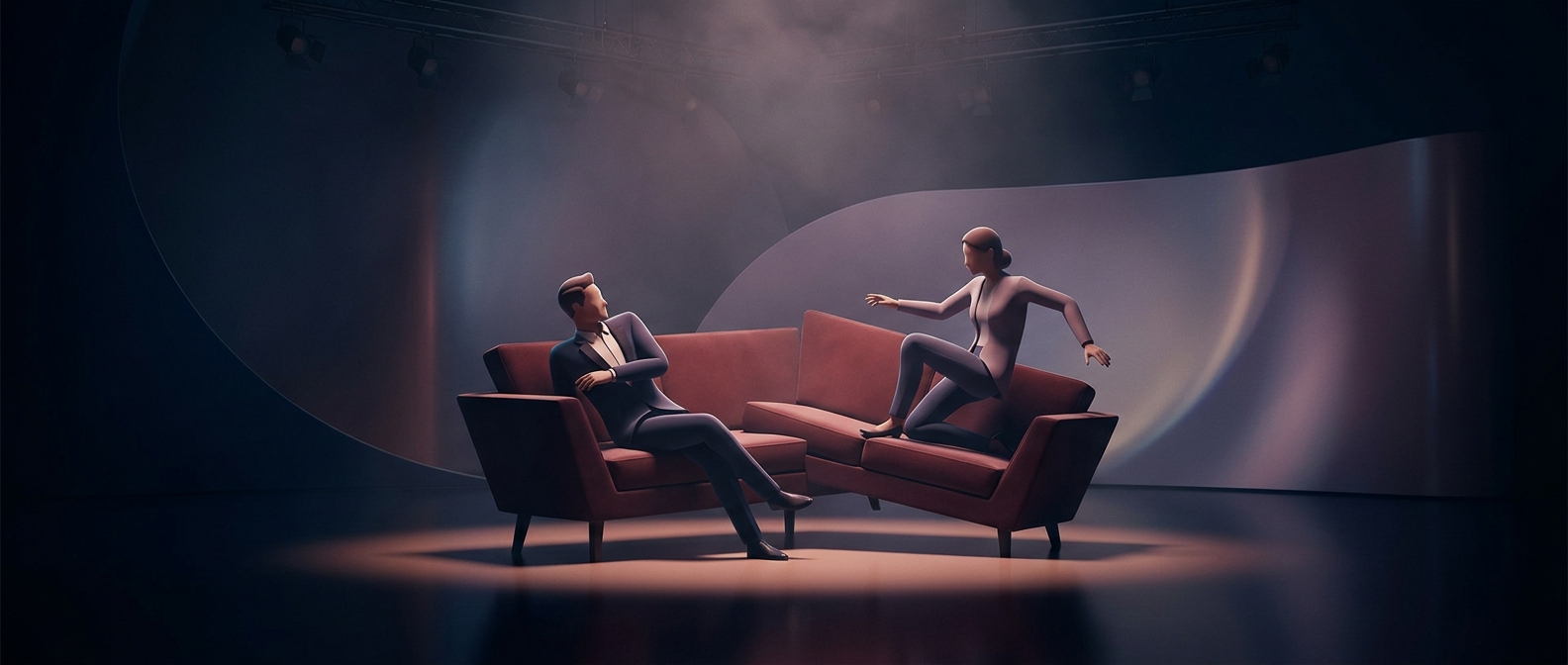
A chair can guide posture without looking like a prop
A late-night guest’s upright pose may look effortless, but the seat is doing part of the work. When a chair tilts forward, it changes how the sitter’s weight settles: leaning back and sinking into a slouch becomes less natural, while keeping the torso upright takes less adjustment. Padding keeps the seat comfortable, so the posture cue need not come from a hard or obviously restrictive chair.
Why posture matters on camera
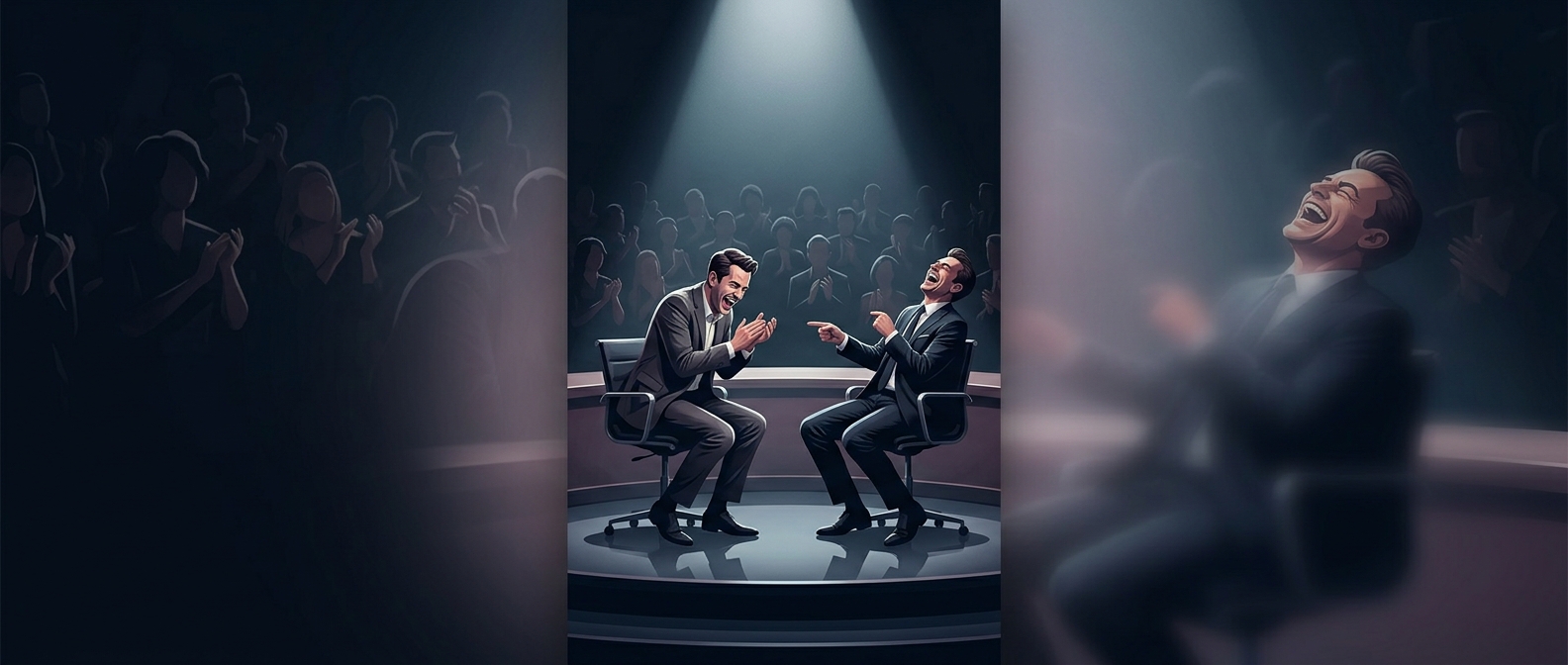
In person, a relaxed slump can read as casual. On a studio camera, it can make a guest’s face seem lower, their outline less clear, and their attention harder to read. An upright sitter stays more visibly present in the frame, making reactions and conversation easier for viewers to follow.
That distinction matters in a format built around close shots and quick exchanges. The furniture quietly nudges guests toward a posture that communicates attention without requiring them to hold a rigid pose throughout the interview. The chair is part of the set’s visual design: it helps turn comfort into a camera-friendly version of engagement.