Twenty frames, not a miniature movie
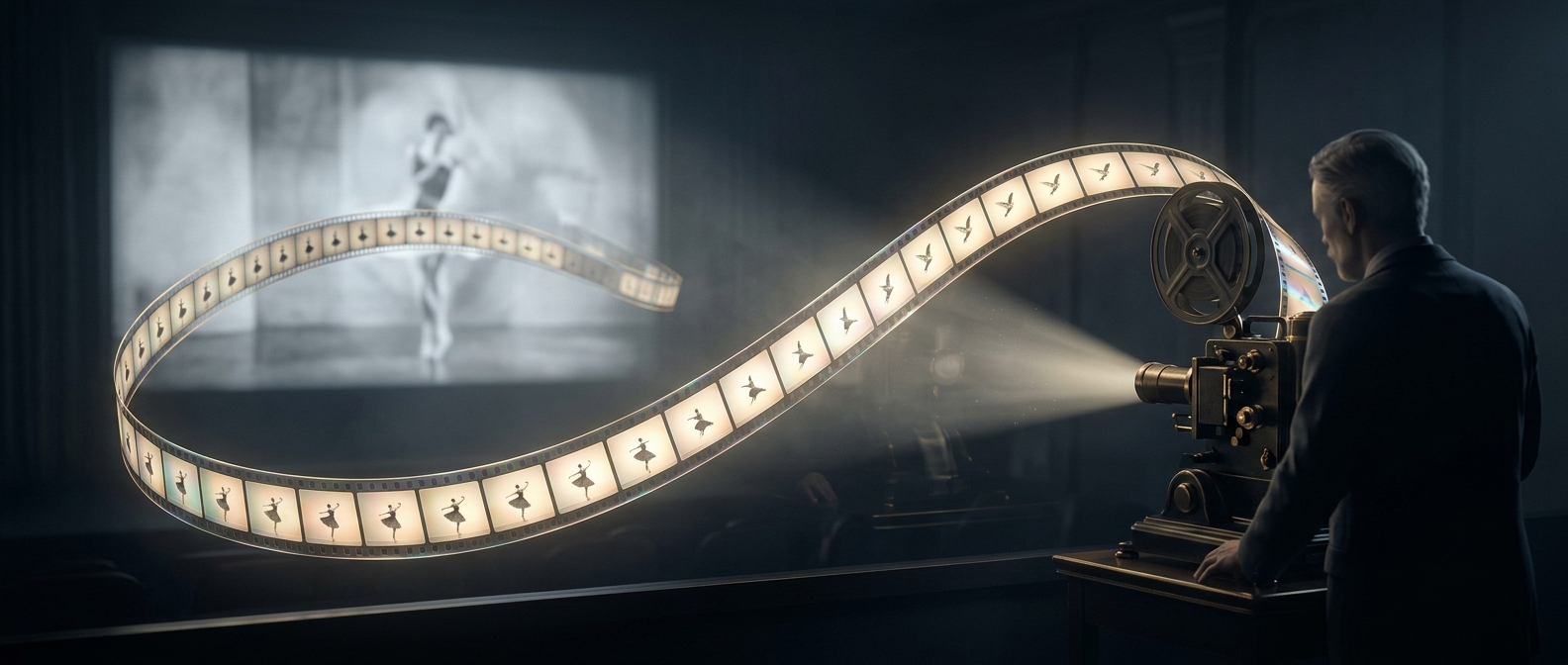
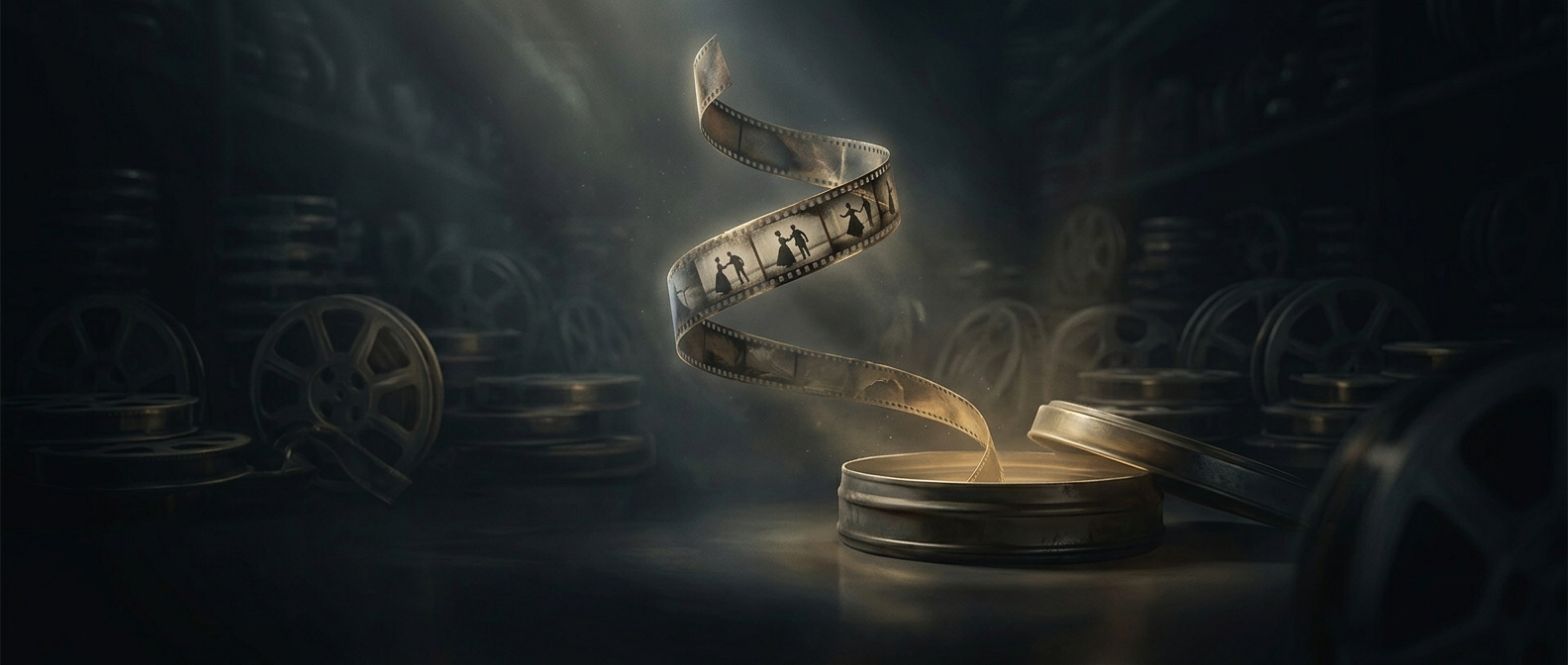
The surviving Roundhay Garden Scene is a strip of only about 20 images. Each image captures a slightly later instant; viewed in sequence, they create the impression of continuous movement. With so few frames, a person crossing the picture or turning around occupies a large share of the entire record. There is no time for a plot to unfold—just enough for the camera to preserve a gesture.
That limitation reflects the technology’s early stage. A moving picture camera had to expose one image after another on a strip of material and advance that strip with enough regularity for the images to play back as motion. The surviving film is associated with Louis Le Prince’s experiments in 1888, before motion-picture cameras and projection had become a standardized public entertainment system.
A record made on an awkward material
Le Prince used paper film, rather than the more familiar transparent plastic film that later became standard. Paper could carry a photographic image, but it was not an ideal medium for a strip that needed to travel through a camera and then be viewed as a smooth sequence. Its fragility and the difficulty of handling it help explain why early moving-image records were precarious objects, not durable reels made for routine screening.
The scene’s importance is therefore not that it tells a complete story. It shows what a new kind of record could do: preserve a brief action across a sequence of photographs. The surviving seconds are a glimpse of motion captured before the equipment and materials could reliably turn that glimpse into a longer film. Each time the figures move, the strip is doing the essential work of cinema—making separate still images seem alive.