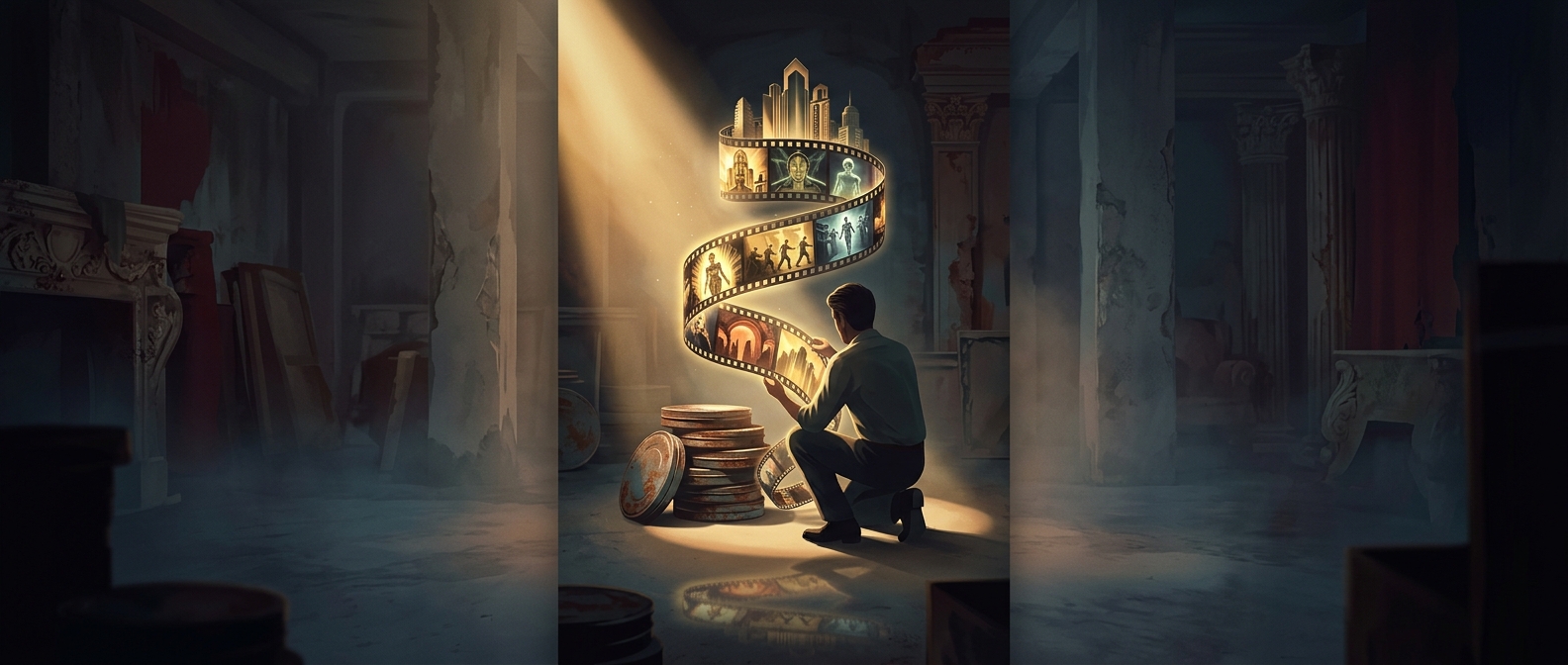
How Metropolis lost a quarter of its story
When Fritz Lang’s Metropolis premiered in 1927, it was a sprawling silent film about a divided future city. Audiences outside Germany often saw shorter versions: distributors cut scenes to make the film easier to show and, in some cases, to simplify its story. The removed footage disappeared from circulation, leaving later restorations to rely on incomplete copies and written accounts of what was missing.
For decades, the gaps were more than a matter of runtime. They disrupted the film’s plot and relationships, making some characters’ actions harder to follow. Archivists could preserve and repair the surviving material, but they could not restore scenes for which no images remained.
A canister changed what could be restored
The missing footage surfaced in Argentina in a battered 16mm film element—a smaller-format copy—stored in a dusty canister. Its condition was poor, but the images filled in roughly 25 minutes absent from the familiar version. That made the discovery valuable not because it offered a pristine replacement, but because it gave restorers actual frames to work with instead of descriptions alone.
The recovered material could be placed back into the film’s sequence, revealing connective scenes and plot developments that earlier audiences had not seen. It also showed the limits of film restoration: damaged, lower-quality footage cannot be made to look identical to the best surviving original material. The restored film therefore preserves visible differences in image quality, a reminder that recovery is not the same as returning to an untouched original.
The canister’s importance lies in that distinction. It did not simply add extra minutes; it let viewers encounter a substantially more complete version of a film whose missing scenes had shaped how generations understood its story.