A Crowd That Agrees Not to Talk
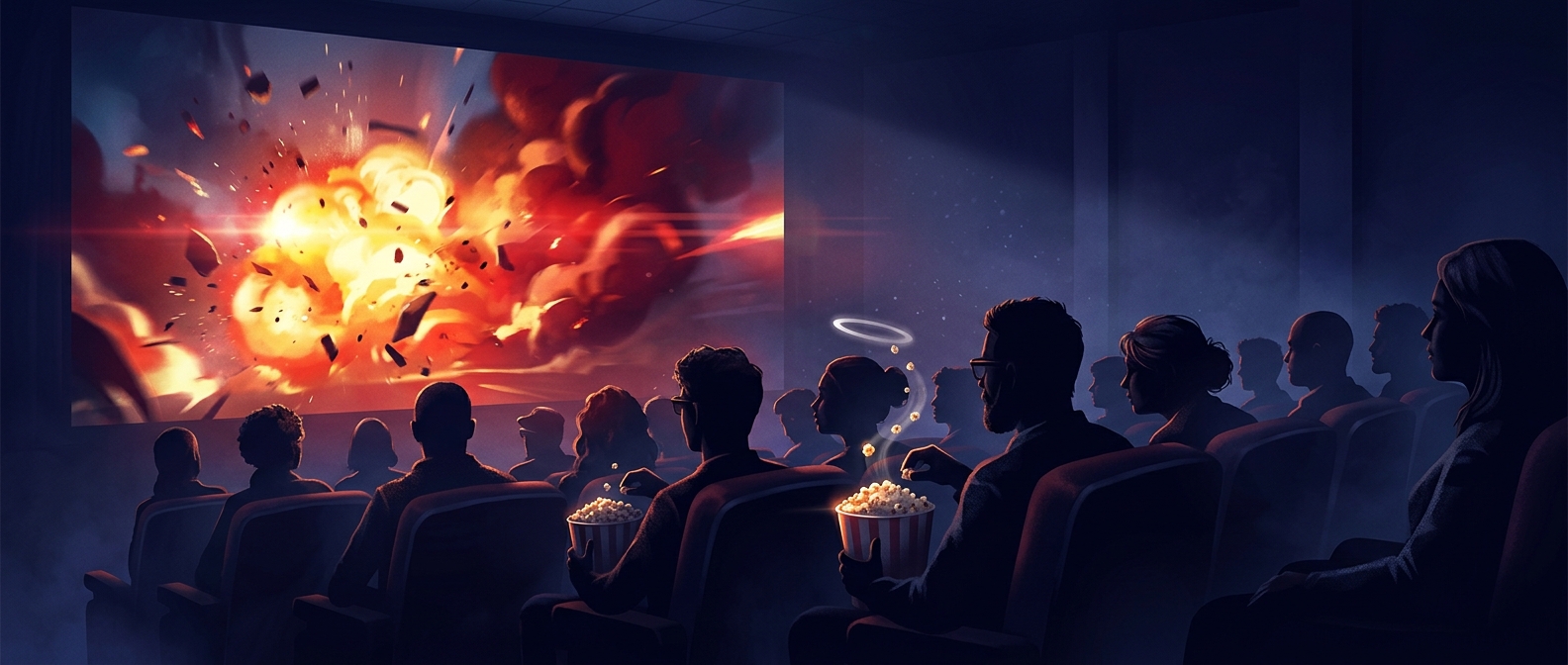
A movie theater gathers strangers into a shared experience while asking them to behave almost as if they were alone. The room goes dark, attention turns toward one screen, and conversation is set aside. That quiet is not merely politeness: it lets each person follow dialogue, sound cues, and small visual details without competing voices.
The rule works because everyone can see—and hear—when it is broken. A whispered comment or a loud wrapper cuts across the same soundtrack that the rest of the audience is trying to follow. A shush is a quick, informal correction: it reminds the offender of the room’s expectation without stopping the film for a discussion about it.
Shared Attention, Minimal Contact
Unlike a party or a performance where audience reactions are part of the event, a film usually directs attention away from the people in the room. Viewers may laugh, gasp, or shift together, but they are not expected to talk to one another. The result is a peculiar kind of company: strangers share suspense or amusement while largely pretending not to notice each other.
That arrangement depends on small acts of restraint. Keeping a phone dark, opening snacks quietly, and waiting until the credits to talk all protect the same fragile thing: the sense that the story on screen has the room to itself. A crunch can seem disproportionately disruptive precisely because the audience has collectively made silence part of the show.