Acting to a screen that wasn’t there
For a scene built around a futuristic display, the actor has to give invisible graphics a convincing place in the room. Downey couldn’t simply glance vaguely toward the camera: each look needed to land where a particular readout or image would later appear, and at the moment the scene called for it.
That turns eye movement into a kind of performance mark. A shift that is too high, too early, or held too long can make the finished interface feel disconnected from the character. The actor must also react as though the absent graphics have meaning, even though the visual cues that would normally guide that reaction have not been added yet.
Why the camera setup mattered
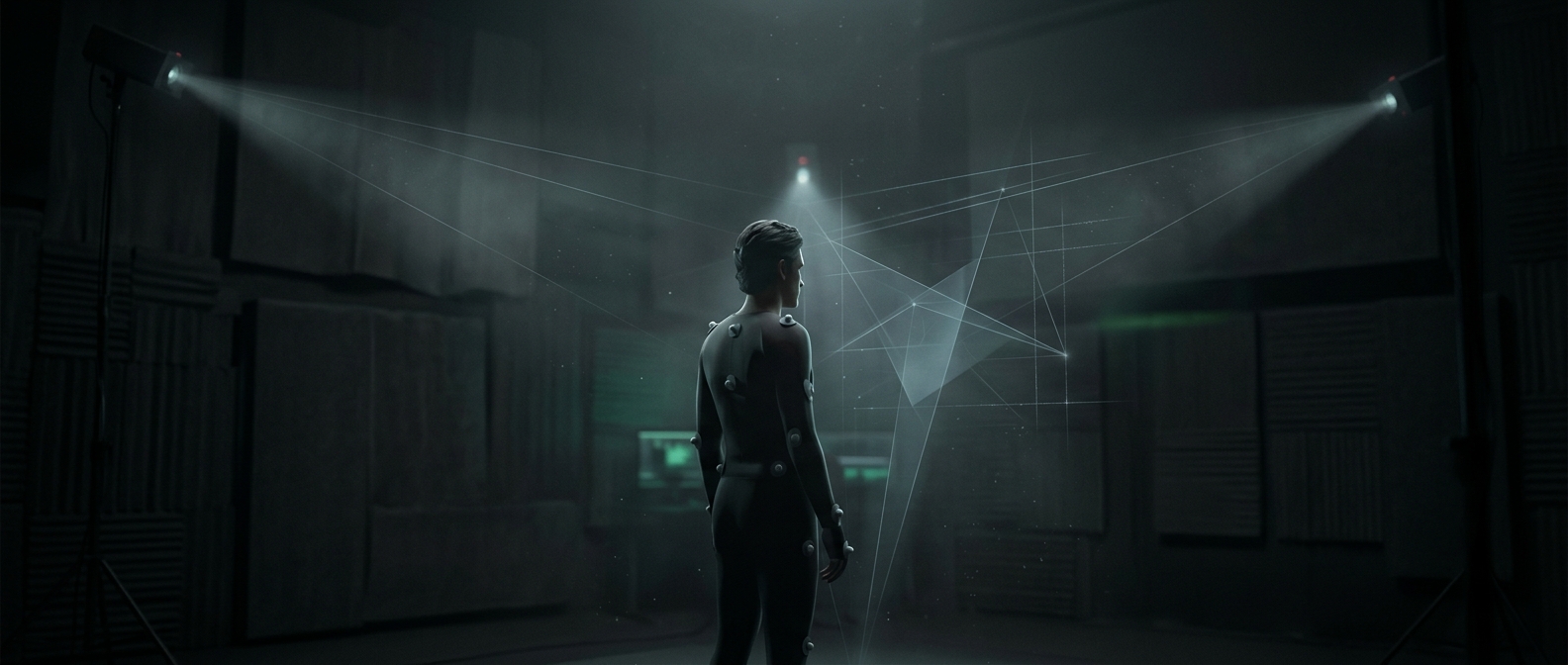
A rigid camera rig helps keep the relationship between the filmed performance and the planned graphics controlled. If the camera’s position or movement changes, the interface’s apparent position must change with it; otherwise, the graphics can seem to slide across the image rather than occupy a stable place in the scene. A constrained setup gives the effects team a more predictable frame to work with.
The graphics could be composited into the footage later, but they still had to feel connected to Downey’s gaze and timing. That connection is what lets a viewer read a glance as “he’s checking that display,” rather than “he’s looking at empty space.” The eventual screen may be digital, but its credibility depends on small, physical choices made before the screen exists.