A racecourse became a motion laboratory
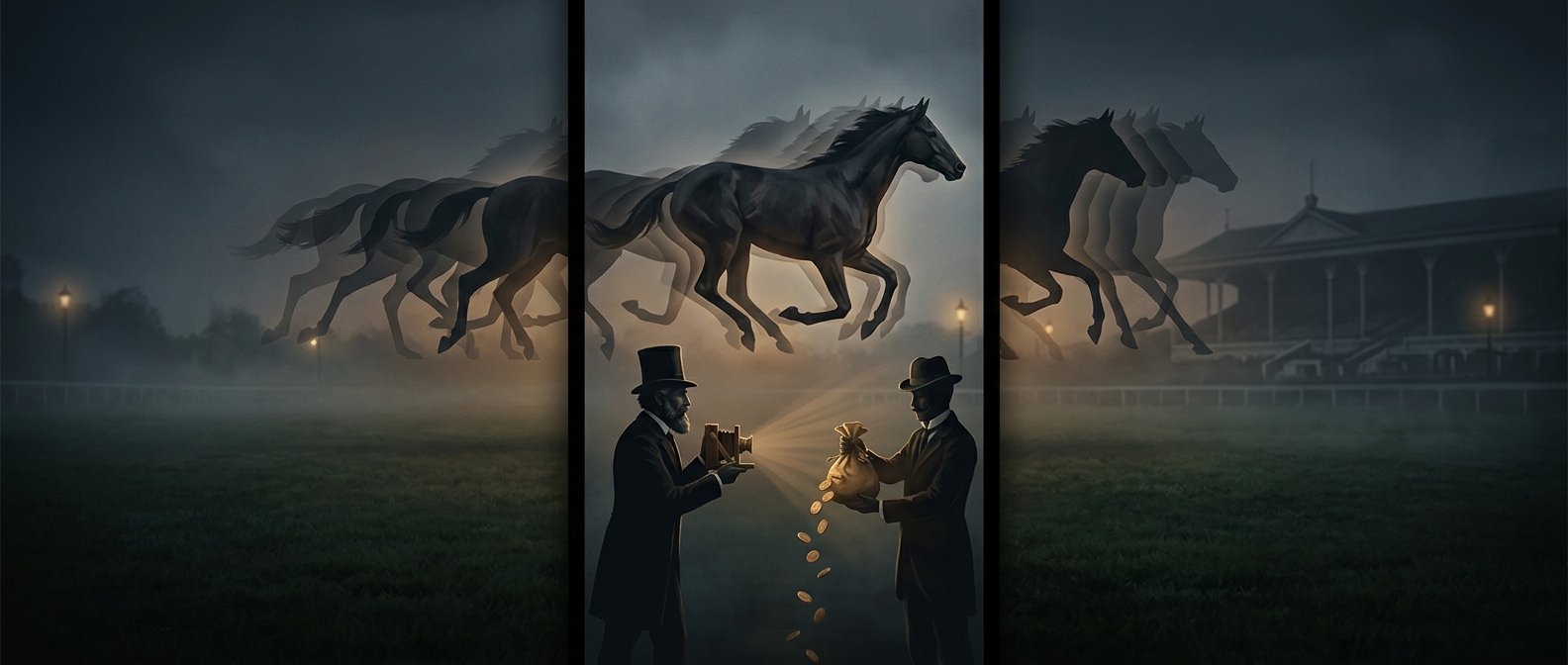
The question was harder to settle by eye than it sounds. At a gallop, a horse’s legs move so quickly that the body’s brief flight phase—the instant when no hoof touches the ground—can disappear into a blur. Leland Stanford, a former California governor and racehorse owner, wanted a clear answer. Photographer Eadweard Muybridge devised a way to make the moment visible.
How the cameras caught the stride
Along a track, Muybridge set up a row of cameras aimed at the horse’s path. As the horse passed, it struck a series of trip wires, triggering the cameras one after another. Each photograph froze a slightly later instant, turning a fleeting stride into a sequence that could be examined frame by frame. The pictures showed that a galloping horse does lift all four hooves, though not in the outstretched pose artists had often imagined.
That sequence was more than an answer to a sporting argument. It showed how separate still images could make movement easier to study—and, when displayed quickly in order, could suggest movement to a viewer.
From evidence to projected motion
Muybridge later adapted the photographs into the zoopraxiscope, a device that projected images painted onto a spinning glass disc. It was not a modern film projector, and his experiments were not cinema in its finished form. But they helped establish a crucial idea: record a series of changing poses, then present them fast enough for the eye to experience continuous action.
The lasting twist is that an argument about a horse’s feet helped turn photography from a way to preserve a moment into a way to make motion itself visible.